A packed dance floor doesn’t have to begin with a nervous two-minute spotlight. Your wedding reception can open with laughter, a shared toast, a favorite activity, or an invitation that brings wedding guests into the celebration at once.
The best first dance alternatives keep the moment meaningful without asking you to perform naturally. Whether you dislike dancing, prefer less attention, or want to skip the first dance, choose another reception opening that fits your personalities and feels comfortable.
Start by deciding what you want that opening moment to accomplish. Then build the music, timing, and guest participation around an activity that transitions smoothly from cocktail hour into the reception.
Key Takeaways
- A first dance is optional, so choose a reception opening that feels comfortable and personal to you.
- Invite guests into the celebration with an open dance floor, reverse anniversary dance, group family moment, or another easy-to-join activity.
- Personal options such as the wedding shoe game, a slideshow, trivia, karaoke, or a live band feature can create meaningful memories without a traditional dance.
- A short 30- to 60-second song moment can preserve the emotion of a first dance while keeping the spotlight brief.
- Give your DJ, planner, venue, and other vendors a clear cue, firm time limit, music plan, and backup option so the transition feels smooth.
Give Yourselves Permission to Change the Tradition
A wedding first dance is a choice, not a requirement. It’s one optional choice among many wedding traditions. Some couples love the quiet pause together. Others would rather be surrounded by friends, family, and less pressure. Both approaches are completely valid.
A range of first-dance alternatives can work beautifully, but the strongest option is the one that feels natural for your reception, your wedding venue, and the people you want around you.
The First Dance Is Not a Test
You don’t need lessons or a choreographed dance to create a memorable reception opening. If dancing makes either of you anxious, that feeling can take attention away from the celebration itself.
As part of wedding planning, think about what you want the moment to accomplish. Do you want a warm family moment? A quick burst of energy? A reason for guests to leave their tables? Once you know the answer, it’s easier to choose an activity that fits.
A thoughtful alternative can still create photos, laughter, and a clear transition into the party. It can also make guests feel more involved from the first song.
Pick an Option That Fits Your Crowd
Your guests matter, but they don’t need to control the decision. A room full of outgoing friends may enjoy a lively activity. A mixed-age group may respond better to a shared memory display or a simple group moment. A smaller reception may feel right with a toast and an immediate open dance floor.
Choose something with a clear beginning and ending. If it follows cocktail hour, make sure it suits the room’s energy. That structure keeps the evening moving and gives your DJ, photographer, planner, and catering team a reliable cue.
First Dance Alternatives That Fill the Wedding Dance Floor
If your priority is filling the wedding dance floor quickly, choose an opening that makes participation easy. Guests are more likely to join before they have time to overthink it.
Invite Everyone Onto the Floor Right Away
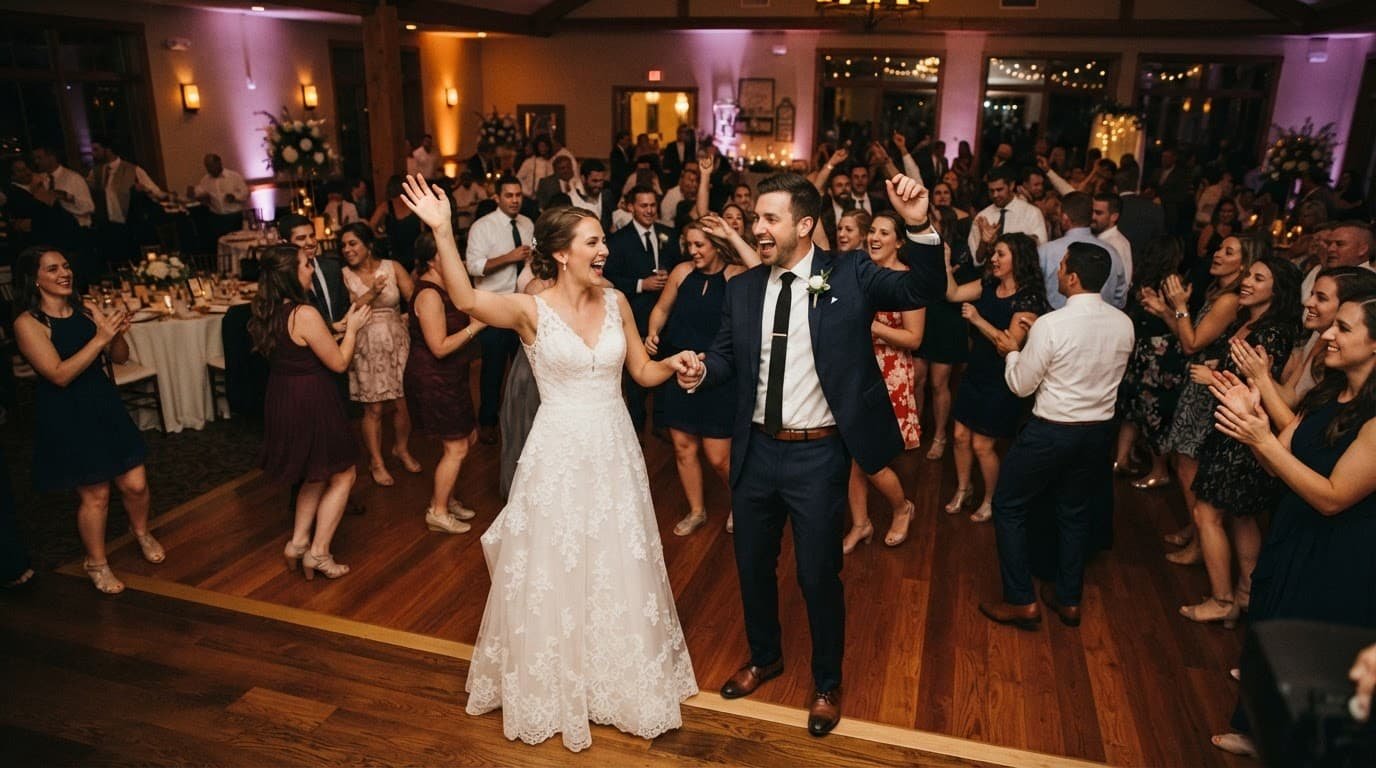
Skip the couple’s first dance and have your wedding DJ make a short, upbeat announcement after dinner, cake cutting, or your wedding entrance. Start with a recognizable song, invite the wedding party out first, then welcome everyone to join.
This works because nobody has to watch while you dance alone. The focus shifts from performance to celebration, and the floor has a base of people from the first beat.
Keep the announcement brief and the first songs familiar. A slow, obscure song can make guests hesitate. A confident opening track with a simple hook gives people an immediate reason to move.
The best opening activity ends while guests still want one more minute, then gives them an easy reason to stay on the floor.
Try a Reverse Anniversary Dance
A reverse anniversary dance brings married couples, or other willing pairs, onto the dance floor in stages. Begin by inviting the longest-married pair, then call additional couples out by years together until the floor is full.
It creates a warm, inclusive moment without placing all attention on the newlyweds. It also gives married couples something to celebrate as grandparents, parents, friends, and newer pairs join in.
Ask your DJ to prepare a few simple prompts and keep the music upbeat but comfortable. You can present the longest-married couple with flowers, dessert, or a kind round of applause. If you want the moment to stay light, skip prizes entirely and move directly into open dancing.
Turn Your Story Into a Reception Moment
Personal activities are ideal when you want a meaningful alternative that doesn’t require anyone to dance. They work especially well for couples who value shared history, family memories, humor, or hobbies.
Use the Wedding Shoe Game With Care
A wedding shoe game is simple: sit back-to-back, hold one item representing each partner, and answer playful questions by raising the item that matches the answer. A host or DJ reads prompts such as, “Who said I love you first?” or “Who is more likely to plan a weekend trip?”
The strongest part of this option is the laughter. It’s low-pressure, can be done seated, and gives guests a glimpse of your relationship without requiring a long speech.
Keep it to eight or 10 questions. Review them before the wedding, avoid anything embarrassing, and let your DJ know which topics are off-limits. A five-minute game feels fun. A 20-minute game can slow down dinner service and pull energy away from the dance floor.
Photo or Video Slideshow
A photo slideshow can honor parents, chosen family, and the relationship you’ve built together. Include childhood photos, early dates, trips, pets, everyday memories, and a few wedding-day images if your photographer can provide them quickly.
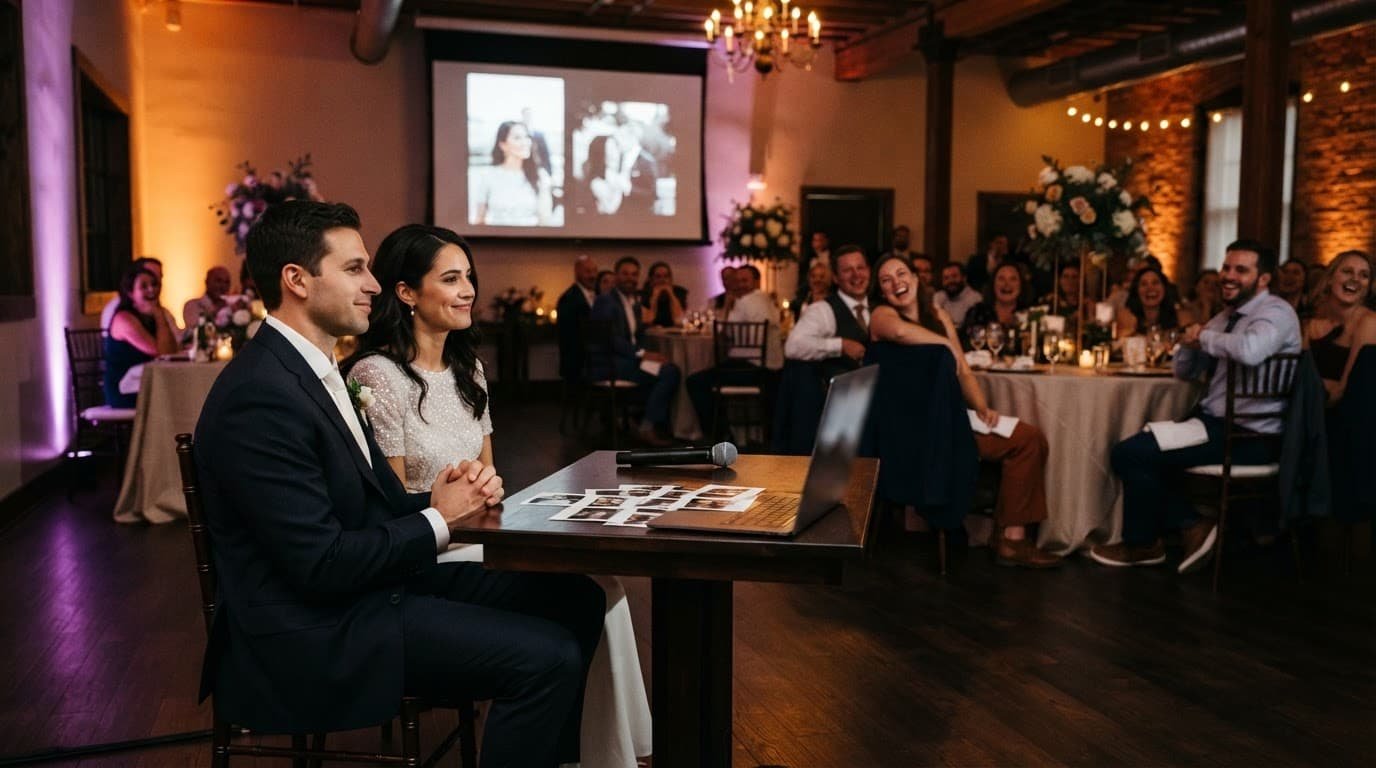
Keep the presentation between three and five minutes. Around 25 to 40 carefully selected images is usually enough to tell a story without losing the room. Use songs that are meaningful to you, but check the lyrics and exact edits before the event.
Send the final video file to your DJ or venue contact well before the wedding. Confirm the screen size, projector connection, audio source, power location, and backup plan. A slideshow should feel polished, not like a last-minute phone connection.
Keep a Small Dance Moment, If You Want One
Skipping tradition doesn’t have to be all or nothing. Some couples want a private-feeling moment together, but not a full-length dance in front of everyone.
Make It a 30- to 60-Second Song Moment
Choose one meaningful part of your first dance song, often a chorus or short instrumental section. Enter the floor and share a brief couples dance, such as a simple sway, seated moment, or easy movement. Then have the DJ invite the wedding party and guests onto the floor before the song ends.
A short version preserves the emotional moment and a meaningful opportunity for wedding photos without stretching the spotlight. It’s also easier to rehearse. You only need to know where the music begins, when the invitation happens, and what song follows.
For dance timing ideas, a professional planner’s traditional-dance coordination guide can show where an abbreviated moment fits into the schedule.
Adapt Parent Dances on Your Terms
Parent dances can be shortened, combined, replaced with a group family song, or skipped entirely. During wedding planning, decide which relatives or chosen family members you want to honor. You may want to dance with a parent, grandparent, sibling, mentor, chosen family member, or nobody at all.
A group invitation works well here. Begin with the people you want to honor. After one verse, invite them and the wedding party onto the floor, then welcome everyone else. It feels warm, keeps everyone involved, and avoids roles that don’t fit your family.
Build Entertainment Around What You Enjoy Together
Your shared interests can become some of the most personal wedding entertainment ideas. Choose an activity guests can understand quickly, even if they don’t share the hobby.
Bring in Trivia, Games, or a Friendly Competition
A short round of wedding games can include questions about your first date, favorite foods, travel memories, or the people who introduced you. Guests can answer from their tables while the DJ reads questions and calls out a few responses.
If gaming is part of your relationship, a quick Mario Kart round or board-game-style challenge can be fun. Keep it visual, brief, and easy to follow. You don’t need a complicated tournament that leaves most guests waiting.
If the activity follows cocktail hour, give it a clear five- to 10-minute window before open dancing. Then use an upbeat song to bring guests toward the floor.
Consider Karaoke, Bandeoke, or a Live Band Feature
Karaoke can be a great fit for a confident, music-loving crowd. Start with one pre-selected singer or a member of the wedding party who’s happy to lead the way. Don’t pressure reluctant guests to perform.
Bandeoke follows the same idea, except a live wedding band plays while guests sing. It can create a big, memorable moment, but it needs careful planning. During wedding planning, confirm song choices, lyric comfort levels, microphone needs, sound checks, and the ending cue.
A live band can also perform one high-energy opener, then hand the room back to the DJ for dancing. Plan that transition in advance so the energy stays consistent and guests know what happens next.
Plan the Reception Cue With Your DJ
Even creative ideas need clear coordination. Good wedding planning starts with one clear decision-maker and a firm time limit, so the reception opening feels relaxed.
A sample wedding reception timeline can help you identify a natural opening after cocktail hour, introductions, dinner, or toasts. Compare it with your own wedding day timeline, then tailor the timing to your priorities.
- Choose one person to give the go-ahead. Your DJ should know whether that cue comes from you, your wedding planner, venue coordinator, or photographer.
- Set a firm time limit. A shoe game may need five minutes. A slideshow may need four. A short dance may only need one song edit.
- Plan the music immediately after. Decide whether the next moment is open dancing, a parent dance, dessert, or a toast. Dead air changes the mood quickly.
- Check the room setup before guests arrive. Sound should reach the front, middle, and back of the room without overpowering conversation. Wireless microphones, speaker placement, lighting, and screen visibility all affect the experience. Create a contingency plan for equipment issues or a delayed cue.
A professional wedding DJ does more than press play. They manage announcements, watch how guests respond, make clean transitions, and adjust the music when the room needs a lift or a breather. They can also follow the contingency plan if timing or equipment changes.
Frequently Asked Questions
What can we do instead of a first dance?
You can invite everyone onto the dance floor, try a reverse anniversary dance, show a slideshow, play the wedding shoe game, or begin with trivia or karaoke. Choose the option that matches your personalities, guests, and reception energy.
Do we have to skip dancing completely?
No. You can share a 30- to 60-second song moment, dance privately, or invite guests onto the floor before the song ends. A shortened version keeps the emotion and photos without creating a long spotlight.
How long should a first dance alternative last?
Most alternatives work best within a clear five- to 10-minute window, while a slideshow should usually stay between three and five minutes. Shorter activities keep guests engaged and make it easier to transition into open dancing.
How do we include guests without making anyone uncomfortable?
Make participation easy, voluntary, and simple to understand. Invite the wedding party or a few willing guests to start, then welcome everyone else without pressuring anyone to dance, sing, or perform.
What should we tell our DJ or wedding planner?
Share the activity, the person giving the go-ahead, the time limit, the music that follows, and any equipment needs. Confirm technical details such as microphones, screens, projectors, song edits, and a backup plan before the wedding day.
A Reception Opening That Fits You
The most successful alternatives are personal, well-timed, and comfortable for the people at the center of the celebration. A slideshow, reverse anniversary dance, game, group invitation, or 60-second song moment can all create a meaningful start.
You don’t need a traditional wedding first dance to create a full dance floor or a memorable reception. You need a clear plan, music that fits your crowd, and an opening that feels like your celebration.