A poor song choice can change the feel of a corporate event in seconds. For event organizers, one unreviewed lyric before an executive speech, an awkward remix at a client reception, or music that overwhelms conversation can make a polished program feel less professional.
A clear event approval workflow gives HR, marketing, event planners, and entertainment partners one shared process. It keeps music appropriate, supports the company image, and gives the DJ clear direction without turning every playlist decision into a long email thread.
Key Takeaways
- A clear event approval workflow helps HR, marketing, planners, and DJs coordinate music choices from one centralized source.
- Define the event atmosphere, approved genres, restricted content, key cues, volume expectations, and a practical do-not-play list before building the final playlist.
- Assign reviewers, deadlines, approval statuses, escalation paths, and one final decision-maker to prevent delays and conflicting playlist versions.
- Review music rights separately from creative fit, especially for venue playback, videos, livestreams, recordings, and social content.
- Give the DJ a final production handoff with the approved playlist, cue points, backup tracks, schedule details, and clear guidance for day-of requests.
Why Corporate Event Music Needs Its Own Approval Process
Music is often treated as a small event detail until it creates a large distraction. Corporate audiences may include employees, executives, clients, vendors, families, and guests with different expectations. The right soundtrack should feel welcoming, intentional, and appropriate for everyone in the room.
A strong approval process keeps the team focused on the event’s purpose, not one person’s favorite songs.
Email Threads Create Too Many Versions
Music decisions can quickly get scattered across emails, text messages, spreadsheets, and verbal conversations. Someone approves a song list, another person adds requests later, and the DJ receives an outdated file on event day.
Use one centralized source for the event brief, approved songs, restricted songs, comments, deadlines, and final sign-off. This creates a clear record of what was approved and when.
HR and Marketing Review Different Risks
HR may focus on workplace appropriateness, inclusion, language, alcohol references, and guest comfort. Marketing and communications teams often review brand tone, client-facing moments, recorded content, and the overall atmosphere.
The event lead should coordinate those viewpoints, then give one person final authority for music decisions. That person can approve, decline, or delay requests when they don’t fit the event plan.

A song request is useful input, not a promise that the song will play.
Start With a Clear Music Policy
A music policy doesn’t have to be long or restrictive. It should give the team and the DJ practical guardrails before anyone begins building a playlist.
Write down three to five words that describe the desired atmosphere. A client dinner may call for “warm, refined, and modern.” A holiday party may be “upbeat, social, and celebratory.” Those words make later choices easier.
Define What Belongs on the Approved List
The music brief should identify the event type, audience, schedule, desired energy, volume expectations, approved genres, and any songs that are important to the company.
It should also include key cues, such as arrival music, award walk-ons, presentation transitions, dinner background music, and the point when the room can shift toward more energetic music. The strongest playlists move with the event instead of staying at one volume and tempo all night.
Build a Practical Do-Not-Play List
A do-not-play list protects the company image and prevents uncomfortable surprises. It may include explicit versions, songs with aggressive or political themes, music that conflicts with workplace standards, and tracks that don’t fit the audience.
Radio edits are helpful, but they aren’t automatic approval. A clean edit may still have themes that feel out of place, or long gaps that interrupt an important moment. Review the exact version that will be played, including remixes and client-provided files.
For additional planning ideas, explore these corporate event music planning tips before sending your final brief.
Build an Event Song Approval Workflow That Works
The best event approval workflow is simple enough for busy stakeholders to use. It should show the current owner, required reviewer, approval status, and next action for each song or music block. Use simple labels such as submitted, under review, changes requested, approved, declined, or escalated.
A basic approval process can follow five stages:
- The event organizers submit one music brief with the timeline, audience notes, preferred genres, requests, and restrictions.
- HR and marketing review the brief for workplace fit, brand standards, and event purpose. The event lead records department sign-offs, remaining comments, and owners for unresolved issues.
- The responsible venue, legal, procurement, licensing, or production contact reviews music-use questions, including requirements from approving agencies where applicable.
- The final approver releases the approved playlist and notes any backup selections.
- The DJ, MC, and event team receive the final version before the production meeting.
Use Deadlines and Automatic Reminders
Every reviewer needs a deadline tied to the event management timeline. A request awaiting marketing approval shouldn’t sit unnoticed until the day before the event.
Unassigned reviews, late comments, and unclear escalation paths can create approval bottlenecks. Workflow software can send automated notifications when a reviewer is assigned, comments are added, or a deadline is missed. Real-time tracking also lets the event lead see whether the playlist is ready, under review, or waiting for a decision.
Keep the Approval History
Recurring company events benefit from a detailed activity log that retains the approver, timestamp, comments, final file, and licensing notes. Save prior music briefs, feedback, final playlists, declined requests, cue sheets, and post-event notes in a shared cloud-based folder.
That history helps future planning teams avoid repeating the same conversations. It also gives the company a useful record if a question comes up about a song choice, licensing responsibility, or approval decision.
Match Music Approval to the Event Timeline
A playlist can be approved and still fail if it isn’t matched to the program. Corporate event music should support the room, the schedule, and the people speaking.
Think through each event moment before finalizing the music. Arrival and networking usually need a comfortable volume. Award presentations need clean cues and quick fades. Dinner needs warmth without competing with conversation. A celebration may call for more energy once formal programming is complete.
Create a Final Production Handoff
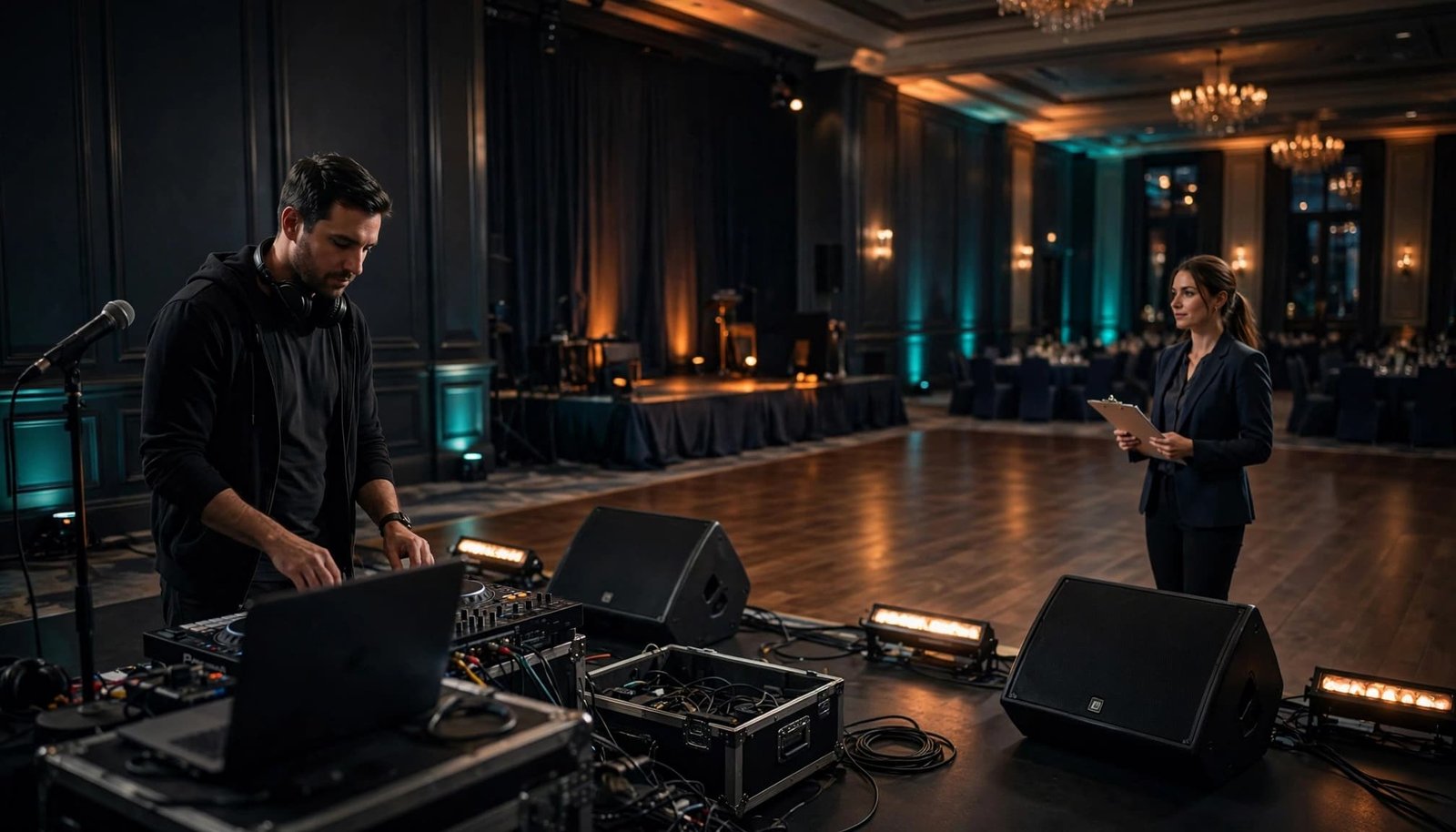
The final music plan should reach the DJ before event day, along with pronunciation notes, award order, microphone needs, cue points, backup tracks, and the contact who can approve last-minute changes.
A professional DJ can adjust pacing when a speaker runs long or a room needs more energy, but the core direction should already be clear. This is where New Hampshire corporate event DJ services can bring music, MC coordination, sound, lighting, and event flow into one organized plan.
Prepare for Day-Of Requests
Guest requests often add energy, especially at holiday parties and employee celebrations. They can also bypass the approval process when no clear rule exists.
Give the DJ permission to treat requests as suggestions, not promises. For client-facing events, a prompt, courteous response to a client or guest can support customer service.
The final music contact should be available for questions involving a sensitive request, a schedule change, or a song outside the approved standards.
Add Music Rights Review Before Final Sign-Off
Creative approval and music rights review are separate parts of the same approval process. A track can fit the brand perfectly, but brand fit doesn’t confirm performance, synchronization, master-use, livestream, or recording permissions.
Map every music use before approving the final plan. Include in-room playback, pre-show videos, award walk-ons, livestreams, recorded replays, social clips, podcasts, and downloadable files.
Ask What the Venue Covers
For music played to guests in a ballroom or meeting room, ask the venue what public-performance coverage it has. Confirm whether that coverage applies to your event format and room. ASCAP’s music licensing FAQs explain that ASCAP licenses public performances of its members’ musical works.
Coverage can vary, and one organization does not automatically cover every catalog or use. BMI’s licensing information also describes how business licenses provide permission to play musical works.
Document who confirmed the coverage and who is responsible for any gaps. If responsibility varies by venue, client, vendor, or jurisdiction, record the escalation contact too. Don’t rely on assumptions or a personal streaming subscription.
Treat Video and Social Content Separately
Music heard in the room may need different permissions when paired with video, placed in a livestream, included in a replay, or used in a branded social clip. A synchronization license relates to pairing a composition with visual media. Permission for a particular released recording may involve separate master-use rights.
The Copyright Alliance overview of music licenses explains the different roles of performing-rights organizations, including ASCAP, BMI, SESAC, and GMR. For high-visibility video, livestream, or recorded content, have qualified legal counsel or a music-rights professional review the plan.
Keep licensing records, invoices, permissions, vendor emails, platform terms, cue sheets, and final media links in the event file.
Choose Workflow Software That Fits Your Team
The right workflow software depends on team size, event complexity, and existing processes. Event organizers should choose a system that fits how their organization already works.
A small internal gathering may only require a shared form and approval board. A large conference, gala, or multi-location event may need an event scheduling system that connects music review with room bookings, production deadlines, and program timing. It may also need stronger event management controls, integrations, and audit records.
Dedicated Event Approval Platforms
Event-focused platforms such as Mazévo, Eproval, and Mitti by SafetyCulture may be useful when the organization also manages room reservations, event permitting, campus approvals, security coordination, or recurring venue requests.
These options can make sense when music approval is one part of a larger event management process. Some teams also need to connect music review with venue permissions, safety review, or event permitting deadlines. Where applicable, the workflow can include venue authorities, municipal reviewers, campus offices, or approving agencies.
Look for digital forms that capture the event date, audience, music brief, restricted content, reviewer assignments, licensing questions, and escalation contacts. The platform should also offer role-based review, document storage, mobile access, and a clear status dashboard.
General Workflow and Project Tools
Tools such as Pipefy, Kissflow, Nintex, Process Street, Wrike, Trello, and Asana can work well when HR and marketing already use them for internal approvals. An existing project management tool may be preferable to purchasing a dedicated event platform.
Collaboration tools can support shared comments, assignments, approvals, and file review across HR, marketing, planners, and production partners. A mobile app is useful when an event lead needs to review a request or approve a change away from a desk. It shouldn’t bypass required documentation or department sign-offs.
Choose a system that makes ownership clear. The goal isn’t more software. It is fewer missed messages, fewer duplicate playlists, and a reliable record of final decisions.
| Feature to Compare | Why It Matters for Music Approval |
|---|---|
| Role-based permissions | HR, marketing, and event leads can review only the items assigned to them. |
| Automated notifications | Stakeholders receive reminders before a delay affects the event timeline. |
| Real-time status tracking | The planner can see which approvals are complete and which need attention. |
| Cloud-based file storage | A cloud-based solution should keep the current brief, approved playlist, cue sheet, licensing records, and version history together with controlled access. |
| Activity logs | Future teams can review past approvals and resolve questions quickly. |
| Online scheduling | Reviewer deadlines, production meetings, and event-day milestones stay connected to the approval timeline. |
| Task automation | The system can assign reviewers, route comments, send reminders, and escalate overdue approvals. |
A system is only effective when everyone knows how to use it. Process automation should support the organization’s actual approval stages instead of creating unnecessary steps. Create reusable workflow templates for the music brief, review checklist, escalation path, final handoff, and post-event record.
Questions HR and Marketing Teams Ask
Can a personal Spotify or Apple Music account be used at a corporate event?
A personal subscription is not the same as a commercial event license. Confirm the platform’s terms, the venue’s coverage, and the DJ’s music-library rights before doors open. Playback, livestreaming, and recorded video can involve different questions.
What should a corporate event music brief include?
Include the event schedule, audience details, desired atmosphere, approved genres, restricted songs, key cue points, volume guidance, requests process, and final approval contact. Add a backup plan for schedule changes, technical issues, or a declined request.
Why keep song approval records after the event?
Saved records help the company plan recurring events with more confidence. They show what worked, what was declined, which requests supported the room, and who confirmed music-use responsibilities.
A Better Approval Process Creates a Better Event
A thoughtful event song approval workflow gives the full team confidence before the first guest arrives. It keeps HR, marketing, planners, venues, and entertainment partners working from the same music plan.
Professional DJ Entertainment Since 1999, DJ Steve Neff Entertainment LLC helps corporate planners coordinate music, sound, lighting, announcements, and event flow with care. When the right people approve the right details early, the soundtrack feels natural, the program stays smooth, and guests can focus on the celebration.