A successful school dance begins with a clear plan long before families reach the gym. For New Hampshire PTOs, an elementary school family dance for elementary-age students needs thoughtful planning. Like any primary school dance, it works best when music, supervision, accessibility, and costs receive the same attention as decorations.
Thoughtful preparation gives volunteers confidence and families a welcoming evening together. Start with school approval, then build an event that children can enjoy at their own pace.
Key Takeaways
- Confirm school approval, facility requirements, costs, staffing, and safety procedures before announcing the dance.
- Make invitations and activities welcoming to all family structures, and clearly explain that an accompanying adult must remain if school policy requires it.
- Choose affordable themes, review the exact music with the school, and coordinate announcements, volume, and transitions with the DJ.
- Assign volunteers specific roles and shifts, and plan accessible routes, safe arrival and departure, and a supervised quiet space.
- Offer simple refreshments and optional activities so children can participate at their own pace, whether they dance, play, watch, or take a break.
Plan your elementary school family dance early
Confirm school requirements before booking
Start pto event planning by meeting with the principal and facilities contact before announcing a date. Confirm room availability, capacity, custodial coverage, insurance requirements, approved entrances, and vendor setup times.
New Hampshire districts have different facility-use procedures. Portsmouth School Board policy, for example, requires facility applications at least 10 working days before an event. That’s a local requirement, not a statewide deadline or a recommended planning window.
Ask how your district classifies a PTO-sponsored dance and whether fees apply. Use New Hampshire school safety resources as background, while following your school’s event procedures.
Build a budget around complete costs
Decide whether the evening is primarily a community celebration or supports school council fundraising. The PTO and school determine how any fundraising is structured.
Include entertainment, custodial fees, required staffing, decorations, refreshments, payment-processing charges, and a reserve for unexpected expenses. Compare complete DJ proposals rather than hourly rates alone; setup, travel, microphones, lighting, and announcements may affect the package.
Calculate expected income using realistic attendance. If charging admission, arrange a discreet assistance option and consider a household price so larger families aren’t penalized.
Invite every family with clear expectations
Use welcoming names and language
Names such as “Family Dance,” “School Spirit Celebration,” or “Winter Family Social” make inclusive school events welcoming to more households than parent-specific pairings.
Invite students with a parent, guardian, caregiver, or another school-approved trusted adult. The event doesn’t need gendered names or pairings, as some sweetheart dances do.
Family structures differ, and the invitation should make attendance feel straightforward. Keep group activities open to everyone rather than organizing couples, selecting dance partners, or awarding parent-child titles.
Tell families what attendance involves
Confirm the school’s safety and admissions expectations, then state whether an accompanying adult must remain throughout the event. For an elementary school family dance, make that expectation unmistakable; don’t let families assume drop-off childcare is available.
Share the start and end times, admission cost, optional purchases, parking instructions, food plans, and accessibility contact. Keep the dress code and costumes simple: comfortable clothes and familiar shoes are enough, and costumes are optional.
Offer online registration and a paper option. Ticket wristbands can be an optional check-in method if school policy permits. Ask about practical support needs without requiring a diagnosis or unnecessary personal information. Explain photo practices and how families can decline photography.
Choose school dance themes that fit your budget
When choosing school dance themes, aim for a coordinated atmosphere without expensive costumes or elaborate installations.
These elementary school dance ideas use simple school dance decorations:
| Theme | Affordable visual approach | Planning consideration |
|---|---|---|
| School Spirit | School colors and student-made school spirit banners | No special clothing needed |
| Under the Sea | Paper fish and blue decorations | Keep hanging materials clear of equipment |
| Glow Party | Fluorescent paper for a glow dance theme and controlled colored lighting | Keep walking routes well lit |
| Candyland theme | Paper candy cutouts and bright colors | Use lightweight decorations |
| Winter Wonderland | Paper snowflakes and reusable white decorations | Plan for weather-related changes |
Choose school dance themes that volunteers can deliver comfortably. Student artwork often adds more personality than purchased decorations, and a costume contest can stay optional and noncompetitive. Use inclusive wording for sweetheart dances so every family feels welcome.
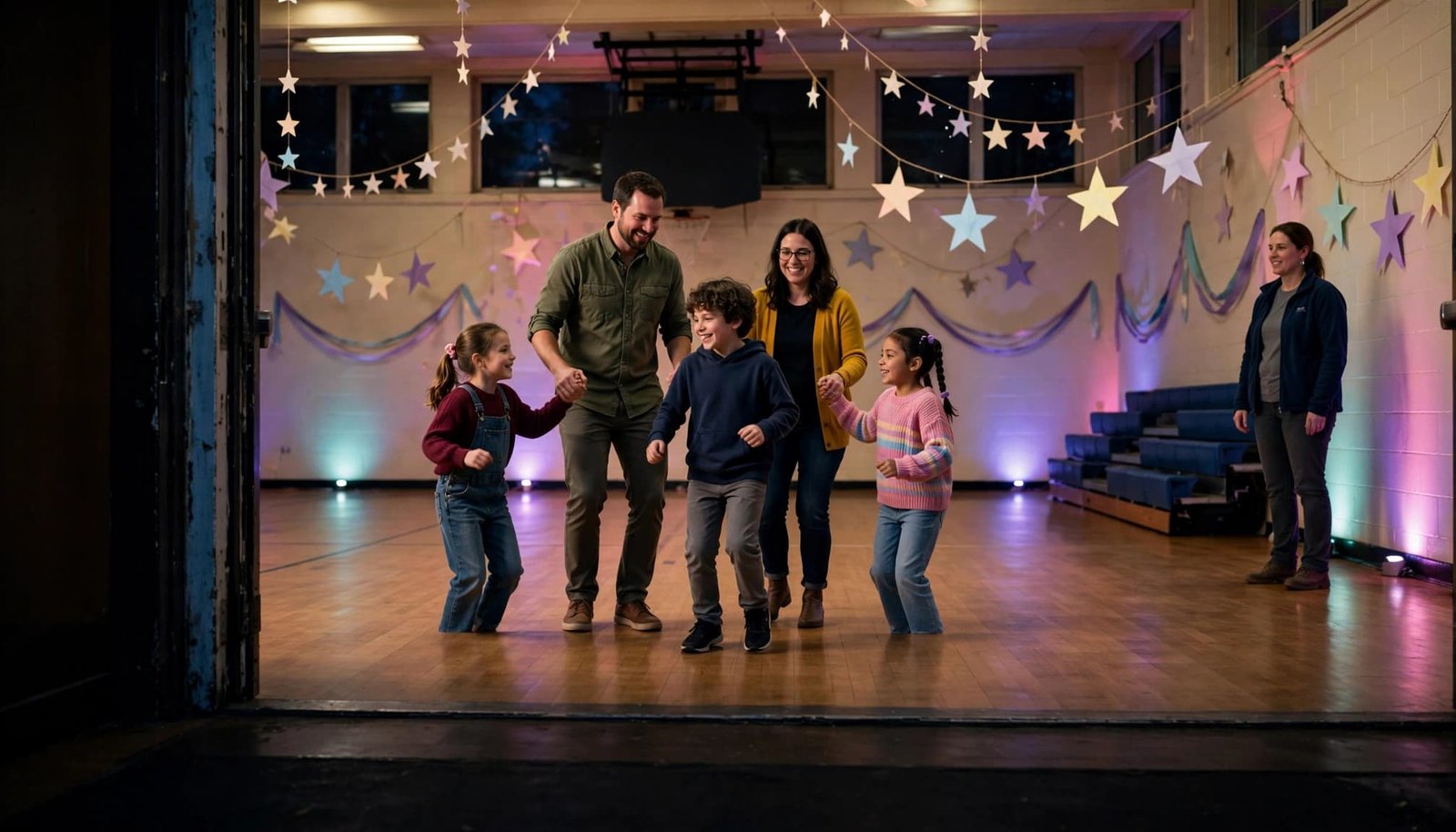
Focus decorations on the entrance and one photo area. Leave the dance floor, exits, and accessible routes open.
For a DIY photo booth, use an approved backdrop and optional photo booth props, such as paper hats. Keep a balloon arch backdrop clear of exits and accessible routes. Volunteers can take pictures on each family’s own phone to avoid collecting images. Place the photo area away from check-in so arriving guests don’t encounter a second line.
Build a clean music playlist with dependable hosting
Review more than the profanity
A clean edit can still contain themes that aren’t appropriate for elementary students. Review the exact recording, remix, or version with the DJ and one designated school contact.
Invite advance requests without promising every song will play. Build a dance music playlist with familiar children’s favorites, upbeat pop, decade throwbacks, adult-friendly classics, and simple group songs. Pharrell Williams’ “Happy,” Justin Timberlake’s “Can’t Stop the Feeling!,” and DJ Casper’s “Cha Cha Slide” are useful starting points for review.
A “clean” label addresses editing; the school still needs to approve the song’s themes and suitability.
Coordinate music, announcements, and transitions
Professional hosting helps the evening maintain a comfortable pace. Agree on the welcome announcement, activity cues, volume limits, closing reminder, and final song before doors open.
DJ Steve Neff Entertainment LLC has provided professional DJ entertainment since 1999. It began in Maine and is now based in Concord. Steve Neff and business partner Jon Turgeon provide professional DJ, MC, sound, lighting, and event entertainment. Their New Hampshire school dance services provide a starting point for discussing your school’s needs.
Ask the district to confirm applicable music permissions and licensing arrangements. ASCAP’s music licensing FAQs explain public-performance licensing; they don’t determine the requirements for your particular dance.
Give parent volunteers clear assignments
Recruit for specific jobs and shifts
A request for “dance volunteers” leaves families guessing about the commitment. Name the job, arrival time, shift length, and contact person.
Useful parent volunteer roles include:
- Check-in helpers welcome families, verify registration, and refer exceptions to the event lead.
- Floor volunteers circulate through assigned areas and keep walking routes open.
- Activity and refreshment helpers manage supplies, queues, spills, and handoffs between shifts.
Assign setup and cleanup separately. A parent helping decorate shouldn’t automatically become responsible for supervising children all evening. Confirm district screening requirements for each proposed duty before assigning volunteers.
Brief everyone before doors open
Give each helper a location, responsibility, backup contact, and working communication method. Identify the administrator or approved event lead who handles conduct, medical concerns, and emergency decisions.
Walk through entrances, restrooms, quiet spaces, first-aid supplies, the AED location, and evacuation arrangements. Review how to report a concern without leaving a zone uncovered.
New Hampshire’s pupil safety and violence prevention law provides context for school bullying policies. Follow the school’s procedures when concerns arise; volunteers shouldn’t improvise disciplinary decisions.
Plan safe arrival, room access, and departure
Family attendance doesn’t replace an event-wide supervision plan. Staffing depends on attendance, student ages, room layout, accessibility needs, exits, and separate activity areas.
Ask facilities staff to approve the room arrangement, electrical access, and cable protection. Keep bags, decorations, tables, and equipment out of walking routes. Test sound in the actual gym before guests arrive.
Control exterior access without blocking emergency exits. Rooms outside the event should remain closed or supervised. Adults monitoring restroom approaches should stay visible while respecting children’s privacy.
Designate a reunion point for a child separated from their accompanying adult. Explain that procedure to check-in volunteers and the event lead.
For winter events, write down who can postpone or cancel, when families will be notified, and how tickets and vendor payments will be handled. Confirm parking access, snow removal, and an indoor waiting area.
End with a clear announcement and an orderly departure. Assigned adults should remain in place until families have left and the school confirms their duties are complete.
Include sensory-friendly spaces and non-dance activities
Elementary school dance ideas should offer several comfortable ways to participate. Children may dance, watch, enjoy a game, or take a break without receiving unwanted attention.
Ask about sound and lighting preferences early, and choose activities that fit different school dance themes. Agree with the DJ on manageable volume, no strobes, and no surprise effects. Keep seating available away from speakers.
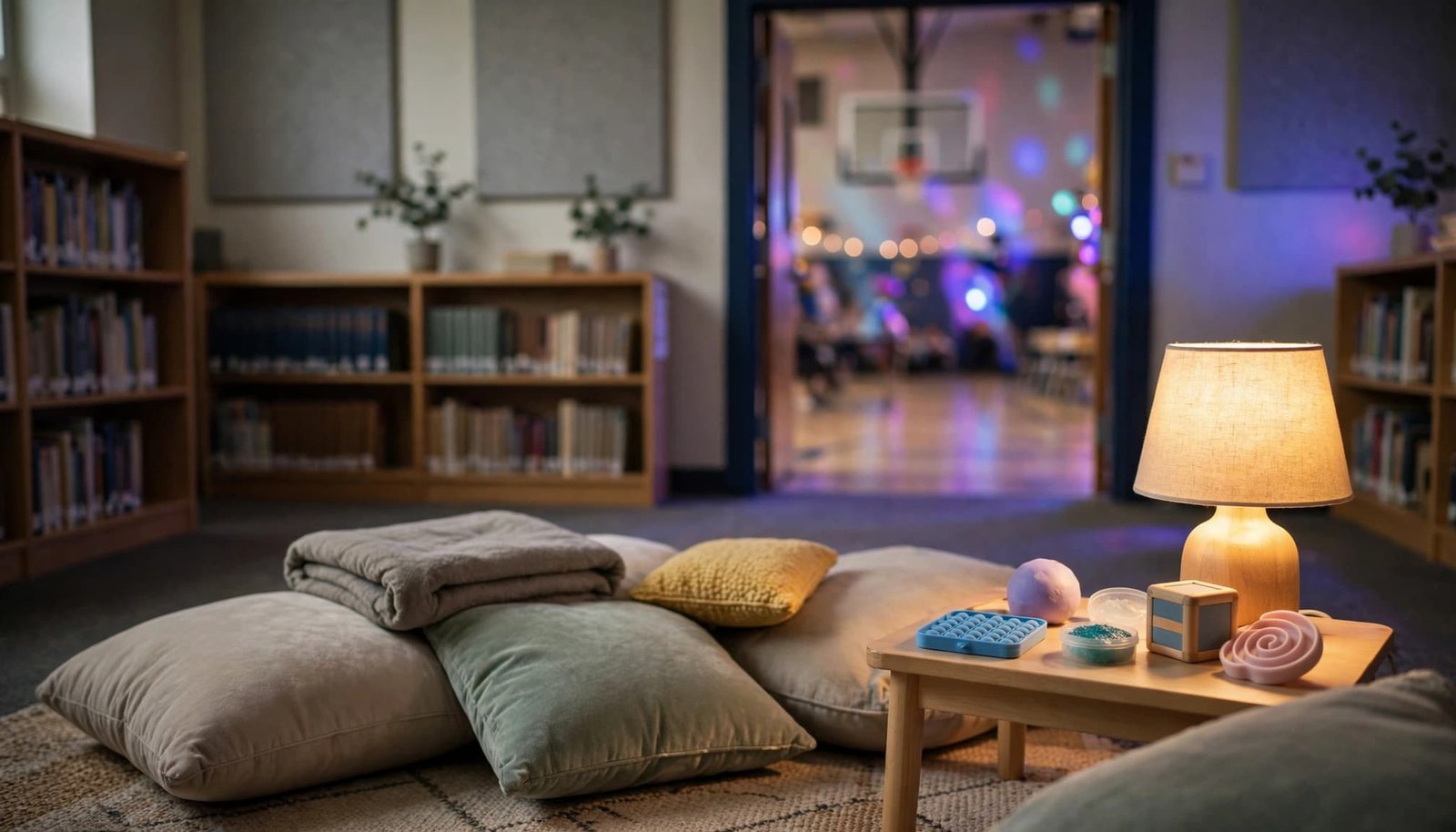
Provide a supervised sensory quiet zone with comfortable seating and access to water. A nearby room may offer more relief than a corner of the same loud gym. Confirm that families can reach it through an accessible route.
Simple coloring, cooperative games, parent child activities, and a photo area give non-dancers meaningful choices. A frozen dance game can work when participation is optional; let everyone rejoin rather than eliminating children.
Avoid public dance judging, forced partner activities, and a costume contest that pressures children to dress up. Children shouldn’t need special clothing, dance experience, or a high tolerance for noise to enjoy the celebration. Ask before providing physical assistance, and allow familiar adults to support breaks.
Keep refreshments and the event schedule manageable
Offer simple, clearly described refreshments
If you offer refreshments, simple concession stand ideas include water and a modest selection of school-approved snacks. These are easier to manage than a full meal. Confirm district food rules and any preparation or serving requirements.
Keep ingredient information available, label refreshments clearly, and discuss allergy accommodations with the school. Don’t promise an “allergy-free” event.
Place food away from the dance floor and equipment. Provide trash containers and assign someone to address spills promptly. Tell families whether refreshments are included or sold separately so optional purchases don’t become an unexpected expense.
Write one shared event timeline
A 90-minute primary school dance is a practical starting point to discuss with your school. Use elementary school dance ideas that balance movement, breaks, and activities, and keep the schedule workable whatever school dance themes you choose.
Use a simple sequence:
- Complete vendor setup, room checks, sound testing, and the volunteer briefing before admission.
- Welcome families with moderate-volume music and a short announcement about activities and support.
- Alternate open dancing with optional group songs while other activity areas remain available.
- Announce the closing time, play the final song, and support an orderly departure.
Give the same timeline to the school contact, volunteer leads, and DJ. Keep one designated contact available near the entertainment area to approve announcements and timing changes.
Afterward, record final costs, attendance, and practical improvements for next year’s committee.
Frequently Asked Questions
When should a PTO start planning a family dance?
Start by meeting with the principal and facilities contact to confirm the date, room availability, capacity, staffing, and district procedures. Application deadlines vary by district, so check local requirements rather than relying on a statewide timeline.
Does a parent or caregiver need to stay during the dance?
The invitation should clearly state the school’s attendance and supervision expectations. For an elementary school family dance, families shouldn’t assume the event provides drop-off childcare.
How can a dance welcome children who don’t want to dance?
Offer options such as coloring, cooperative games, a photo area, seating, and a supervised sensory quiet zone. Keep participation optional and avoid forced partners, public judging, or activities that single children out.
What should the PTO include in its dance budget?
Account for entertainment, custodial fees, required staffing, decorations, refreshments, payment-processing charges, and a reserve for unexpected costs. Compare complete DJ proposals and use realistic attendance estimates when planning admission income.
A well-prepared dance welcomes the whole school
A memorable family dance depends on clear coordination: approved plans, dependable entertainment, defined volunteer roles, and comfortable ways to participate.
Keep school dance themes manageable and share expectations before families arrive. When adults handle the details, children can enjoy the music, movement, and time together. The dance can be a community building experience for the whole school.
Start with your school contact and build one shared plan everyone can follow.