A hotel’s indoor space can look polished on paper and still create problems once guests arrive. Missed cues, unclear speech, poor speaker placement, and limited DJ access can affect the entire evening.
A proper DJ venue walkthrough gives your hotel coordinator, planner, DJ, and internal event team time to review the ballroom, event space, load-in access, power outlets, and acoustics. The goal is simple: coordinated event entertainment, a professional presentation, comfortable guest flow, and a schedule that feels well managed.
Key Takeaways for a Confident Hotel Walkthrough
Bring everyone who can approve decisions, including the hotel event coordinator, corporate planner, DJ or production contact, and in-house AV representative. A floor plan helps, but an in-person visit often reveals details a diagram cannot show.
Clarify what the hotel provides, such as screens, podiums, house speakers, or an in-house technician. Then confirm DJ-provided equipment, including the DJ sound system, wireless microphones, and event lighting.
Use the walkthrough to confirm:
- The DJ booth location, stage position, dance floor, and sightlines for speakers and award recipients. Check sound coverage so every guest can hear clearly.
- Power outlets, cable routes, loading access, elevators, parking, Wi-Fi, and the available setup window.
- Microphone needs for welcomes, presentations, panel discussions, awards, raffles, and closing remarks.
- Room acoustics, guest count, table placement, food service, registration, photo booth placement, and accessible pathways.
- Venue policies for volume, equipment placement, vendor insurance, and teardown.
The best walkthrough ends with clear notes, an approved room layout, and one designated contact for event-day decisions.
Why a DJ Venue Walkthrough Matters for Corporate Events
A hotel ballroom is more than a backdrop. The ceiling height, carpeting, drape, glass, hard floors, and indoor space all affect how guests hear music and announcements.
A carpeted ballroom with soft finishes may absorb sound comfortably. A bright room with glass walls and hard surfaces can make the same volume feel sharp and difficult to manage. The planner and DJ should evaluate sound coverage from the guest tables, stage, podium, and dancing area. The answer isn’t simply turning speakers up or down. It’s planning the right sound coverage for the room, audience, and program.
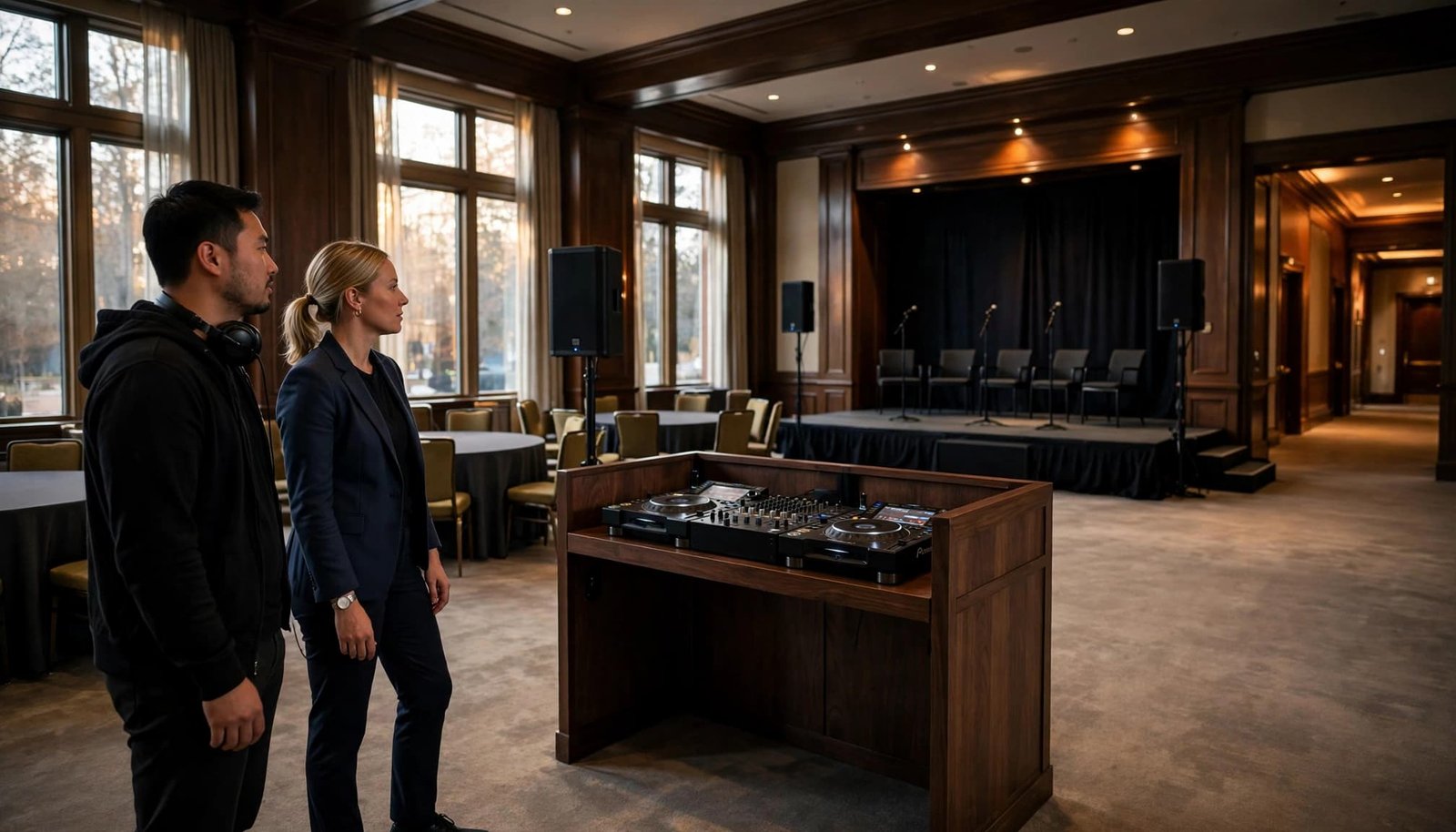
Corporate events also have more formal transitions than a typical party, so event entertainment must support the full program. There may be a welcome reception, a company video, dinner service, executive remarks, award presentations, a raffle, and dancing. Each portion needs the right music level, microphone support, timing, and optional grand entrances for executives or award recipients.
A professional DJ should review the room with the event team, not arrive and hope the plan works. Corporate event DJ services in New Hampshire can include professional sound, microphones, event lighting, background music, and polished MC support based on the needs of the hotel and event schedule. The DJ should coordinate with hotel AV for house speakers, projection audio, screens, and Wi-Fi-dependent presentations. The team should also confirm which equipment the DJ provides directly.
A room that sounds great during an empty afternoon walkthrough can sound completely different once banquet tables, guests, food stations, and conversation fill the space.
First Walkthrough vs. Final Walkthrough
Use the First Visit to Test the Basic Fit
The first visit is often part of venue selection or early planning. Use this venue walkthrough to compare the venue layout with your expected guest count, planned program, dance floor, presentation area, and entertainment setup.
Ask about the hotel event space, where vendors load in, and where the DJ can safely place equipment. Check the distance between the loading area and ballroom. Confirm parking, freight elevator access, load-in access, setup window, and in-house AV availability before the final walkthrough.
This is also the time to discuss multi-room events and how each indoor space will be used. A lobby may host registration or a cocktail hour, a breakout room may need presentation audio, and the ballroom may need dinner music and later dance-floor energy. Plan space for grand entrances at an awards gala or executive arrival.
Use the Final Meeting to Confirm Event-Day Details
Schedule the final walkthrough according to the hotel’s preferred planning timeline, after your run-of-show, guest count, and major program details are taking shape. This meeting should settle decisions rather than reopen the entire event plan.
Bring the current floor plan, cue sheet, presentation needs, announcement wording, vendor contacts, and music guidelines. Confirm who has authority to adjust the schedule if dinner runs late or a speaker is delayed.
The final plan should show exactly where the DJ position, speakers, stage, screens, podium, dance floor, photo booth, and catering stations will be placed.
Map the Hotel Ballroom Before Equipment Arrives
Place the DJ Booth for Visibility and Access
The DJ position should clearly view the stage, dance floor, and primary speaking area. Those sightlines support smooth music fades, executive introductions, walk-up cues, and awards segments.
Review sound coverage with the hotel team, including speaker placement, room acoustics, and unobstructed sightlines. Keep the position away from busy bars, server stations, and entrances. These areas create traffic and increase the risk of equipment being bumped.
Confirm the approved equipment package, power outlets, and dedicated circuits before arrival. Identify safe cable paths and confirm which speakers, receivers, and lighting fixtures the DJ provides. The hotel should clarify what it supplies, including podiums, screens, installed audio, and other AV infrastructure.
If the DJ is supplying microphones for a podium or stage, discuss where the receivers will sit and how handoffs will work. A polished event doesn’t leave a speaker searching for a microphone as the room waits.
Protect Guest Flow and Accessible Routes
Look at the room through a guest’s eyes. Can someone enter, register, find their table, reach the buffet, and move toward the dance floor without crossing equipment or cables? Check the entire indoor space, including entrances, service areas, and any photo area.
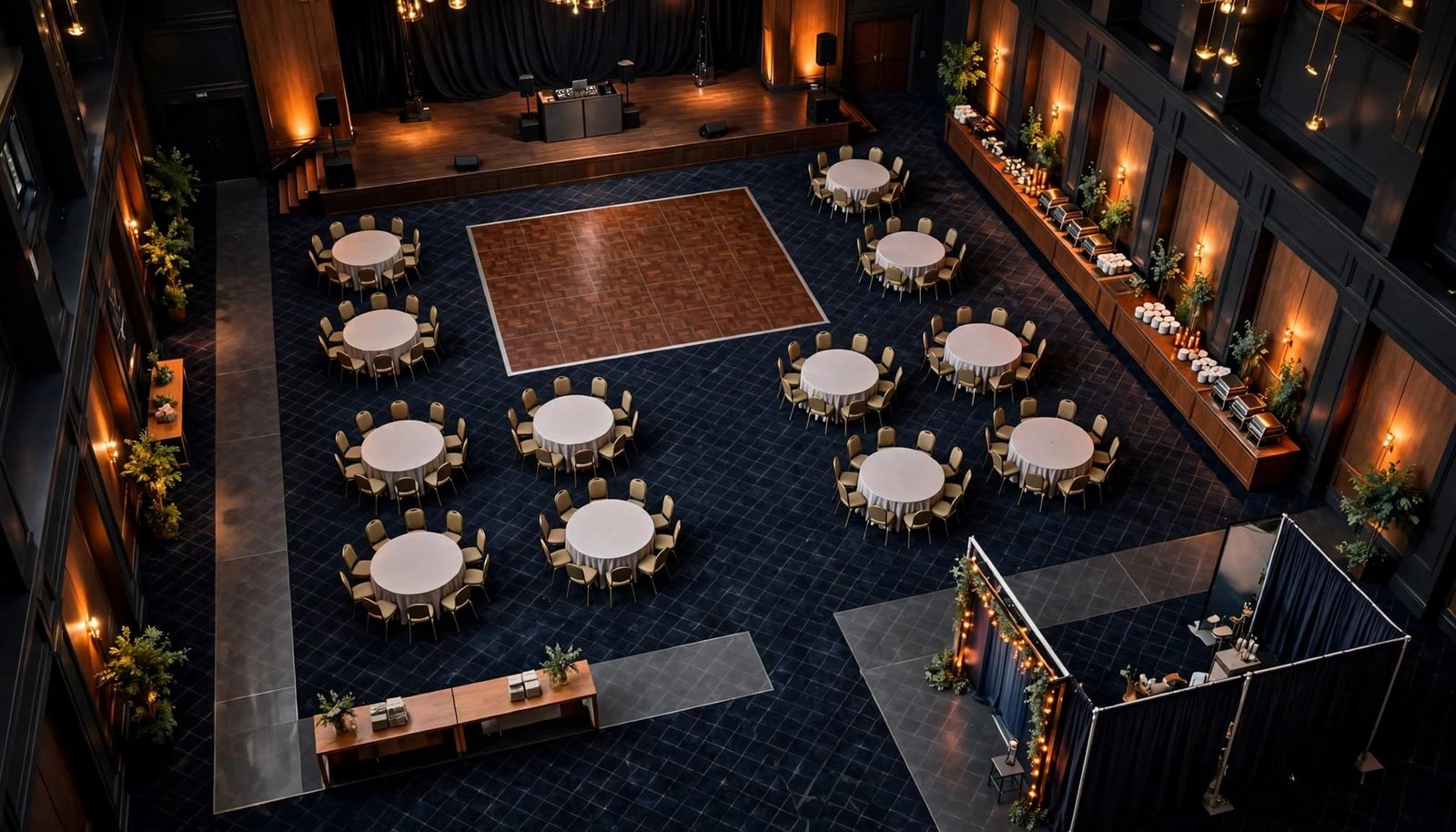
Keep speaker stands and lighting fixtures away from doorways, emergency exits, stairs, and primary walkways. Confirm door widths and keep accessible pathways clear. If a cable crosses an approved guest path, the hotel must approve the protection method. Tape alone may not be appropriate in a busy ballroom.
Also confirm the distance from parking to the load-in area and whether elevators, ramps, or loading doors limit equipment access. Record these details in the room map, then get venue approval for all equipment placement before the event.
The ADA temporary-event planning guide is a useful reference when reviewing temporary layouts, seating, service areas, and accessible travel paths. Accessibility should be part of the approved layout from the start, not a last-minute adjustment.
Plan Sound, Power, and Lighting Around the Room
Match Sound Coverage to the Program
Guest count matters, but it is not the only factor. A dinner with award presentations needs clear speech at every table. A holiday party may need fuller music near the dancing area while keeping nearby conversation comfortable.
Ask where speakers can be placed for balanced sound coverage. Good speaker distribution keeps nearby tables comfortable while helping the back of the room hear announcements. Larger spaces may need separate sound zones when dining and dancing happen in different areas.
Document the DJ’s sound setup separately from the hotel’s house AV. Confirm which speakers, microphones, and playback connections each provider supplies. Discuss every wireless microphone need early, including handheld, lapel, and headset units.
For video playback, confirm whether the handoff uses Wi-Fi, a cable, or presentation audio from the hotel’s system. Identify who connects the DJ’s audio to the room’s projection or AV system.
Check Power and Lighting Restrictions
Identify approved power outlets, dedicated circuits if available, cable length needs, and the person who authorizes power use. Older hotels and function rooms may have limited access, so don’t assume a nearby outlet can support production equipment.
Event lighting should support the program’s purpose. A thoughtful lighting design can use warm uplighting for an awards dinner or company celebration, then shift to controlled dance lighting later. This keeps the room refined, photo-ready, and comfortable during presentations.
Ask about restrictions on uplighting, fixture placement, haze, fog, wall mounting, or clamping. Confirm hotel rules for temporary structures and review safety expectations with the NH Division of Fire Safety, especially when staging or additional production is part of the event.
Build the Run-of-Show With the Hotel Team
Confirm Load-In, Setup, and Sound Check
The event timeline should include more than guest arrival and closing remarks. Add vendor access, unloading, setup, system testing, doors opening, and teardown.
Confirm parking, the approved load-in entrance, cart access, freight elevators, and available power outlets. Check when the ballroom will be clear for setup, and ask whether presentations depend on Wi-Fi. Hotel banquet teams may need the room for an earlier function or may be completing final table settings.
A reasonable sound check before guests arrive gives the DJ time to test the wireless microphone, music playback, speakers, and lighting. Check sound coverage for speech intelligibility at the back tables, podium, stage, and dance area. Hotel AV staff should handle or approve house screens, projectors, and house audio connections, while the DJ tests DJ-provided equipment. Include AV coordination and a check of the hotel sound system in the production plan.
Assign Cue Responsibility Before the Event Starts
Every important moment should have an owner. Identify who cues the DJ for dinner, grand entrances, or a gala opening, who confirms an award recipient is ready, and who advances the presentation.
Share pronunciation notes for executives, award winners, sponsors, and company names. Confirm music for arrivals, walk-ups, award transitions, dinner, and dancing. Corporate events often require clean edits and clear do-not-play guidelines, especially when clients, leadership, and mixed-age employees are present.
When planning those details, booking a New Hampshire event DJ should include the schedule, music preferences, sound needs, event lighting options, and special announcements.
Ask About Hotel Rules Before Signing Off
Confirm Volume, Insurance, and Vendor Policies
Hotels may set their own volume expectations, vendor arrival requirements, insurance documentation, and equipment rules. Get these details in writing and share them with the DJ before event day.
Noise requirements can also vary by municipality and location. For example, Londonderry’s noise regulations show why planners should confirm local rules and noise ordinances rather than assume one standard applies across New Hampshire.
Ask whether the hotel requires a certificate of insurance, names an additional insured party, limits outdoor amplified sound, or restricts music after a certain time. Clarify which policies apply to hotel-provided AV and DJ-provided equipment, who approves wireless microphones and power use, and whether Wi-Fi, house sound, screens, or event lighting require an in-house AV technician.
Document the Final Plan
Before leaving, send a written recap to the core planning team. Include the DJ setup location, microphone plan, speaker placement, sound coverage, power source, load-in instructions, approved cable routes, event lighting plan, program cues, and event-day contacts.
The hotel, planner, caterer, DJ, and production partners should work from the same version of the floor plan. Clear vendor coordination helps prevent avoidable questions during setup.
Frequently Asked Questions
Where should the DJ booth and speakers go in a hotel ballroom?
Place the DJ booth where there’s a clear view of the stage, guest area, and primary speaking area. Speakers should provide even sound coverage without blocking guest paths, exits, or service routes. The exact placement depends on the room shape, table layout, ceiling height, and program needs.
Who creates the final corporate event floor plan?
The hotel usually provides the room diagram and banquet layout. The corporate planner, client, caterer, DJ, AV team, photo booth provider, and other vendors should review the floor plan together. Each partner needs to approve the areas that affect food service, sound, lighting, staging, and guest access.
What should a DJ know before the final event review?
The DJ should have the expected guest count, current schedule, setup window, room assignment, microphone needs, presentation details, music standards, and event-day contact list. The team should clarify which AV equipment the hotel provides and which equipment the DJ supplies, including the sound system, wireless microphones, lighting, and presentation audio. They should also confirm Wi-Fi requirements, load-in access, power outlets, parking, accessibility, and venue policies. A clear plan helps the DJ focus on smooth hosting, clear sound, and the right energy for each part of the program.
A Better Event Starts With a Better Room Plan
A thoughtful DJ venue walkthrough turns a hotel ballroom into a practical event plan, not just a beautiful room. It clarifies the layout, dependable audio, accessible guest flow, coordinated AV, and a workable setup window.
Since 1999, DJ Steve Neff Entertainment LLC has helped New Hampshire companies plan event entertainment, music, sound, lighting, and event flow around the room and occasion. The strongest corporate events feel organized because the important details were handled before the first guest arrived.