A wedding DJ can have the music planned, the sound system packed, and the timeline ready, then face a delayed setup because the wedding venue is still waiting on insurance paperwork. This paperwork may come through a short-term or annual DJ event insurance policy, depending on the booking.
The important detail is that New Hampshire does not impose one liability insurance rule on every DJ. Venue contracts, permits, client requirements, business structure, and risks such as a guest suffering bodily injury during setup determine what coverage and documents are needed.
Key Takeaways
- New Hampshire wedding DJ insurance requirements usually come from the venue contract or event permit, not one statewide rule for every DJ.
- Many venues request general liability limits of $1 million per occurrence and $2 million aggregate, but the contract controls. DJ event insurance may suit a one-time booking, with coverage purchased per event.
- A Certificate of Insurance, often called a COI, should show the correct venue name, policy dates, limits, and required endorsements.
- General liability protects against covered third-party claims. It usually doesn’t protect a DJ’s own speakers, lighting, laptop, or controller, which may require commercial property insurance.
- Match business insurance to your business structure and services. Start the insurance conversation before signing the venue agreement, not during wedding-week setup planning.
Is Wedding DJ Insurance Required in New Hampshire?
State Rules and Venue Contracts Are Different
A solo DJ doesn’t automatically need liability insurance under a universal New Hampshire law. The New Hampshire Insurance Department’s commercial insurance guidance distinguishes state requirements from private contract terms. A wedding venue can still require DJ event insurance before allowing access, load-in, or final approval.
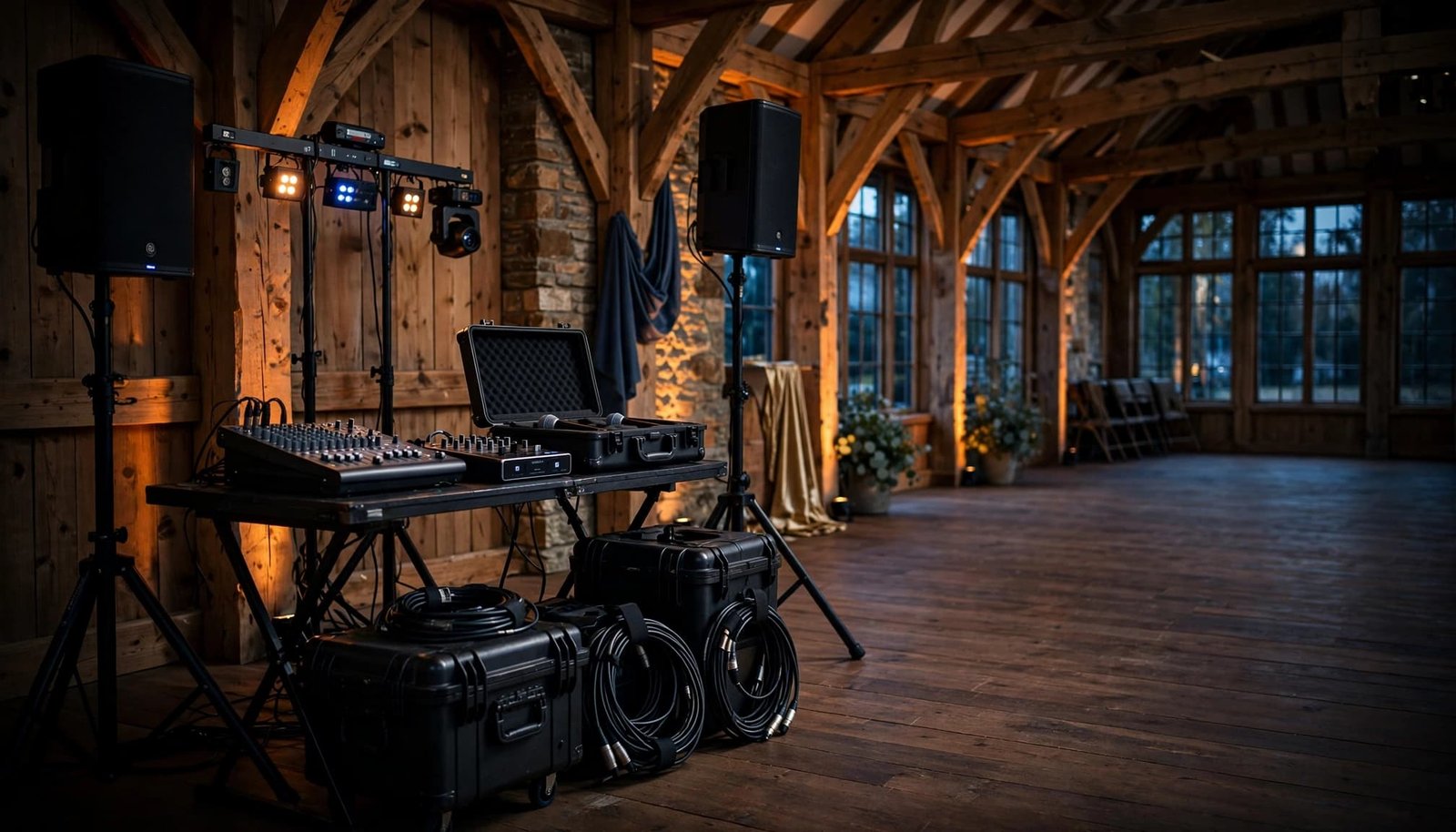
That requirement is reasonable. A DJ setup includes speakers, lighting stands, power connections, extension cords, wireless microphones, and cables near guests and staff. If someone trips over a cable or a speaker damages a polished floor, the venue wants appropriate coverage for potential bodily injury and property damage.
Ask for the venue’s insurance requirements as soon as the date is being discussed. Don’t assume a prior venue’s requirements will match the next one.
Municipal and Public Locations May Ask for More
A wedding on municipal property, at a public park, or at a venue using a special-event permit can involve more detailed insurance language. Public liability terminology in a permit doesn’t automatically create a statewide requirement for every DJ. The permit holder may need an event policy well before the event date, and the deadline may be earlier than the DJ’s contract deadline.
Public and corporate properties may also request higher limits, auto coverage, or that the venue and property owner be listed as additional insureds. Those requests should go directly to the insurance provider with the exact legal names from the contract.
A venue’s insurance request is not a formality. One missing endorsement or incorrect legal name can keep a vendor from setting up on time.
Coverage a Venue May Ask a DJ For
General Liability for Guests and Property
General liability insurance is the foundation of most venue requests. DJ event insurance often starts with this coverage. It may respond to covered third-party claims involving bodily injury or property damage caused by business operations. Depending on the policy, it may also help pay legal fees for a covered claim.
For example, a guest could trip over a speaker cable, or a lighting stand could scratch a venue wall during setup. The facts of the loss, policy exclusions, deductibles, and policy terms determine whether a claim is covered. Liability coverage isn’t a promise that every incident will be paid.
Many wedding venues ask for $1 million per occurrence and $2 million aggregate. Those coverage limits are common for professional vendors, but they aren’t a universal rule for every New Hampshire wedding booking. A short-term event policy may satisfy the venue contract, but confirm its terms before signing the agreement.
Some venues or policies use public liability to describe similar third-party protection. Professional liability addresses different risks, such as certain errors or omissions, and isn’t a substitute for this coverage.
Coverage for Gear, Staff, and Vehicles
General liability usually doesn’t cover a DJ’s own gear when it’s stolen, dropped, damaged in transit, or affected by weather. Commercial property insurance can help protect DJ equipment, including speakers, mixers, controllers, wireless microphones, laptops, and lighting. Review whether inland marine coverage is more appropriate for gear moved between locations.
New Hampshire’s Workers’ Compensation Insurance FAQs explain that workers compensation insurance is required for employers with full-time or part-time employees. A DJ using employees shouldn’t treat this as optional. Verify employee classification and any applicable statutory exceptions before relying on a different arrangement for assistants, independent contractors, or subcontractors.
Commercial auto insurance may be appropriate for vehicles used to transport equipment. Business vehicle use may instead involve commercial auto, hired-auto, or non-owned-auto liability coverage. Alcohol-related language should also be reviewed when the DJ is serving, selling, or contractually responsible for alcohol.
Certificate of Insurance: Getting Documentation Right
What a COI Does, and Does Not Do
A certificate of insurance summarizes policy information. It usually lists the named insured, insurer, policy number, coverage dates, and limits. For a specific booking, it documents the DJ event insurance a venue may require before approving arrival and setup.
Send the venue’s request to the insurer exactly as written. Use the exact legal name and address supplied by the venue contract. Include the wedding date and all requested wording. Confirm the effective dates cover load-in, the event itself, and load-out.
The certificate alone does not change coverage. The event policy and attached endorsements control coverage. They determine whether a guest’s bodily injury claim triggers covered defense obligations, including legal fees, subject to the policy terms.
Additional Insured Requests Need an Endorsement
A venue, property owner, or event planner may ask to be listed as one of the additional insureds. This status may extend limited protection to that party for claims tied to the DJ’s work, subject to the endorsement and policy language.
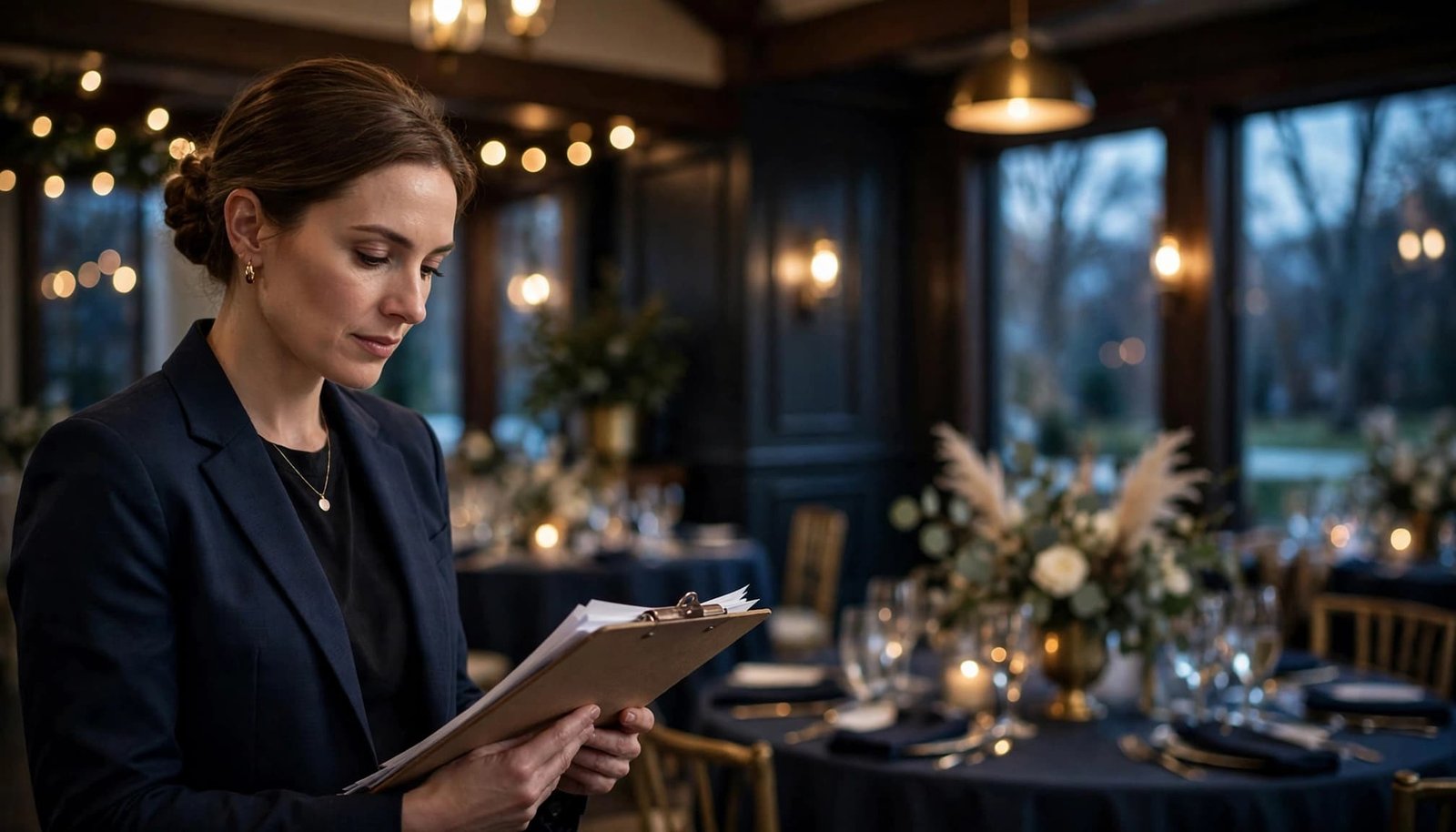
Don’t assume a certificate-holder listing makes a venue an additional insured. The listing identifies where the document was sent, while an additional-insured endorsement changes the policy. Ask the insurer for the required endorsement and confirm the wording before submitting the COI.
A COI also doesn’t insure the DJ equipment itself. Separate property coverage may be needed for that gear. Ask the insurer to review any Primary and Noncontributory or Waiver of Subrogation wording before submission.
Review indemnification language carefully before signing. Have unclear contract terms reviewed by a qualified professional, especially when they assign responsibility for risks the policy may not cover.
Short-Term or Annual Coverage?
Short-Term DJ Event Insurance for Occasional Bookings
Short term insurance can make sense for a DJ handling a single wedding, an occasional private event, or a new business testing its booking volume. Coverage can be arranged per event, depending on the provider and policy terms. Insurance Canopy advertises DJ event insurance, with additional insureds available for a fee. Availability and fees depend on the policy and venue wording.
A short-term policy still needs close review. Confirm the coverage hours, whether setup and breakdown are included, the liability limits, venue wording, and exclusions involving outdoor work or rented equipment. The event policy must satisfy the venue’s contract.
One-day coverage advertised by other providers may also be available. For example, ACT lists one-day event insurance, although every policy should be reviewed for DJ-related operations and venue requirements.
Annual Policies Fit a Regular Wedding Calendar
An annual policy often makes sense for full-time wedding professionals. It can provide ongoing protection for a mobile DJ working across multiple venues and prevent a last-minute purchase for every booking.
Year-round coverage isn’t automatically better. Equipment protection may be separate from liability coverage, and commercial property insurance may not cover every item used at events. Review whether owned, rented, transported, and stored equipment is protected.
Providers such as Next Insurance and Hiscox may offer business insurance options. A business owner’s policy may or may not fit a mobile DJ’s operations, especially when equipment travels between venues.
Next Insurance and Hiscox differ in policy forms, exclusions, limits, and eligibility. Hiscox may structure equipment protection differently, so review whether the policy covers the gear and services provided. The right choice meets the contract and fits the number of events booked each year.
Equipment and Outdoor Wedding Risks
Count the Value of the Full Rig
A DJ event insurance review should start with the full value of the working setup. General liability protects against covered third-party claims, but it doesn’t automatically cover loss of the DJ’s own equipment.
Calculate the replacement value of all your gear and equipment, including controllers, mixers, subs, powered speakers, stands, lighting, wireless microphones, laptops, cases, cables, backup music devices, and power protection. This complete list should include all DJ equipment, not only the most expensive pair of speakers.
Commercial property insurance or inland-marine-style coverage may apply to owned gear while it’s stored, transported, loaded in, and used. Business insurance terms vary, so the policy’s covered causes of loss, territory, deductibles, per-item limits, rented-equipment treatment, and exclusions control.
Then ask direct questions:
- Does equipment coverage apply while gear is stored, transported, loaded in, and in use?
- Are theft, accidental damage, water damage, and weather-related losses included or excluded?
- Does the policy cover rented or borrowed equipment?
- What deductible applies if a loss occurs?
- Does the policy have a per-item limit that’s lower than the value of a laptop or speaker?
A $10,000 policy limit doesn’t help much if a high-end rig is worth far more than that.
Outdoor and Destination Weddings Need a Wider Review
Outdoor weddings create extra planning needs. A barn lawn, lakeside property, tented reception, mountain venue, or private home may have uneven ground, long cable runs, limited power, moisture, wind, and a difficult load-in route.
Confirm that the performance area is dry, level, and covered when needed. Check that it’s close enough to safe power access. Cable covers, secure speaker placement, and clear emergency routes protect guests while helping the event feel organized.
For a destination wedding outside New Hampshire, the destination venue’s contract and any event policy requirements control. Ask about policy territory, required limits, added insureds, local permit rules, and the date the documentation is due.
A Better Booking Workflow
Strong insurance planning begins before the entertainment agreement is finalized. A professional DJ should discuss DJ event insurance alongside ceremony audio, reception timing, lighting, music planning, and load-in access.
Use this process for every venue booking:
- Request the venue’s insurance requirements in writing before signing the entertainment agreement.
- Compare the contract’s requested limits with the current general liability insurance policy, limits, and endorsements.
- Send the exact venue legal name and requested wording to the insurer early. Confirm whether single-event coverage purchased per event or an annual program fits the booking schedule. Verify the wording directly with the issuing carrier, whether the policy is from Hiscox or another insurer.
- Review the COI when it arrives, including dates, limits, and certificate holder details. Confirm the dates cover load-in and load-out.
- Review endorsements for additional insureds, then confirm the policy’s operations and transported DJ equipment match the application.
- Keep the final COI, endorsements, venue contact, event contract, and policy records with your business insurance documents.
- Bring digital and printed copies to the event as proof of insurance in case the coordinator asks for them.
Couples also benefit from working with a vendor who plans these details early. New Hampshire wedding DJ services should include dependable coordination along with professional music, sound, lighting, and MC support.
Frequently Asked Questions
Does every New Hampshire wedding DJ need $1 million in liability insurance?
No. A $1 million per-occurrence limit is common in venue contracts, but it isn’t a statewide legal mandate. DJ event insurance may offer that limit for one booking, but general liability insurance is one form of liability insurance. The venue’s contract controls whether documentation from an event policy is acceptable, so compare its requirements with the policy before accepting the booking.
What happens if a guest trips over a DJ cable?
The guest may make a bodily injury claim against the DJ, venue, or other involved parties. The incident could also involve property damage if equipment or venue property is damaged. Covered defense costs may include legal fees, but policy terms don’t guarantee payment of every expense. Proper cable placement, covers, open walkways, and careful setup reduce the risk.
Can a DJ add a wedding venue as an additional insured?
Often, yes. The venue must provide its correct legal name and required wording. The DJ’s insurer can then issue the endorsement if the policy allows it. A certificate holder listing alone isn’t the same as an additional insured endorsement.
How should a DJ compare insurance providers and documentation?
A DJ might review options from Next Insurance and Hiscox, but a brand name doesn’t determine whether coverage meets the venue’s requirements. Compare policy forms, exclusions, coverage limits, and venue endorsement requirements before purchasing or requesting a certificate.
A Clear Path to Venue Approval
The right DJ event insurance plan matches the venue contract, event location, business structure, services performed, and actual gear and equipment. Venue and insurer requirements vary, so the cheapest policy or longest list of add-ons may not be the right fit.
Professional DJ experience dating back to 1999 brings valuable preparation to weddings, but reliable paperwork matters too. A thoughtful business insurance plan, clear communication, accurate documents, and careful setup planning help keep the celebration on track.