A good DJ booth setup usually places the wedding dj booth beside the dance floor, facing the reception, with clear views of guests and the coordinator. Nearby power access, safe cable routes, and enough room for speakers keep service areas clear.
A convenient corner doesn’t always support comfortable sound or smooth announcements. Start with the finished floor plan, including occupied tables, décor, and food stations, before choosing the entertainment location.
Key Takeaways
- Keep the DJ close to the dancing area with clear coordinator sightlines.
- Reserve space for the complete setup, not just the table.
- Plan power, speaker coverage, and guest movement together.
Choose a Location That Supports the Reception
Keep the Dance Floor in View
Position the booth along the edge of the dance floor so the DJ can follow guest reactions and coordinate entrances, toasts, and special dances. Keep the workstation clear of pillars, tall centerpieces, and partitions.
The DJ should also be able to see the planner or designated coordinator. That visual connection supports timely announcements without requiring anyone to cross a crowded room.
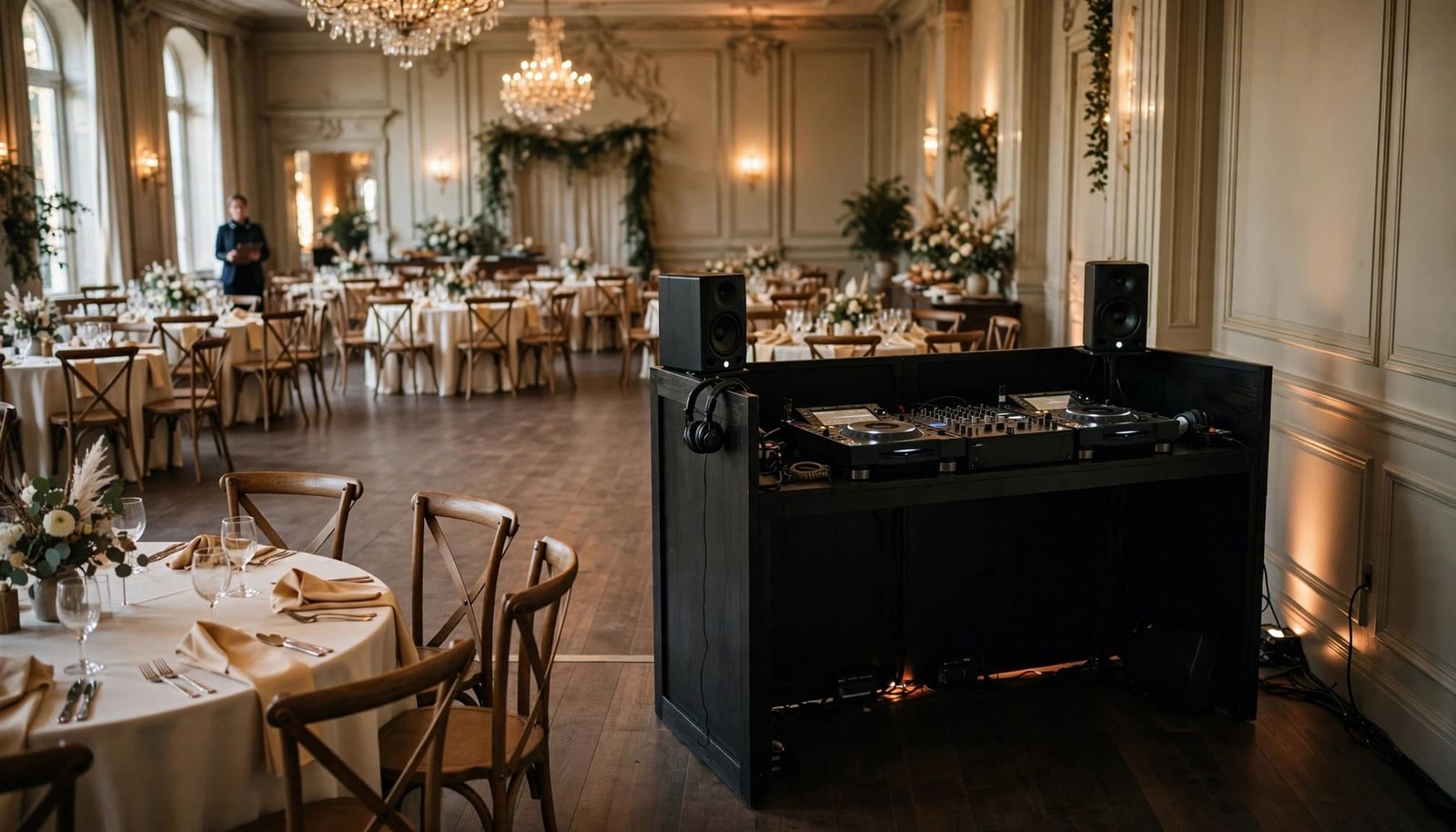
Protect Guest Movement and Comfortable Seating
Fit the dj booth wedding setup into the floor plan without blocking traffic flow near entrances, buffet queues, bar service, exits, or accessible routes. Check traffic flow with chairs pulled out, not just against empty-room measurements.
Point the main speakers toward the dance floor, not directly at nearby dinner tables. Reserve quieter seating away from speakers and bright effects. Our guidance on wedding reception sound zones explains how dinner conversation and dancing can share one reception.
Match the Booth Footprint to the Room
These widths are starting points, not requirements tied to attendance. The full operating footprint of a wedding dj booth depends on its equipment and room layout, not guest count alone.
| Guest Count | Suggested Booth Width |
|---|---|
| Under 50 | 4 feet |
| 50 to 200 | 6 feet |
| Over 200 | 8 feet |
Measure the booth, operating space behind it, speaker stands, lighting, and cable routes. Our wedding venue DJ setup checklist helps organize those details.
For tight-access venues, portable DJ booths and portable DJ tables with modular parts can make transport easier. Choose pieces that stay stable, route cables neatly, weigh no more than 40 pounds, or measure no more than 36 inches wide. A portable table that assembles in under five minutes can simplify setup.
When comparing dj booth ideas, weigh a simple facade or table against a more visually prominent option. Choose dj booth design ideas and a modern dj booth design that suit the room without blocking views. An LED DJ booth may need extra space for lighting and structure, so keep LED DJ booths clear of guest routes and key views. Include a dj booth screen or led screen dj booth in your measurements.
Plan Power and Equipment Around the Location
Locate Outlets Before Finalizing Placement
Identify approved outlets first, then choose a nearby booth position with reliable power access that preserves sightlines and guest routes. A convenient socket shouldn’t force the DJ behind a wall.
Use grounded outlets and calculate demand from electrical input ratings, not speaker peak-output claims. Sound, lighting, and catering equipment may need separate circuits. A qualified electrical provider should handle temporary distribution; NFPA’s National Electrical Code overview provides the broader safety framework.
Route cables along approved room edges. Use suitable cable protectors wherever crossings are unavoidable; tape alone isn’t appropriate protection for every walkway.
Keep the Workstation Organized
Place the mixer centrally, with playback devices on either side. Separate-deck options include Pioneer CDJ-3000s or Technics SL-1200s; software options include DJ software such as Serato, Rekordbox, and Traktor. A controller-based system can combine several functions.
Place monitor speakers beside the booth and reception speakers for even room coverage; headphones and microphones complete the sound plan. Useful accessories include a laptop stand, surge-protected power strips, Velcro ties, cable sleeves, and gaffer tape.
A modern DJ booth design can include displays or lighting, but keep both within room sightlines and plan for safe power needs. A DJ booth screen or DJ booth LED screen also needs clear visibility and enough space.
Risers, monitor stands, and tiered shelving add usable space without widening the booth. Keep them stable and below important sightlines.
Assemble and Test Before Guests Arrive
If you’re wondering how to build a DJ booth, this sequence covers assembly and connections for an event workstation. It doesn’t cover electrical modifications.
With equipment switched off, follow this setup sequence:
- Assemble and stabilize the booth structure.
- Route power cables.
- Position the mixer centrally.
- Add playback devices.
- Connect audio cables.
- Add computers, stands, and accessories.
Use cable management and color-code audio, power, and data cables for easier troubleshooting. If you hear a ground loop hum, an appropriate transformer-isolated direct box can help. Never remove an electrical safety ground.
Acoustic treatment, such as foam behind monitors, can reduce nearby reflections, but it won’t solve ballroom-wide echoes. Hard walls and high ceilings require thoughtful speaker positioning.
Test announcements at the farthest tables and music near the dance floor before guests arrive.
Understand Equipment Costs Without Confusing Them With DJ Fees
These March 2024 figures are historical equipment-purchase estimates, not DJ service prices or rental quotes from event rental companies.
| Setup Category | Approximate Equipment Budget |
|---|---|
| Beginner | $1,500 to $3,000 |
| Intermediate | $5,000 to $8,000 |
| Professional | $10,000 to $25,000+ |
| Custom LED booth | $5,000 to $10,000 |
Couples hiring entertainment don’t need to purchase this equipment. DJ service pricing covers planning, performance, transport, setup, and coordination. Compare event rental companies by checking whether packages include delivery and setup, and confirm the equipment footprint. If you’re considering TOP Dance, verify its current offerings and inclusions directly. An illuminated facade doesn’t compensate for poor placement.
Frequently Asked Questions About DJ Booth Placement
Does the DJ Need a Stage?
A stage is optional. Floor-level placement often provides straightforward guest interaction and equipment access. If using a platform, include its access route, usable depth, and speaker positions in the layout. Keep the booth clear of views toward the sweetheart table.
What Changes for a Tent Reception?
Use a stable, level position with protection against rain and wet ground. Keep the booth away from tent openings exposed to blowing weather. Power distribution, cable protection, and speaker stability need their own plan; a small guest count doesn’t remove these requirements.
Give the Entertainment a Place to Work Well
The right booth location supports clear announcements, comfortable conversation, and an inviting dance floor. Plan the complete footprint before tables and décor make the location difficult to change.
Share one final layout with your DJ, venue, and planner. That preparation keeps equipment out of guest routes and gives the reception a dependable foundation.