A courthouse ceremony may be brief, but the celebration that follows still deserves thoughtful music, clear timing, and room for the people you love. This courthouse wedding DJ checklist connects the legal side of a civil ceremony with the personal details that make a dinner reception feel like a real wedding day.
The goal is not to recreate a ballroom production. It is to plan a polished, relaxed celebration where the ceremony, photos, dinner, toasts, and dancing all have a natural place.
Start with the courthouse details, then build the reception around the moments that matter most.
Confirm the Marriage License and Courthouse Rules First
Every courthouse sets its own rules for appointments, identification, guest access, fees, and certificate filing. A few calls early in the process can prevent a difficult surprise during wedding week.
Ask the clerk these practical questions
Before booking your civil ceremony, ask the exact courthouse or city clerk’s office:
- Do both partners need to apply for the marriage license in person?
- Which forms of photo ID are accepted?
- Does either partner need a birth certificate, Social Security number, divorce record, or death certificate?
- Is there a waiting period after the license is issued?
- How many guests and witnesses may attend the ceremony?
- How and when can you request the certified marriage certificate?
Rules vary widely. For example, the NYC City Clerk marriage ceremony information lists a $25 ceremony fee and a 24-hour wait after obtaining a license. Texas has a 72-hour waiting period in many cases, as outlined in the state’s marriage requirements.
Bring documents that match your application
Both partners should bring the original, current photo ID the office requests. A driver’s license, passport, state ID, or military ID may be accepted, but don’t assume every office follows the same list.
Bring any required birth certificate, along with other documents the clerk confirms. If either person was previously married, ask whether the courthouse needs final divorce paperwork or a former spouse’s death certificate. Confirm the waiting period, marriage license fees, payment methods, and expiration dates before setting the dinner reservation or venue contract.
A marriage license allows the ceremony to happen. It is not always the same document as the certified marriage certificate you may need later.
Leave time around the appointment
Courthouse ceremonies can be short, but arrival, security, paperwork, witness instructions, and filing steps can add time. Ask for the booked ceremony slot, recommended arrival time, and certificate procedure directly from the office.
Do not schedule your photographer, transportation, or reception entrance based on a guessed ceremony length. Give the day some breathing room.
Keep the Civil Ceremony Small but Personal
A small guest list can make a courthouse wedding feel calm and meaningful. It can also bring family expectations into sharp focus, especially when the dinner reception includes more people than the ceremony.
Set clear guest-list boundaries
Set the guest list early, deciding whether the courthouse ceremony is for the couple only, immediate family, or a limited group of witnesses and close friends. Explain that courthouse capacity rules, security procedures, or appointment limits guide the decision, rather than who matters most. If a bridal party is included in the dinner reception, clarify whether those participants are also invited to the courthouse ceremony.
A larger dinner reception or after party gives you a welcoming way to celebrate with grandparents, siblings, friends, and colleagues who could not attend the civil ceremony. Everyone does not need the same role to share the occasion.
Add details that still feel like you
Personal touches do not need a long aisle or a packed room. Bring a wedding bouquet, choose wedding attire that feels special, write short wedding vows if the officiant allows them, or arrange a first look outside the courthouse.
Ask whether music is permitted inside or outside the ceremony space. Some locations limit amplified sound and guest access. A favorite song can still be used for a private walk, photo session, dinner entrance, or first dance later that evening.
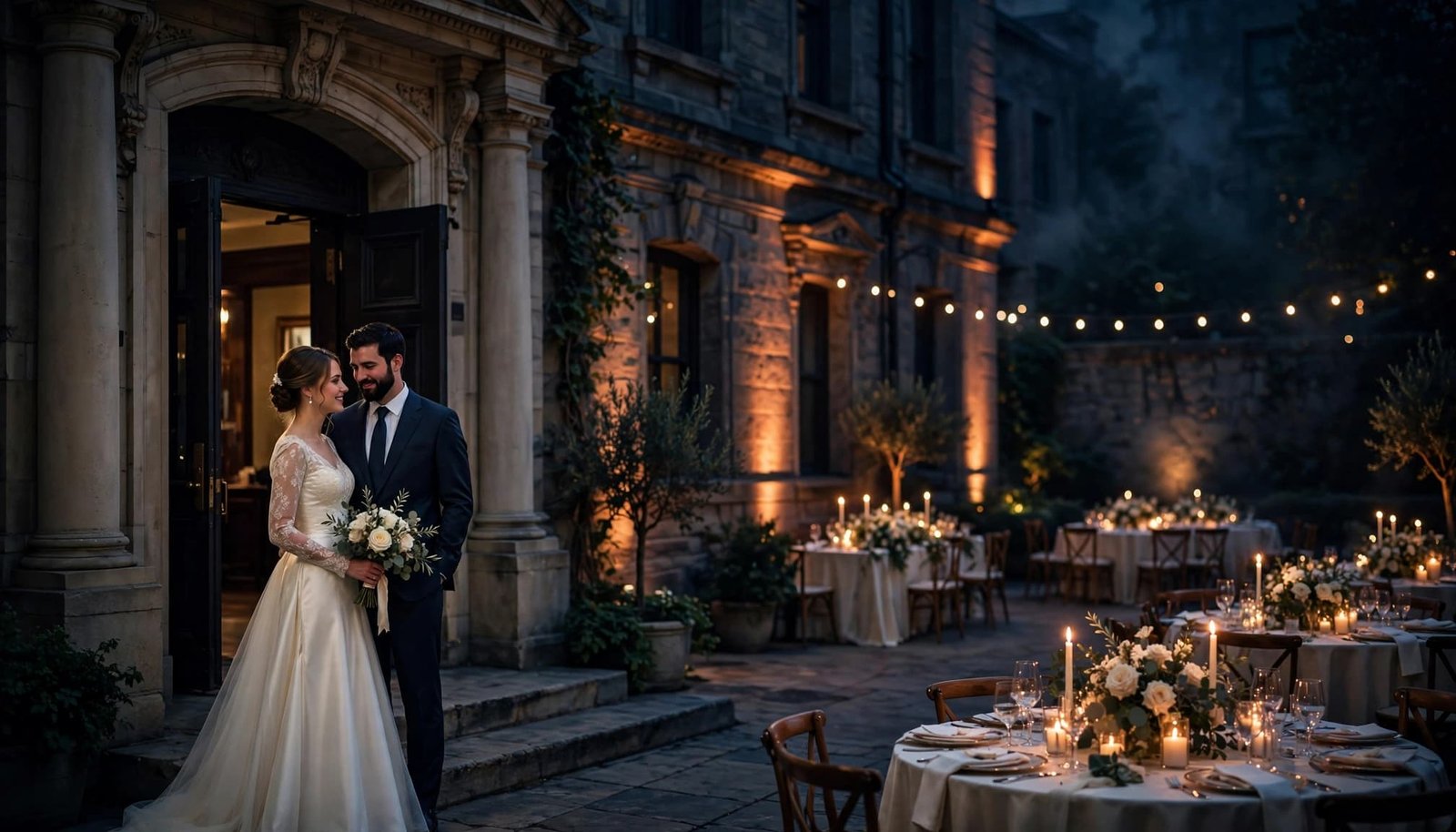
Build a Realistic Courthouse-to-Reception Timeline
The drive between a courthouse and a dinner venue can look simple on a map. On a wedding day, parking, photos, guests leaving at different times, and vendor access can turn a short trip into a rushed transition.
Protect time for photos and travel
Plan a wedding photography window after the ceremony before guests arrive at dinner. Even a 30-minute buffer allows time for congratulations, family portraits, and a quiet moment together.
Allow extra time if formal wedding attire, accessories, or a change of clothes could slow the transition.
If the DJ is handling both locations, confirm whether the courthouse needs audio support or whether all equipment will be set up at the reception venue. A sound system cannot be packed, moved, and tested instantly between distant locations.
Make the dinner reception its own event
On the wedding reception checklist, treat the dinner reception as its own event with separate timing and purpose. The civil ceremony handles the legal commitment. The dinner reception gives guests time to eat, toast, visit, and celebrate.
Start with cocktail hour music or welcoming background music while guests arrive. Then move into introductions, dinner, toasts, the couple’s featured dance, and open dancing if that fits your group. A good plan doesn’t require every traditional reception event.
The Courthouse Wedding DJ Checklist for Dinner Reception
A wedding DJ does more than fill quiet moments with songs. They can manage music cues, guide introductions, provide microphones for toasts, coordinate with vendors, and help the reception move without constant questions directed at the couple.
Professional DJ entertainment since 1999 has taught DJ Steve Neff Entertainment LLC that a smaller guest count still needs dependable sound, comfortable hosting, and a clear event flow. Review professional ceremony and reception DJ services by what is included, not by a package name alone.
Confirm coverage, equipment, and venue access
Your wedding reception checklist should confirm the wedding venue address, guest count, load-in time, setup location, parking, stairs or elevators, power access, curfew, and volume limits. Ask where speakers can be placed without blocking walkways, exits, or dinner service. Schedule a sound check after speaker placement and before guests arrive.
Also confirm these details in writing:
- Whether ceremony audio, cocktail-hour music, reception sound, lighting, and MC services are included.
- How many wireless microphones are available for officiants, readers, and toasts.
- Whether the DJ brings backup playback, spare cables, and a backup microphone.
- Who coordinates with the venue, caterer, photographer, planner, and any live musician.
A venue with stone walls, high ceilings, or exposed beams may need careful speaker placement. Clear voices matter more than excessive volume.
Give the DJ a useful music plan
Share must-play songs, a short do-not-play list, favorite artists, genres, and the energy you want for dinner and reception music. A focused plan is more helpful than a 200-song script.
Include the first dance, the bridal party entrance if one is planned, parent dances, cake cutting, cultural traditions, bouquet toss if planned, last dance, and any songs that have family meaning. For more ideas, use these wedding reception music ideas as a starting point.
Guest requests can be welcome, but set the boundary. The DJ should know whether requests are encouraged, approved by the couple, or limited to music that fits the atmosphere.
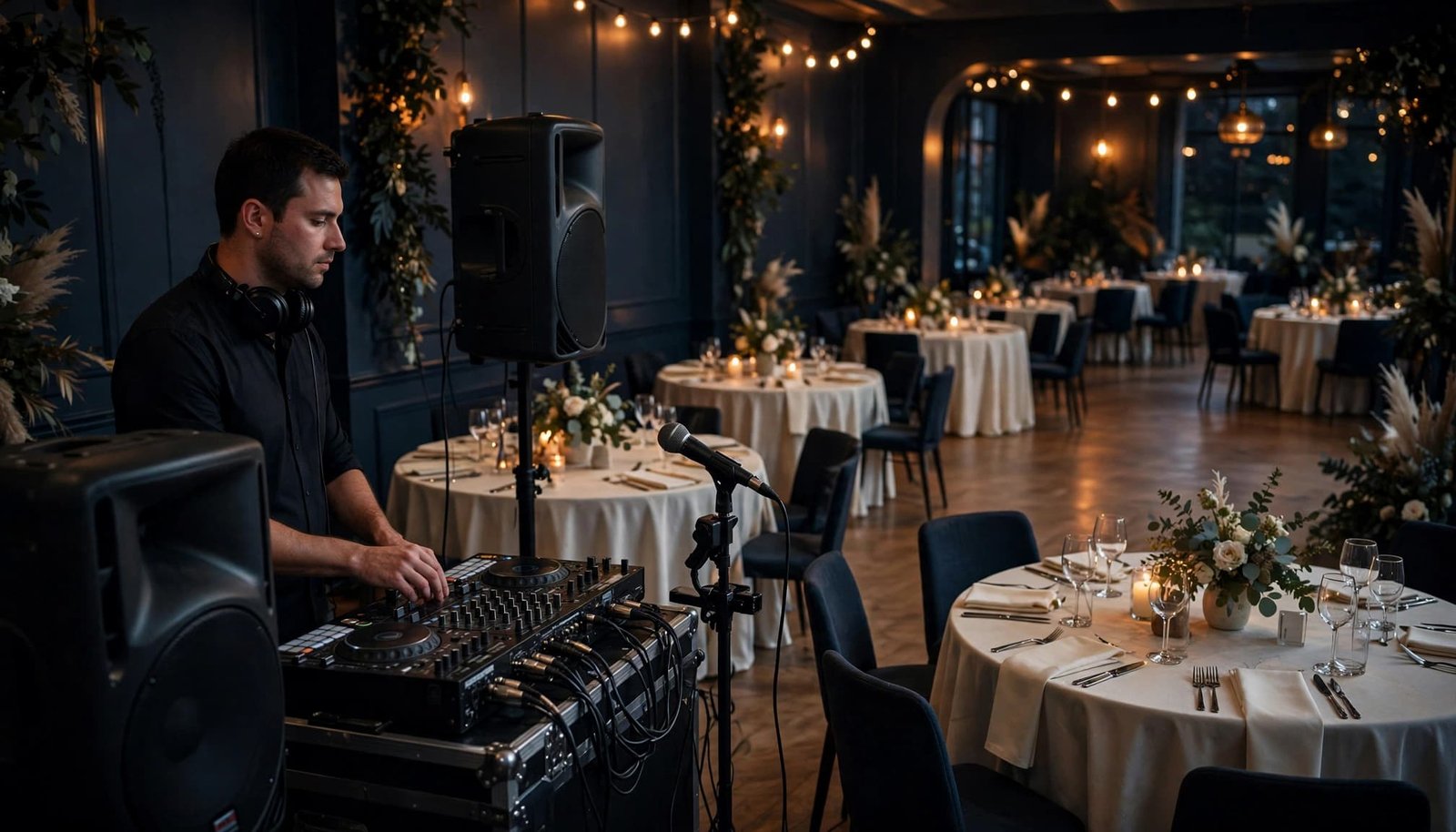
Plan the Music and Formal Moments in Advance
Use a wedding reception checklist during the final planning conversation two to four weeks before the wedding. As part of wedding planning, send the finished wedding day timeline to the DJ, venue coordinator, caterer, photographer, planner, and day-of contact.
Prepare names, cues, and announcements
Provide phonetic spellings for both partners, bridal party members, parents, and anyone giving a toast. Confirm who signals each cue, including the reception entrance, dinner service, speeches, first dance, and cake cutting.
Choose one calm point person who can approve small day-of changes. That person might be a planner, trusted friend, sibling, or family member. You should not be answering questions about speaker placement or song transitions while getting ready.
Separate dinner music from dance-floor music
Cocktail-hour music should welcome conversation. Dinner music should stay warm and present without competing with table conversation. After formalities, the music can become more energetic if dancing is part of the plan.
A professional DJ can read the room while protecting your preferences. The playlist should feel personal, but it should also leave space for real guest response and a comfortable pace.
Sample Wedding Day Timeline for a Courthouse Reception
Use this wedding reception checklist and timeline as a planning model, then adjust it for the applicable waiting period, appointment time, travel distance, dinner reservation, and venue rules.
| Time | Wedding Day Moment | DJ or Point-Person Detail |
|---|---|---|
| 1:30 p.m. | Arrive at courthouse | Bring photo ID, marriage license paperwork, rings, and witness details. |
| 2:00 p.m. | Civil ceremony | Confirm who has the marriage license and who takes family photos. |
| 2:30 p.m. | Congratulations and photos | Keep the group together for requested portraits. |
| 3:30 p.m. | Travel or private photo time | Build in parking and traffic buffer. |
| 4:30 p.m. | DJ load-in and sound check | Test microphones, speaker placement, music cues, and power. |
| 5:30 p.m. | Guest arrival and cocktail hour | Play welcoming background music at conversation level. |
| 6:15 p.m. | Couple’s entrance and bridal party, if applicable, followed by dinner | Confirm introductions and dinner-service timing. |
| 7:15 p.m. | Toasts and first dance | Photographer, DJ, and speakers should be ready before cues begin. |
| 7:45 p.m. | Open dancing or relaxed social time | Follow the couple’s music direction and guest energy. |
| 9:45 p.m. | Last dance and farewell | Confirm transportation, final announcement, and venue exit time. |
The exact clock times will change, but the order protects the important moments and gives vendors clear responsibilities.
Key Takeaways for a Smooth Celebration
A courthouse wedding and dinner reception can feel every bit as intentional as a larger wedding. The difference is not the guest count. Use this wedding reception checklist to keep the planning behind the day organized.
- Verify local marriage-license rules, fees, waiting periods, guest limits, and certificate procedures with the issuing office.
- Give the courthouse ceremony and reception separate time blocks, especially when travel and photos are involved.
- Compare DJ quotes by coverage, equipment, setup time, microphones, lighting, planning support, and overtime terms.
- Finalize names, music choices, formal events, and your do-not-play list before wedding week.
- Put one trusted person in charge of day-of DJ and vendor questions.
For more help choosing music that fits the room and the people in it, explore these wedding DJ planning tips.
Frequently Asked Questions
Can we have a larger reception after a courthouse wedding?
Yes. Many couples keep the civil ceremony private or limited to immediate family, then invite a larger group to dinner, a reception, or an after-party. If a bridal party is attending the reception, tell guests clearly which events they are invited to attend so there is no confusion.
The reception can include dinner, toasts, a featured couple’s dance, cake, and dancing even if the legal ceremony happened earlier in the day or before the reception date.
Do we need a DJ for a small dinner reception?
A DJ is useful when you want clear introductions, dependable microphones, music that changes with the evening, and someone responsible for keeping the timeline moving. This is especially helpful when guests are spread across a private dining room, patio, or multiple spaces.
For a quieter dinner, the DJ setup can stay appropriately sized. You may only need polished background music, toast microphones, a first dance, and a few well-timed announcements.
What should we finalize before the wedding day?
Your wedding reception checklist should include the venue floor plan, DJ setup location, parking, access time, sound limits, power, weather backup plan, and final timeline. Confirm that the marriage license paperwork and courthouse timing are settled before the reception day.
Send the DJ your special songs, do-not-play list, guest-request preference, introductions, pronunciation notes, and day-of contact. Keep copies of your DJ contract, invoice, music plan, and venue details in a shared folder.
That simple step keeps important information available if someone needs it quickly.
Make the Small Moments Feel Complete
The strongest courthouse wedding days are not rushed because they are small. They feel well-planned, personal, and comfortable for everyone involved.
Handle the courthouse requirements early, give the dinner reception a realistic timeline, and let your DJ and vendors manage the details they were hired to handle. That leaves you free to enjoy the promises, the meal, the music, and the people gathered to celebrate with you.