A retreat can have an excellent agenda and still lose energy between sessions. Music is part of the broader plan, helping shape arrivals, transitions, networking, and the event’s pace. Company retreats vary widely, so an executive retreat and a leadership offsite may need different energy levels and programming.
For New Hampshire business owners and planners, corporate retreat entertainment should support the event, not take it over. Planning should account for venue size, seasonal weather, travel and load-in logistics, AV needs, music preferences, inclusivity, and event timing. The DJ can welcome arrivals, time transitions, support working sessions and networking, and prepare the closing celebration.
Key Takeaways
- Corporate retreat entertainment should support arrivals, transitions, working sessions, networking, and the closing celebration without taking over the event.
- Match the DJ setup to the New Hampshire venue, guest count, room acoustics, seasonal conditions, power access, load-in routes, and AV requirements.
- Use approved, inclusive music programming with conversation-friendly volume, optional interactive activities, and a gradual increase in energy when appropriate.
- Vet DJs for corporate experience, clear communication, backup equipment, venue coordination, weather contingencies, and workplace-appropriate music standards.
- Build an itemized entertainment budget that accounts for performance time, equipment, travel, setup, AV integration, lighting, additional programming, and contract terms.
Why a DJ Is More Than Evening Entertainment
A DJ can shape the pace of corporate retreat entertainment, from arrivals to the final gathering. Music supports announcements, transitions, and presentations, while clear microphone support keeps facilitators and leaders heard.
The goal is not to turn every retreat into a dance party. It is to create a welcoming atmosphere that fits your people, your corporate culture, and the reason everyone gathered.
Set the Tone as Guests Arrive
Arrival music should match the venue’s size and layout, whether guests enter a hotel lobby, executive meeting room, resort ballroom, or lodge. Keep the volume conversation-friendly, with light pop, classic soul, acoustic covers, refined funk, or clean contemporary tracks.
Low-key announcements can welcome guests, direct them to registration, or remind the group about the opening session. The DJ should keep these cues helpful without making the room feel overly formal.
Keep Working Sessions Moving
Long meetings need breaks that feel intentional. A short music bed as people return from coffee, lunch, or breakout groups helps working sessions restart on time.
Microphone support and short walk-up cues belong in the AV and timing plan, especially for awards, panel introductions, team challenges, and leadership presentations. Most cues need only 10 to 20 seconds, and a recognizable opening with a clean fade feels polished.
Save Dance Energy for the Right Moment
A closing celebration can be lively without pressuring anyone to participate. Dancing, photo moments, song requests, and other interactive experiences should remain optional.
Guests bring different ages, abilities, comfort levels, cultural backgrounds, and musical preferences, so a strong DJ reads the room. Music should build energy gradually and align with your corporate culture. Some may join the dance floor, while others talk or take photos; the dance floor should be an option, not a requirement.
Match the DJ Setup to Your New Hampshire Retreat Venue
Venue selection shapes corporate retreat entertainment because each space creates different technical demands. An executive retreat in a small meeting room has different sound, lighting, and access needs than a resort ballroom or outdoor company gathering.
New Hampshire gives planners plenty of retreat settings, including mountain resorts, downtown hotels, lakeside conference centers, university spaces, farms, and outdoor gathering areas. Consider capacity, room acoustics, ceiling height, speaker placement, and breakout room changes before choosing a setup.
Start venue research early. A directory of New Hampshire event venues can help compare meeting space, lodging, parking, travel distance, and event services before you begin discussing entertainment details.
Resorts and Conference Centers Need AV Coordination
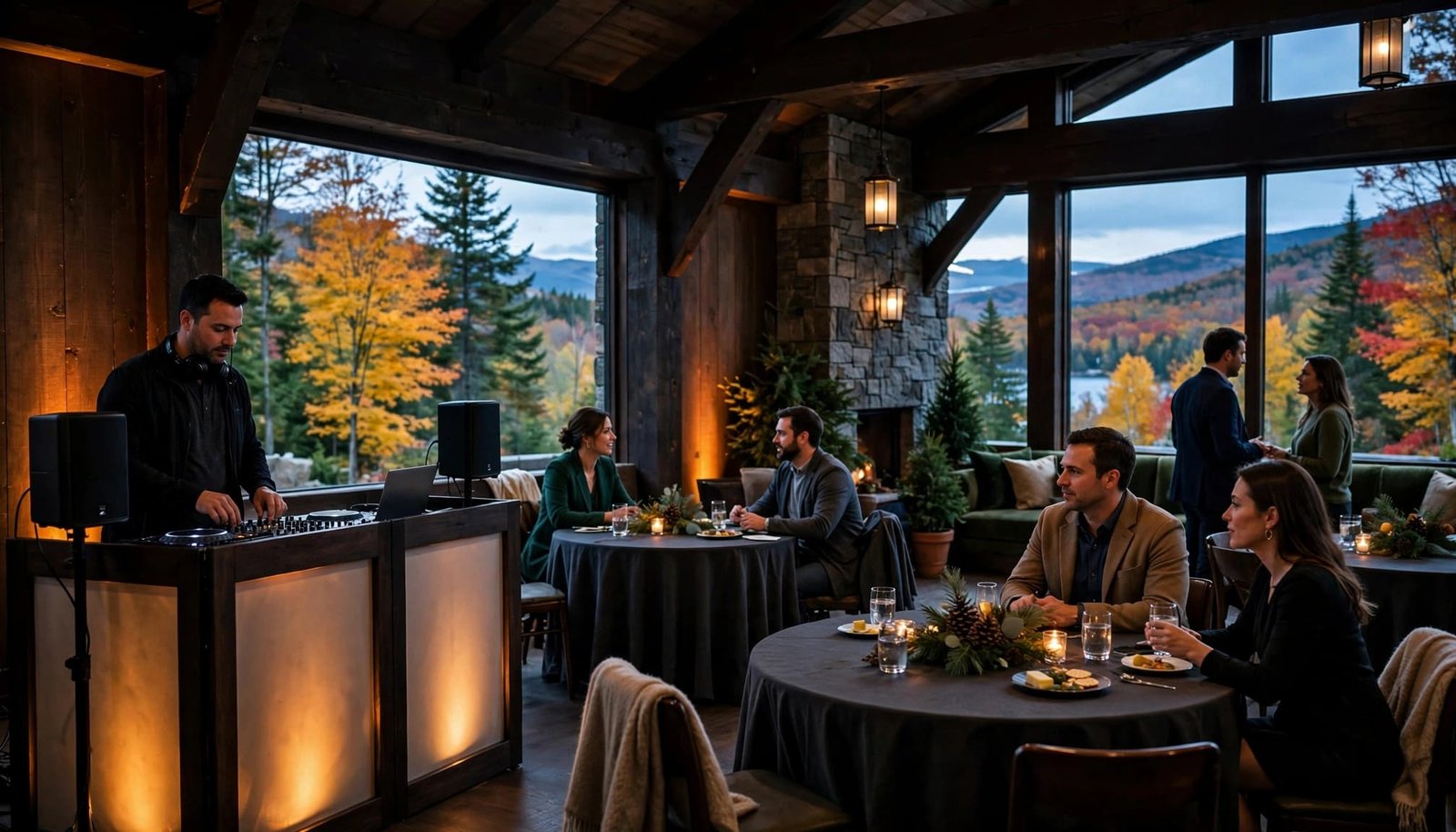
A resort ballroom may need a different system than a small executive meeting room. Ask whether the venue has in-house AV, what equipment is installed, and whether an outside DJ can connect to the house sound system.
For example, Mountain View Grand’s meetings and events spaces include flexible gathering areas and in-house AV options. That doesn’t mean every room has the same audio setup. During venue coordination, the DJ, venue coordinator, event planner, and AV team should confirm each room’s details.
Review speaker placement, microphone needs, power availability, load-in routes, elevator access, setup timing, and room changes before event day. Confirm how much setup time is available, especially when the venue hosts multiple programs.
Outdoor and Seasonal Retreats Need a Weather Plan
An outdoor summer picnic, fall foliage retreat, or lakeside team event can feel relaxed and memorable. It also needs a dependable rain plan for summer storms and fall temperature changes.
A silent disco can suit an outdoor or lakeside evening when noise restrictions, nearby lodging, or mixed participation preferences make conventional speakers less suitable. Headphones still need charging, sanitation, weather protection, a dry backup location, and a clear plan for distribution and collection.
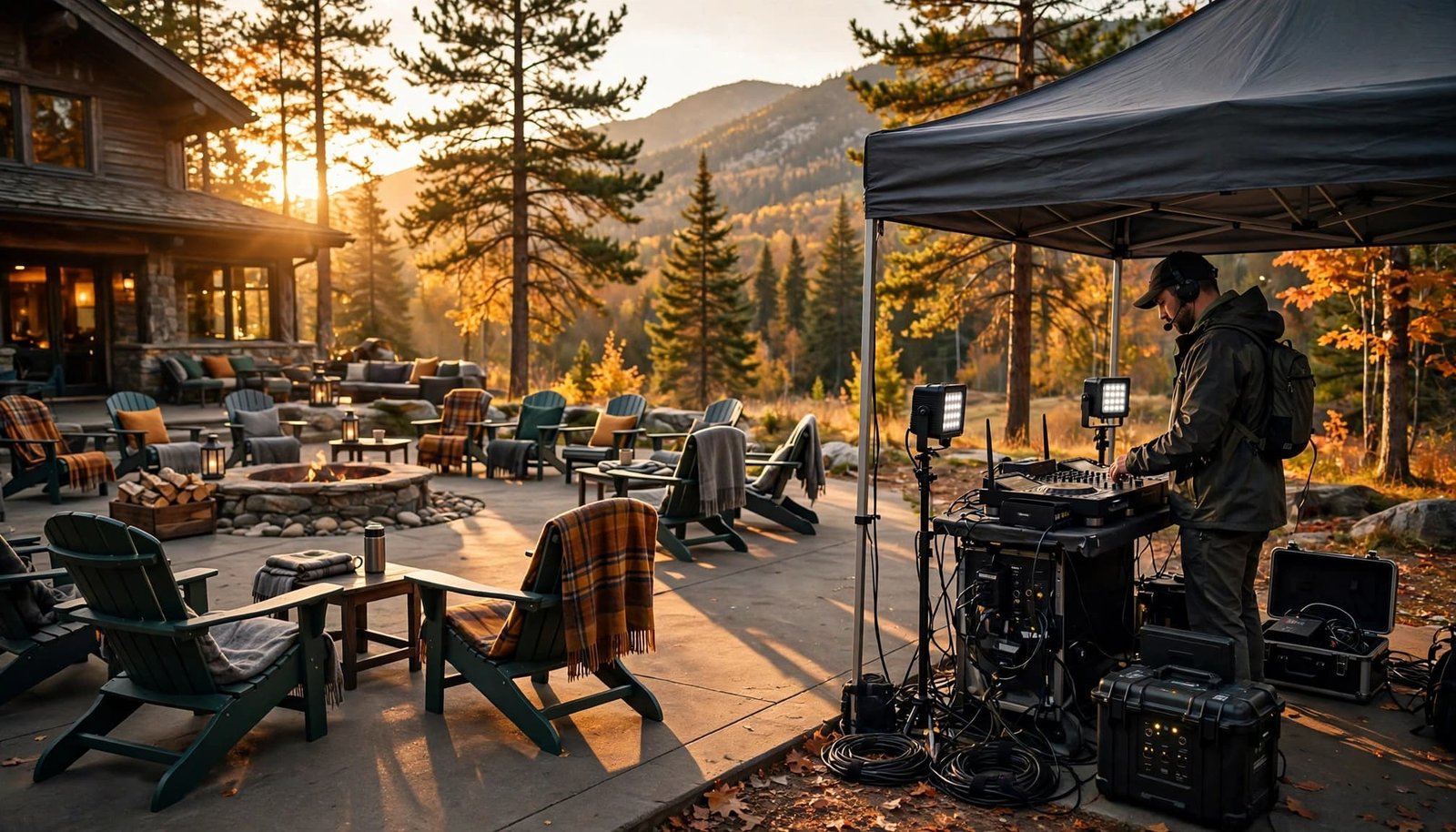
The DJ setup should have protection from wind, moisture, direct sun, and uneven ground. Confirm power access and a nearby indoor space if weather changes the schedule.
Winter retreats bring their own timing concerns. Guests may arrive later due to weather, while snow and ice can affect load-in areas. Allow extra travel time on mountain or rural roads, and build more setup time into the schedule.
Build Music Around the Retreat Schedule
A strong corporate retreat entertainment plan matches the retreat’s purpose, timing, audience, and energy. Instead of relying on one generic playlist, use music to support working sessions and mark breaks without disrupting concentration. It can energize group activities and create a natural finish.
Before selecting songs, choose three to five words that describe the event. A leadership offsite may feel “confident, modern, welcoming, and composed.” A company anniversary might feel “celebratory, familiar, upbeat, and polished.”
Use Music for Networking and Meals
During networking sessions, cocktails, and dinner, volume matters as much as song choice. In hotel dining rooms, lodge spaces, and lakeside venues, guests should hear a pleasant soundtrack without leaning across the table to talk.
A DJ can create that atmosphere with controlled volume, clean edits, and suitable genres. Planners can share broad preferences that reflect varied musical tastes without promising every request. Live music can complement DJ coverage during planned dinner experiences. A short set featuring acoustic music requires separate sound-check and changeover planning before the DJ returns with background music.
The best networking music is present enough to make the room feel active, but low enough that guests never have to compete with it.
Add Optional Team Building Moments
Music can support team building without making anyone feel singled out. Trivia, music bingo, and song-based icebreakers create interactive experiences. Short walk-up cues and optional participation formats provide interactive experiences without putting anyone on the spot.
An inclusive, headphone-based silent disco can suit outdoor areas or late-night programming. A silent disco also helps guests who prefer different volume levels.
Keep activities short and optional, because teams still need time to talk, recharge, and form connections naturally. Team building activities should remain voluntary and accessible to everyone.
If the day includes awards or recognition, choose a few 10- to 20-second celebration cues. Let the evening build toward a closing celebration, dancing, or conversation. Use approved songs with clean edits, such as “September,” “Can’t Stop the Feeling!,” or “24K Magic,” when they fit the audience and company approval process.
How to Choose a Corporate Retreat DJ
The best entertainment provider brings more than a playlist. As an entertainment partner, they should understand corporate retreat entertainment, workplace timing, professional announcements, music approvals, and contingency planning.
New Hampshire planners should begin booking entertainment about five months before the retreat when possible. Published marketplace data shows many planners hire DJs around 150 days before an event. Fall foliage and holiday demand can make popular weekends book even earlier.
Good vendor vetting includes references, insurance, backup equipment, communication habits, and venue experience. New Hampshire travel logistics matter for rural venue access and overnight stays. Confirm arrival and load-in times well before the retreat.
Ask Questions That Reveal Preparation
A quick conversation should cover more than music genres. Ask how the DJ handles announcements, room changes, requests, sound checks, weather-related timing adjustments, and last-minute agenda changes. Compare the event entertainment plan for daytime sessions with the needs of evening events. A dinner reception or closing party may require a different approach.
Useful questions include:
- Can the DJ provide background music, microphones, and dance-floor programming in one coordinated plan?
- What backup playback equipment, spare cables, and extra microphones come to the event?
- How does the DJ handle workplace-appropriate music and employee requests? Can clean edits suit a corporate crowd?
- How will the DJ account for mixed ages, international employees, clients, families, senior leaders, and varied cultural or musical preferences?
- What interactive experiences can they offer, such as music bingo, trivia, hosting, or a silent disco? How would they manage headphones and inclusion for that format?
- Are team building activities optional, accessible, and appropriate for the company’s culture?
- Will the DJ coordinate directly with the venue’s AV or banquet team?
- What happens if the schedule changes because a session runs late, rooms change, or weather affects timing?
A dependable answer should be clear and specific. “We will figure it out” is not the same as a real contingency plan.
Review Music Standards Before the Event
A radio edit is useful, but it is not automatic approval. Some tracks still contain themes, references, or awkward dropouts that do not fit a mixed workplace crowd.
Provide an approved music direction, a do-not-play list, and one company contact with final authority. This is especially helpful for events with clients, families, senior leaders, or employees from different backgrounds.
Requests can still be welcome. They should be treated as input, not promises. The DJ can use appropriate requests at the right time without allowing one unreviewed song to change the atmosphere.
Sound, Lighting, and Safety Details That Matter
Production quality shapes how guests experience corporate events. For retreats, speech clarity comes first in ballrooms, lodges, tents, cafeterias, patios, and multi-room facilities. Clear audio helps guests follow speakers. Balanced music keeps conversation comfortable, while tasteful lighting makes a reception or dance floor feel special without darkening the room.
Plan Sound for Speech First
A retreat isn’t a nightclub. Speakers, presenters, and announcements need to remain clear throughout the room. Test wireless microphones in the actual space, and check speaker coverage at the back and sides.
Ballrooms, lodges, cafeterias, tents, outdoor patios, and multi-room facilities all handle sound differently. Low ceilings can make bass muddy, while reflective glass can create distracting echoes.
Confirm venue noise restrictions and ending times in writing. Ask about separate indoor and outdoor limits, along with curfews for the exact space.
Keep Cables, Power, and Access Routes Clear
Audio and power cables should follow approved room edges whenever possible. They should never cross emergency exits, stairways, doorways, or accessible routes used by wheelchair users.
If a cable must cross a busy walkway, use a venue-approved floor protector or cable ramp. Gaffer tape can secure a thin cable in a dry, low-traffic area, but it isn’t a replacement for proper protection where guests and staff walk.
During the final walkthrough, verify that the DJ area doesn’t block doors, fire equipment, exits, or wheelchair access. Confirm dedicated circuits for speakers, lighting, laptops, and microphones where available. For outdoor equipment, plan weather protection and a safe shutdown procedure.
A professional setup should include backup systems, redundant music playback, spare cables, and an extra microphone. Also discuss backup power considerations and a contingency plan for equipment failure.
For large meetings or multi-room programs, UNH Events and Conferences is one example of a New Hampshire venue resource with varied meeting, dining, and event spaces. Verify exact room rules, power, load-in requirements, and access to any house sound system with the venue.
Set a Realistic Entertainment Budget
Corporate retreat entertainment costs vary by booking hours, guest count, travel distance, and setup complexity. Microphones, lighting, hosting, and coverage for one reception or several retreat sessions also affect the total.
New Hampshire pricing can span a broad budget range. Published DJ listings suggest an illustrative market range of about $400 to $1,300 for basic event rates. Treat it as a planning reference, not a guaranteed quote. Shorter bookings may cost less, while extended coverage, formal hosting, extra sound systems, and lighting can raise the total.
Multi day programs may need separate coverage for daytime sessions, dinners, and evening events, plus additional equipment, travel, lodging, or a second operator.
Compare entertainment options such as a DJ-only package, DJ plus MC support, live music, a silent disco, lighting, trivia, or other additions. Request itemized proposals to compare services accurately.
Use a line-item budget rather than one vague entertainment number.
| Budget Area | What to Confirm |
|---|---|
| DJ performance time | Arrival, daytime sessions, dinner, awards, dancing, and teardown hours |
| Sound equipment | Speakers, wireless microphones, mixers, backup audio, and venue AV compatibility |
| Lighting | Uplighting, dance-floor effects, weather-safe placement, and venue-approved installation |
| Venue requirements | Venue size, room count, power access, and room change needs |
| Travel and parking | Distance, parking fees, load-in route, and overnight travel |
| Weather contingency | Outdoor backup space, equipment protection, and rain-related changes |
| Early load-in | Access time, elevator needs, and coordination with venue staff |
| AV integration | Presentation systems, microphones, screens, and house sound connections |
| Setup and teardown | Labor time, equipment removal, and post-event venue requirements |
| Additional programming | Trivia, team games, hosting, live music, silent disco, or multi-session support |
| Contract terms | Cancellation or rescheduling terms, deposits, overtime, and payment schedule |
The lowest quote isn’t always the lowest-risk choice. A lower quote may exclude microphones, backup equipment, extra hours, travel, or required setup.
A prepared retreat DJ who arrives ready, communicates clearly, and brings backup equipment can protect a much larger investment in travel, lodging, meals, meeting space, and staff time.
Frequently Asked Questions
How far in advance should we book a corporate retreat DJ?
New Hampshire planners should ideally begin booking entertainment about five months before the retreat. Fall foliage, holiday events, and popular weekend dates may require booking even earlier.
Can a DJ support daytime retreat sessions as well as the evening celebration?
Yes. A DJ can provide arrival music, transition cues, microphones, background music for meals and networking, and dance-floor programming for the closing event. Daytime sessions usually require a more restrained approach focused on speech clarity and timing.
What should we ask a corporate retreat DJ before booking?
Ask about workplace-appropriate music, microphones, backup equipment, venue and AV coordination, room changes, weather adjustments, and last-minute schedule changes. You should also confirm insurance, references, travel costs, setup timing, and contract terms.
How can we make retreat entertainment inclusive?
Keep dancing, song requests, trivia, music bingo, and other interactive experiences optional. Use clean, varied music at comfortable volumes while considering different ages, abilities, cultural backgrounds, and musical preferences.
What does a corporate retreat DJ package usually cost in New Hampshire?
Published DJ listings suggest an illustrative basic event range of about $400 to $1,300, but actual pricing varies. Booking hours, guest count, travel, microphones, lighting, hosting, additional sessions, equipment, and setup complexity can all affect the final quote.
Give Your Team a Retreat Worth Remembering
A corporate retreat DJ should make the event feel organized, welcoming, and ready for each next moment. Optional interactive experiences can add personality without forcing participation.
With approved music direction, inclusive programming, clear microphones, venue coordination, safe cable and power planning, weather contingencies, realistic setup time, travel logistics, and a dependable backup plan, the DJ can keep your New Hampshire team event polished without making it feel over-programmed. The result should be a closing celebration guests remember for meaningful connections and accomplishments, not just the music.