Silence can make a room feel formal, but music that’s too loud makes a networking reception feel like a party nobody can talk through. The right track gives guests a little lift as they arrive, then leaves room for names, ideas, and introductions.
The soundtrack should feel polished and familiar enough to welcome employees, clients, sponsors, and music professionals. At a networking event, it should stay low-key, making business networking easier without turning the room into a dance floor.
A focused music brief, a curated library, and careful volume control turn background sound into part of a well-run event. The same low-pressure principles also apply to networking events connected to the music industry, including music-industry receptions.
Set the Mood Before You Select Songs
Music is part of the room design, whether the audience represents a general corporate group, the music industry, or the music business. Before choosing songs, decide what a successful reception should feel like: relaxed conversation, confident introductions, and a polished welcome for employees, clients, or sponsors.
A playlist becomes more reliable when it has a clear job. Industry networking may prioritize introductions and relationship building, while career development events need an especially welcoming atmosphere for music professionals.
Choose Three to Five Clear Brand Words
Start with a short description, not a long list of artists. “Warm, modern, welcoming, and premium” creates a different result than “creative, social, and upbeat.”
A financial firm may prefer composed instrumental soul or light electronic music. A graphic design agency can usually support more disco, indie funk, or refined house music, with independent music woven into the playlist. A nonprofit leadership reception may call for warm jazz, tasteful classics, and uplifting instrumental tracks.
Share those words, guest details, and restrictions with the DJ or music provider, including relevant input from music managers and industry leaders. It gives them a clear direction while allowing room to respond to the schedule and the guests.
Build the Evening in Phases
Arrival music should soften the first few minutes, when many guests are looking for a familiar face. During active networking, maintain a steady, mid-tempo pulse that supports business networking and leaves space for networking opportunities. Bring the music down for a welcome, sponsor recognition, or announcement, then restore it smoothly once conversation resumes.
Plan the flow by event moment instead of locking the entire program into one sound.
| Event Moment | Preferred Feel | Music Direction |
|---|---|---|
| Guest arrival | Relaxed and polished | Instrumental jazz, bossa nova, soft soul |
| Active networking | Warm and social | Instrumental funk, light electronic, nu-disco |
| Brief remarks | Focused and clear | Low-volume ambient or no music |
| Closing reception | Brighter and celebratory | Clean pop, disco, soulful house |
That progression keeps the room fresh. It also prevents a common mistake: using party music before the room has decided it is ready to be a party.
Corporate Networking Event Music Ideas by Format
The best soundtrack for this format depends on the setting. Music industry gatherings may bring together music professionals and the music community. Other business networking events need a neutral backdrop, where a thoughtful palette beats a long list of famous songs.
Keep lyrics limited during the main networking window. Save highly recognizable songs for later, if the schedule naturally leads into a reception or company celebration.

Cocktail Receptions and Client Mixers
Think stylish but unforced. Instrumental funk from The Budos Band or El Michels Affair brings movement without a chorus taking over the room. Modern jazz and post-jazz from GoGo Penguin or BADBADNOTGOOD create a relaxed city-lounge feel.
For a warmer direction, use instrumental bossa nova and Brazilian jazz, including Antonio Carlos Jobim recordings without vocals. These unobtrusive selections help people connect during a networking mixer, where industry networking and music networking depend on easy conversation.
Playlist directions such as “instrumental soul and funk,” “modern jazz cafe,” and “Brazilian lounge” give a DJ a better foundation than a collection of unrelated favorites. Mix styles in short runs of two or three tracks, then make a gentle change.
A playlist built around independent music or artist-led selections can add personality. Screen tracks from independent artists for tone and lyrical content.
Conferences, Trade Shows, and Sponsor Lounges
Conference breaks work well with clean, lightly rhythmic electronic music. At a music conference for industry professionals, Tycho, Bonobo, and Tourist offer polished electronic directions. Screen every track for vocals and lyrical themes when music executives and industry leaders are in the room.
A sponsor lounge can support a brighter mix of instrumental disco, nu-disco, and soulful house, as long as the bass stays controlled. For music technology gatherings, this approach keeps the space active without making a nearby booth or conversation area too loud.
Save chart pop, bold hip-hop, and broad singalongs for a closing reception or company party. Controlled bass and limited lyrics protect conversation, preserving valuable networking opportunities in this setting.
Keep Music at a Conversational Volume
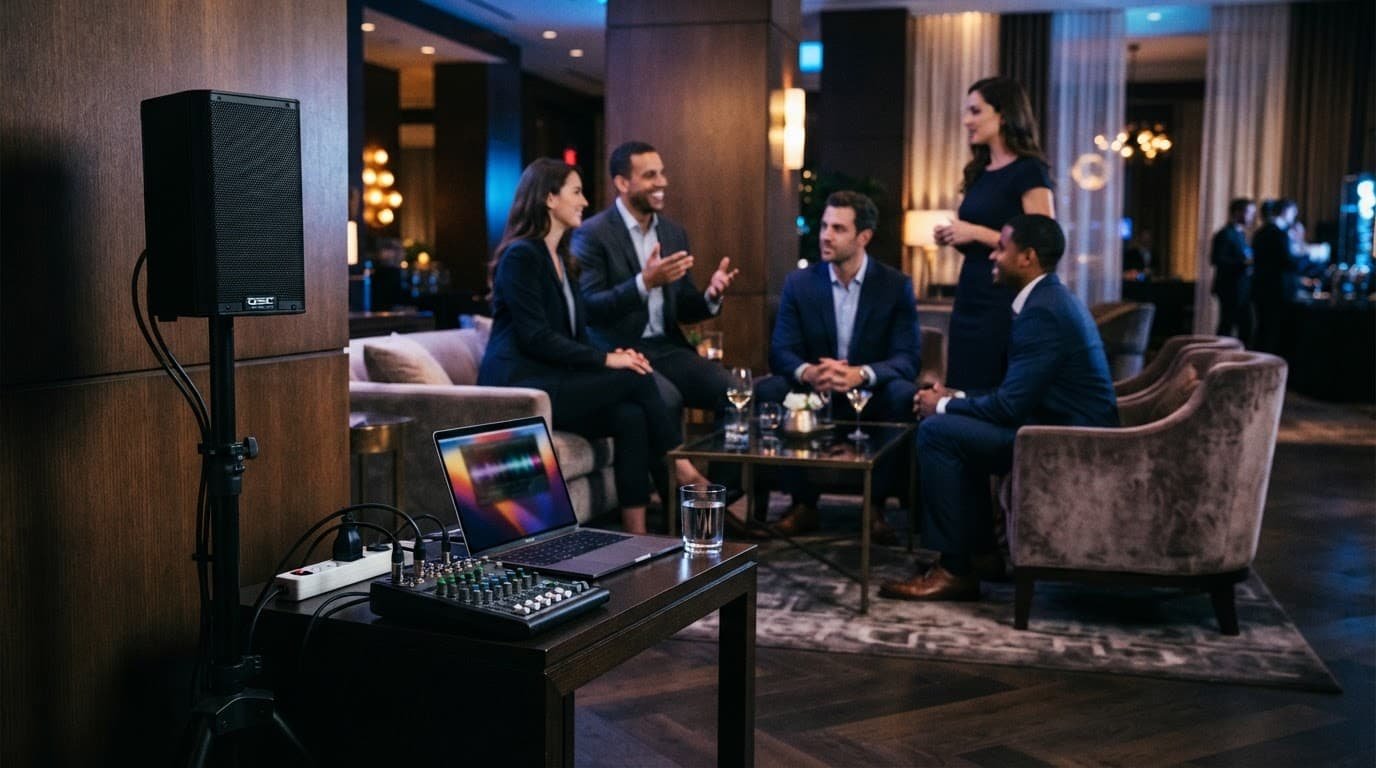
Volume decides whether guests remember the atmosphere or remember shouting. A well-balanced soundtrack is present across the room, but it should never cover a normal speaking voice.
A professional sound check happens with the room set, lights on, and speakers in their intended positions. If live music is included, performers need their own gain and monitoring check. Empty ballrooms can sound much different once people, tables, linens, and catering stations fill the space.
Set a Conversation-First Level
Play a representative track, then stand at a cocktail table about 10 feet from the nearest speaker. At a networking event, two people should be able to speak at normal volume without leaning in or repeating themselves.
Check the edges of the room as well. A bar corner, lobby alcove, or high-ceilinged foyer can become much louder than the center of the reception.
If guests need to repeat their first sentence, the soundtrack is already doing too much.
Sound changes as attendance grows. People and soft furnishings absorb audio, while glass, stone, and open ceilings can throw it back. Recheck the level after arrival and again before any formal program segment.
Use Placement and Zones, Not More Volume
One oversized speaker pointed across a crowded room creates uncomfortable hot spots. Smaller, properly placed speakers at controlled levels usually provide better coverage and a more professional experience.
Keep speakers away from food stations and high-traffic entrances. Angle them away from the main conversation clusters, and leave clear paths for guests and staff.
Ask the venue about its built-in sound system before load-in. A DJ should coordinate microphones, presentation audio, and background playback on the same event timeline, fading music down before each speaker begins.
Keep Music Appropriate and Properly Licensed
Corporate guests do not arrive with the same musical history, so one-genre playlists rarely work for long. Use familiar rhythms without relying on the most obvious songs, then rotate through complementary styles.
Licensing responsibilities still apply when a music business or music industry reception serves professional guests at a networking event.
The result feels considered, inclusive, and appropriate for a mixed workplace audience.
Review the Exact Version of Every Track
A radio edit helps, but it is not automatic approval. A song may lose explicit words while keeping sexual, violent, drug-related, or aggressive themes. Another version may leave an awkward gap in the middle of a familiar chorus.
Review the exact file or stream that will play, not only the song title. Have music professionals check lyrical themes and edits before one event lead gives final approval. Provide the DJ with an approved list that can include independent music, plus a do-not-play list. Treat guest requests as suggestions.
That approach is especially important for client-facing programs, regulated industries, and events where employees bring families. Use short genre blocks, then move gradually between instrumental soul, contemporary jazz, light electronic, and clean pop. Confirm files, permissions, and usage terms with industry professionals, music managers, or music creators when needed.
Confirm Rights Before the Event
Playing music in a business setting requires more than finding a polished playlist. ASCAP’s licensing FAQs explain that a license from one performing rights organization only covers the music represented by that organization.
Depending on the music used, complete public-performance coverage in the United States can involve ASCAP, BMI, SESAC, and GMR. Ask the venue what its license covers, then document who is responsible for any gaps.
Do not assume that permission for in-room playback also covers event video, livestreams, replays, or social clips. A corporate-event music licensing overview explains why these uses may need review beyond public-performance licensing, including sync licensing and catalog permissions that may involve independent labels.
Personal streaming plans are not a blanket answer for an organized public event. Confirm the platform’s commercial terms, the DJ’s music library rights, and the venue agreement before doors open. Clarify responsibility with relevant rights holders. Soundtrack’s music licensing guidance is a useful reminder that creators’ rights still apply when businesses use music.
A Quick Pre-Event Music Checklist
Before the final production meeting, confirm the details that protect the guest experience and company image.
- Write down three to five words that describe the event atmosphere.
- Match the music plan to each networking event moment, including arrival, conversation, remarks, and the closing reception.
- Choose playlist directions and artist styles that fit business networking, since a music industry audience may include industry leaders and guests seeking meaningful networking opportunities.
- Test music volume in the actual room, including bars, lounges, and registration areas.
- Review the exact version of every approved song for language, themes, and awkward edits.
- Give one company contact final approval for music and guest requests.
- Confirm venue music coverage, DJ licensing, streaming terms, and any video or livestream needs.
- Prepare backup tracks, microphone cues, and a clear plan for last-minute schedule changes. For live music, confirm performer needs separately from DJ playback.
With these details in place, the music supports the schedule instead of becoming another item the event team has to manage.
Frequently Asked Questions
How loud should music be at a corporate networking event?
Music should be present without covering a normal speaking voice. Test the level at cocktail tables and across the room, then recheck it after guests arrive.
What types of music work best for networking events?
Instrumental jazz, bossa nova, soul, light electronic, nu-disco, and polished ambient music can create energy without taking over the room. Choose styles that match the event’s brand words and keep lyrics limited during active networking.
Should the music change throughout the event?
Yes, the soundtrack should follow the event’s phases. Use relaxed music for arrival, a steady mid-tempo selection during networking, lower volume for remarks, and brighter music for a closing reception.
How can event organizers keep music appropriate for a mixed audience?
Review the exact version of every track for explicit language, lyrical themes, and awkward edits. Provide the DJ with an approved list and a do-not-play list, especially for client-facing events and regulated industries.
Does a corporate networking event need music licensing?
Business events may require public-performance coverage, and venue licensing does not necessarily cover videos, livestreams, or social clips. Confirm responsibilities with the venue, DJ, platform, and relevant rights holders before the event.
The Right Music Makes Networking Feel Easier
The strongest corporate networking event music creates a welcoming rhythm without demanding attention. It warms the room, softens the first few minutes, and keeps the focus where it belongs, on the people making connections.
Choose the mood first, keep the volume comfortable, screen every track, and confirm the proper music rights. Careful preparation around these details helps guests connect and make the most of networking opportunities.