The microphone goes live, the room is still settling, and the next speaker is waiting for a cue. A corporate event MC script gives the master of ceremonies a clear hosting structure. It helps guide the room through the running order.
A prepared professional host welcomes guests, introduces people accurately, and keeps the program moving without becoming the center of attention. Preparation makes that confidence possible. Start with the schedule, then write the lines that connect its most important moments.
Build Your Script Around the Run of Show
An event script and a run of show work together. The script contains what the audience hears; the run of show records when each moment happens, who approves it, and what the production team does. The master of ceremonies uses the schedule to follow the running order and stay aligned with production. Eventbrite’s run-of-show template is a useful starting point for organizing those details.
Give Every Cue an Owner
For each speaker, video, award, and break, record who gives the go-ahead. The event organizer or production lead can own a cue, such as “DJ starts walk-on music after the planner’s signal.” Include the AV operator, venue contact, photographer, and meal-service lead where their work affects timing.
A working event script template might look like this:
| Program moment | MC line or action | Cue owner |
|---|---|---|
| Doors close | Welcome guests and invite them to take their seats. | Planner confirms room readiness. |
| Keynote begins | Introduce the approved speaker before the keynote speech. | DJ fades music; AV operator prepares slides. |
| Awards begin | Invite the presenter to the stage. | Planner confirms recipients are ready. |
The MC should receive the latest version before guests arrive, not a draft program with a different speaker order.
Mark What Can Change
Put pronunciation notes beside names, and write titles exactly as the speaker wants them announced. Identify required sponsor language and any announcement that needs approval before it changes.
Mark flexible lines too. A short break announcement can move; an award recipient’s name cannot. Compare the final running order with the draft program before sending updates. One designated event organizer or producer should approve live changes and tell the master of ceremonies, DJ, and AV team at the same time.
Corporate Event MC Script Examples for Opening Remarks
Opening remarks should tell guests they’re in the right place, establish the tone, and direct attention to the first program moment. The master of ceremonies, or event emcee, can follow a clear hosting structure and welcome employees, leaders, clients, and guests warmly. Use the draft program to prepare speaker introductions and support audience engagement.

Conference Welcome
Cue: The event organizer confirms the room is ready. Background music fades; the MC microphone opens.
“Good morning, everyone, and welcome. Thank you for making time to be here and for the conversations you’ve already started. We have a full program ahead, so please take your seats and silence your phones. We’ll begin with our opening speaker in a moment.”
If attendees are moving between rooms, check the running order for one approved direction before introducing the speaker. Avoid reading the entire agenda aloud when guests already have it.
Keynote Introduction
For a keynote speech, confirm the speaker’s approved name, title, and reason for addressing the room. Keep the applause cue clear.
“Our next speaker brings today’s discussion into focus. As [approved title] at [organization], [approved speaker name] will share the priorities guiding the work ahead. Please join me in welcoming [approved speaker name].”
Cue: Pause for applause. The DJ plays the agreed walk-on cue; the AV operator advances the opening slide.
Keep unverified achievements out of the introduction. Ask the speaker or their team to approve both the wording and pronunciation beforehand.
Introduce Panels and Awards Without Awkward Pauses
A panel discussion and awards program involve more moving parts than a single keynote. The script should tell guests what happens next while giving the stage team time to act. The event organizer confirms the running order. The master of ceremonies or event emcee follows a clear hosting structure for each handoff.
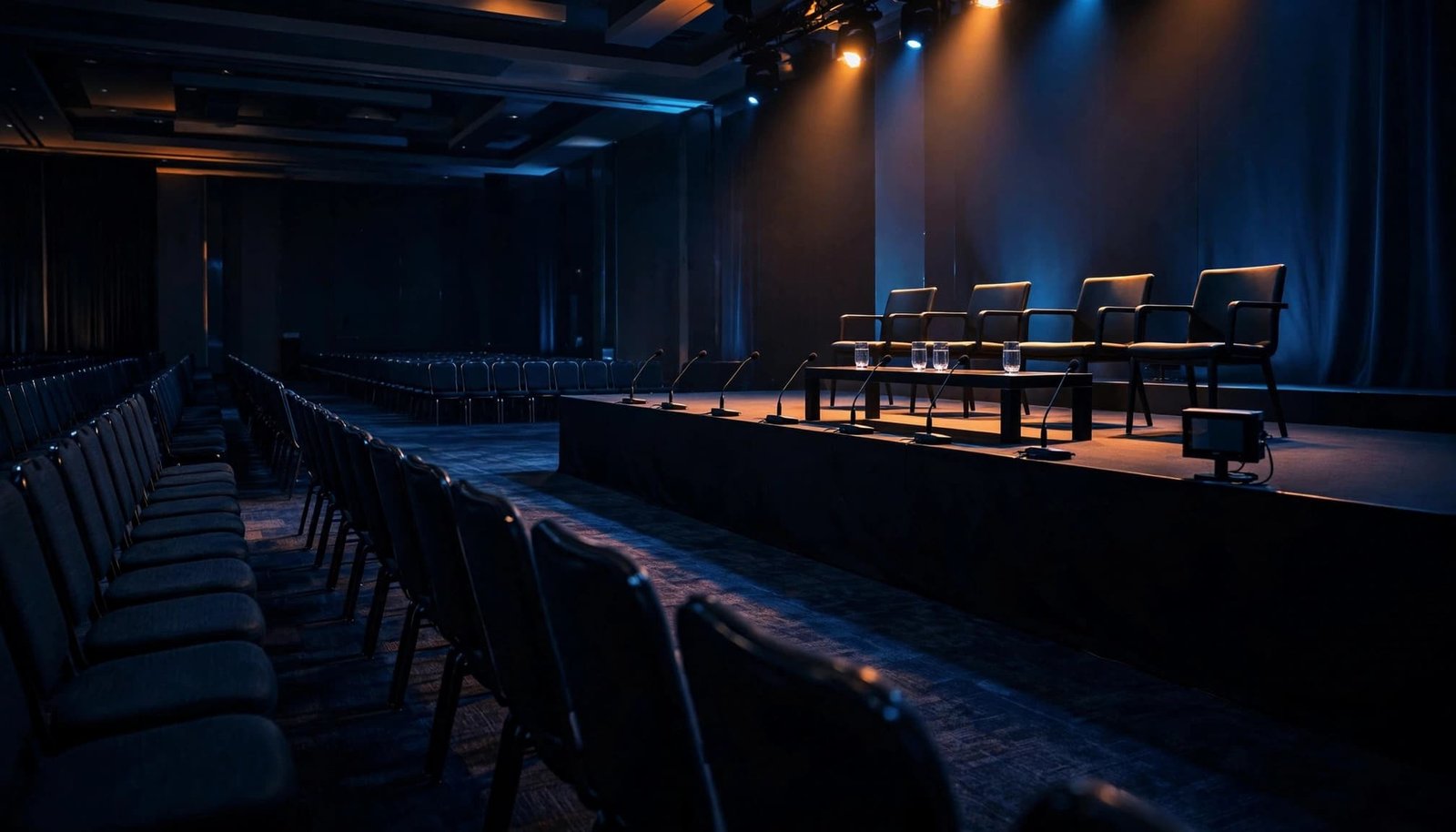
Panel Discussion Handoff
Before the session, confirm who introduces the panelists, who moderates, and how audience questions will work. Check that chairs, water, and microphones are ready before inviting anyone onstage.
“We’re moving into a conversation about the decisions behind today’s work. Please welcome our moderator and panelists as they join us onstage. We’ll hear their discussion first, followed by audience questions if time allows.”
Cue: Pause while panelists take their seats. The moderator takes over after the MC receives a readiness signal.
If questions won’t fit, the moderator should have an approved closing line. The MC can then thank the panel and direct guests to the next session.
Corporate Awards Ceremony Opening
At a corporate awards ceremony, energy matters, but the recipients should remain the focus. For award announcements, confirm the presentation order, pronunciation, entrance route, and where recipients should pause for a photograph.
“Tonight, we recognize people whose work deserves our attention and appreciation. Thank you to everyone who helped bring us to this moment. Please welcome our awards presenter to begin the celebration.”
Keep award announcements concise and use only approved names and titles: “The recipient of the [approved award name] is [approved recipient name]. Please join us in congratulating them.”
Cue: Let the name land, then start the short walk-on track. Give award winners time to reach the photo mark, and fade the track before they speak.
For each of the award winners: “The recipient of the [approved award name] is [approved recipient name]. Please join us in congratulating them.”
Keep a Tight Schedule Comfortable
A conference emcee can protect the schedule without making guests feel rushed. First, know the planned end time and check the running order for moments with room to move. When possible, leave five to 10 minutes around transitions such as dinner service, a networking session, or a major presentation.
At a corporate conference, agree on a discreet time signal with speakers before a keynote speech begins. If remarks run long, the event organizer should decide what changes. The master of ceremonies shouldn’t cut a speaker off based on a guess or promise a break the venue can’t provide.
A useful reset is brief: “Thank you for that conversation. We’re adjusting our next start time slightly. Please stay with us, and we’ll guide you into the next session shortly.” Use it only after the planner confirms the plan.
Music can cover a planned pause while guests move or a stage resets. For corporate event music and hosting, confirm whether the DJ is also providing MC services, microphone support, and cue coordination. Shared responsibilities still need one clear approval contact.
Handle Disruptions With a Clear Backup Line
Technical issues happen in live programs. Eventbrite’s contingency-plan guide recommends identifying likely problems and deciding on responses in advance. During a disruption, the master of ceremonies should have a short, approved line ready while the responsible team fixes the issue. The event organizer should approve the response in advance.
When Slides or Sound Fail
If a presentation doesn’t start, don’t guess at the cause. Give the operator room to work:
“We’re taking a brief moment to get the presentation ready. Thank you for your patience.”
Cue: Hold for the planner’s signal. If directed, introduce the next segment or announce a break.
Test microphones with their intended users when possible. Confirm who handles spare batteries, alternate playback, and presentation audio. The MC shouldn’t have to diagnose equipment from the stage.
When a Speaker Is Missing or Runs Long
If a speaker isn’t in position, continue only with a planner-approved alternative reflected in the running order. Background music may be better than repeated announcements. If an award recipient is absent, the presenter can accept on their behalf if that plan was agreed in advance.
A backup line should buy the team time without making a promise about when the problem will be fixed.
For an overlong segment, shorten a flexible transition rather than racing through names or required recognition. Clear communication behind the scenes keeps the audience’s experience comfortable.
Give Fundraising and Closing Remarks a Purpose
Some business galas include a fundraising appeal. That segment needs more preparation than an energetic request for donations: confirm the goal, approved giving method, who handles contributions, and when the appeal ends with the event organizer.
Fundraising Appeal
Use only figures and examples the organization has verified. The master of ceremonies can introduce the moment without inventing an impact claim:
“We’re turning our attention to the work this evening supports. In a moment, you’ll hear how to contribute and where those contributions will go. Please welcome our fundraising presenter.”
After the presenter speaks, repeat the approved giving instructions once. Give guests time to respond, then move on at the point indicated in the running order.
Closing and Networking Transition
The ending should thank the right people and tell guests where to go. Match the invitation to the room:
Use these closing remarks to thank attendees and direct them to the next part of the evening:
“Thank you to our speakers, presenters, and everyone who joined us tonight. That concludes the formal program. You’re welcome to continue the conversation during the networking session in the reception area. Please enjoy the rest of your evening.”
Cue: Pause for applause. The DJ brings up background music after the MC finishes.
If the evening moves into dancing, adjust the last line and music cue together. A networking reception calls for a different atmosphere than a celebration on the dance floor.
Deliver the Script With a Steady Voice
For event hosting, rehearse with the microphone, stage position, and walk-on cues whenever possible. A master of ceremonies at a corporate conference should read names aloud and practice pauses after introductions. Check whether the back of the room can understand you at a comfortable volume.
Toastmasters’ guidance on vocal variety identifies volume, pitch, pace, and pauses as useful speaking tools. A professional emcee can use a slower pace for directions and names, and a warmer, brighter tone for a celebration. These choices can support audience engagement. Let applause finish before starting the next line.
If stage nerves appear, keep the first sentence short. Build stage presence by looking toward one part of the audience, then moving your gaze across the room. A clearly marked script reduces the need to improvise under pressure.
Choose MC Support That Fits the Program
When hiring a professional emcee, ask who writes and approves the script, how changes reach the master of ceremonies, and whether rehearsal is included. Confirm which production tasks the event emcee handles, including microphones, music, and presentation audio, and who makes final timing decisions. As the event organizer, ask about the host’s event hosting approach for formal executives, awards, and a room that needs more energy.
A combined DJ and MC arrangement may simplify communication for some company events; larger productions may need separate people. Either way, confirm the division of work in writing. When you’re ready to discuss the schedule and production needs, planning DJ and MC services for an event can begin with your timeline, venue details, and special announcements.
Key Takeaways
- Give the master of ceremonies a shared run of show, with an owner and backup plan for every major cue.
- Write complete opening, introduction, transition, and closing lines; verify every name and required detail.
- Let the planner approve live changes while the MC, DJ, and AV team keep their cues aligned for event success.
Frequently Asked Questions
How Long Should an MC Introduction Be?
Long enough to identify the speaker, explain why they’re speaking, and invite applause. For most handoffs, a few clear sentences work better than a full biography. Ask speakers to approve the final wording.
What If the Program Starts Late?
Confirm the revised order with the planner before announcing a new time. If needed, adjust a networking session or other schedule elements. Keep guests informed if they need direction, but don’t fill every pause with commentary. Flexible music and shorter transitions can help the team reset.
Should a DJ Also Be the MC?
It depends on the program and the DJ’s hosting experience as a master of ceremonies. Ask about their announcement style, script review process, and responsibilities during speeches and awards. A shared provider can be convenient, but the roles must be clear.
A Polished Program Starts Before the Microphone Opens
That opening moment feels easier when the words, names, and cues have already been checked. The best script is a working plan for the master of ceremonies, with a hosting structure that guides the room.
Keep the lines clear, assign each handoff, and rehearse key moments, including closing remarks. The audience can then focus on the people and purpose they came to celebrate.