Guests may not remember every fixture in the room, but they’ll remember whether the event felt polished, clear, and comfortable. Corporate event lighting should keep speakers visible, reinforce the company brand, support cameras, and make the room feel welcoming.
A thoughtful plan guides attention without dominating the room. At corporate events, it can focus guests on a keynote, product reveal, awards moment, or conversation across the cocktail table. The result is a more intentional guest experience from arrival to closing remarks.
Corporate Event Lighting Has to Work Before It Wows
The most effective corporate event lighting begins with the program, not a color palette. A ballroom may look impressive in a deep blue wash, but that look fails if the CEO is hard to see at the lectern or the video team records dark, uneven faces.
Start by separating functional lighting from decorative lighting. This practical split is one of the most useful event lighting techniques because each type serves a different job. Functional light protects visibility and presentation quality, while decorative light adds mood, depth, and brand personality.
Make Keynote Speakers Easy to See
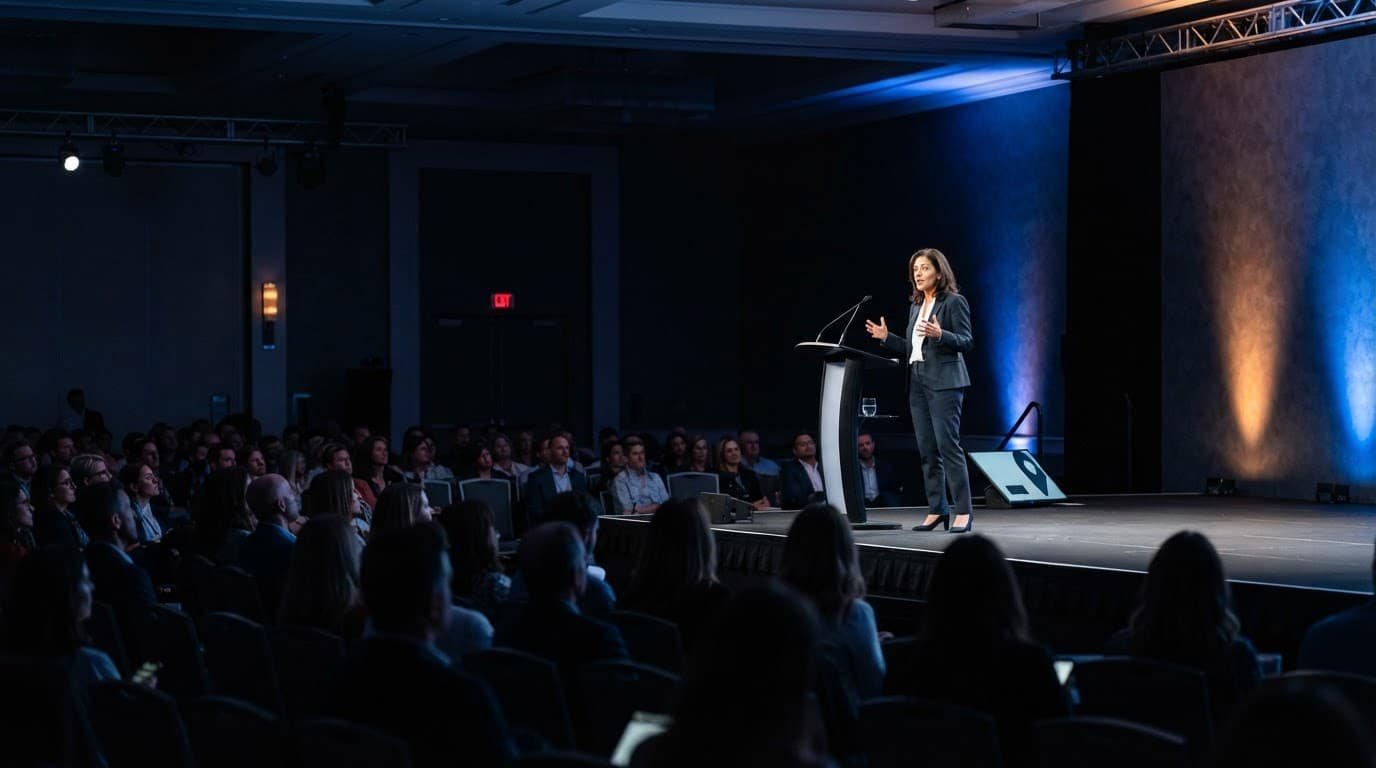
Keynote speakers need soft, balanced white light on their faces. The best placement lights the presenter without shining directly into their eyes, spilling across presentation screens, or creating sharp shadows under the chin.
Ask the AV team to test the stage with the actual camera setup before guests arrive. A speaker can look bright to the audience and still appear flat or shadowed on a livestream. LED fixtures also need a camera test at the planned recording settings, since poor dimming choices can cause flicker or banding. These camera-flicker testing recommendations for live-event lighting are useful when video recording is part of the program.
Keep the primary stage look clean. Colored backlight can add depth, but the presenter should never look blue, red, or green on screen.
Separate Stage Lighting From Decorative Lighting
A reliable lighting design gives each type of fixture a clear role.
| Lighting Job | Best Tools | What It Supports |
|---|---|---|
| Speaker visibility | Soft front light and controlled stage wash | Presentations, video, and audience attention |
| Room atmosphere | Uplighting, wash lighting, wall washes, and subtle texture | Networking, dining, and overall appearance |
| Details and decor | Pin spots and focused accent lights | Centerpieces, awards, signage, and product displays |
| Energy moments | Moving head lights and programmed color changes | Walk-ons, reveals, and post-program celebrations |
Decorative light should support the stage, not compete with it. If every wall, ceiling, and table is moving with color, guests won’t know where to look.
Use Lighting to Support Brand Presence
Brand colors can make a hotel ballroom feel connected to the company, even when the decor is simple. Thoughtful ambient design helps the room feel cohesive, but restraint remains key. Treat brand color like a polished accent, not the entire outfit.
Choose one main color and one supporting tone that work well in the actual room. A navy company logo may look sharp as a color wash on a wall, while a bright orange accent could work better in a photo area or during a short award cue.
Let Uplighting Add Depth to the Room
Uplighting is one of the strongest choices for large corporate ballrooms, conference rooms, and banquet spaces. Fixtures placed around the perimeter can bring attention to columns, draping, architectural details, and plain walls. Pin spots can highlight centerpieces and other table details.
For a networking reception, use a warm neutral or soft brand-color wash that leaves enough natural light on guests’ faces. People should be able to recognize colleagues, read name badges, and take photos without harsh overhead lighting.
For a gala or holiday party, the room can become more colorful after dinner and formal remarks. That gradual shift makes the event feel organized instead of jumping into party mode too early.
Let Gobo Projection Add Focus to Key Areas
Gobo projection uses a custom pattern or logo placed in front of a lighting fixture. It works best on a clean wall, stage backdrop, entrance area, or photo backdrop where guests can see it without standing on top of it.
A logo projected across a dance floor or banquet table often looks distorted and disappears in photos. One well-placed gobo projection near the arrival experience usually has more impact than logos scattered throughout the room.
Color quality matters as much as color choice. Fixture options vary, especially when LED lighting needs to provide clean white light, bold color, and camera-ready results. Reviewing professional LED fixture features can help planners understand why a proper gobo projection test with the venue’s surfaces and fixture setup matters before event day.
Match Lighting Ideas to the Event Format
The right fixtures depend on what the event needs to accomplish. Conferences, awards dinners, corporate galas, and a product launch may all happen in the same ballroom, but event lighting techniques and cueing priorities will differ.
Conferences Need Consistent Stage Coverage
For conferences and leadership meetings, put most of the budget into stage lighting. Speakers, panels, video screens, and walk-on areas need consistent coverage that looks professional in person and on camera.
Use static stage washes and front light for the main program. Moving head lights can still be used, but save movement for walk-ons, break transitions, and the opening sequence. Constant motion behind a presenter can distract the room and make video footage feel busy.
Awards Ceremonies Need Controlled Energy
Awards shows need visual contrast. The room should feel elegant during speeches, then become more celebratory when a winner is announced.
Coordinate lighting cues with the DJ, emcee, and AV team using one shared timeline. A short nominee music bed may last eight to 15 seconds. When the winner’s name is announced, keep the stage clear for applause and recognition. Follow with a bold color wash or brief cue from moving head lights for about 10 to 20 seconds.
That short celebration moment feels more polished than running a full song while the next category waits.
Product Launches Need Focused Reveal Moments
A product launch needs attention on the product, not a wall of effects. Use clean front light on the presenter, controlled accent light with pin spots on the product, and a lighting change that clarifies rather than competes with the reveal.
Avoid aiming bright fixtures at projection screens or glossy displays. Reflections can create screen glare, ruin product photos, and make slides harder to read. Rehearsal should include the exact reveal position, presentation content, and camera angles.
Ask the Venue the Right Lighting Questions
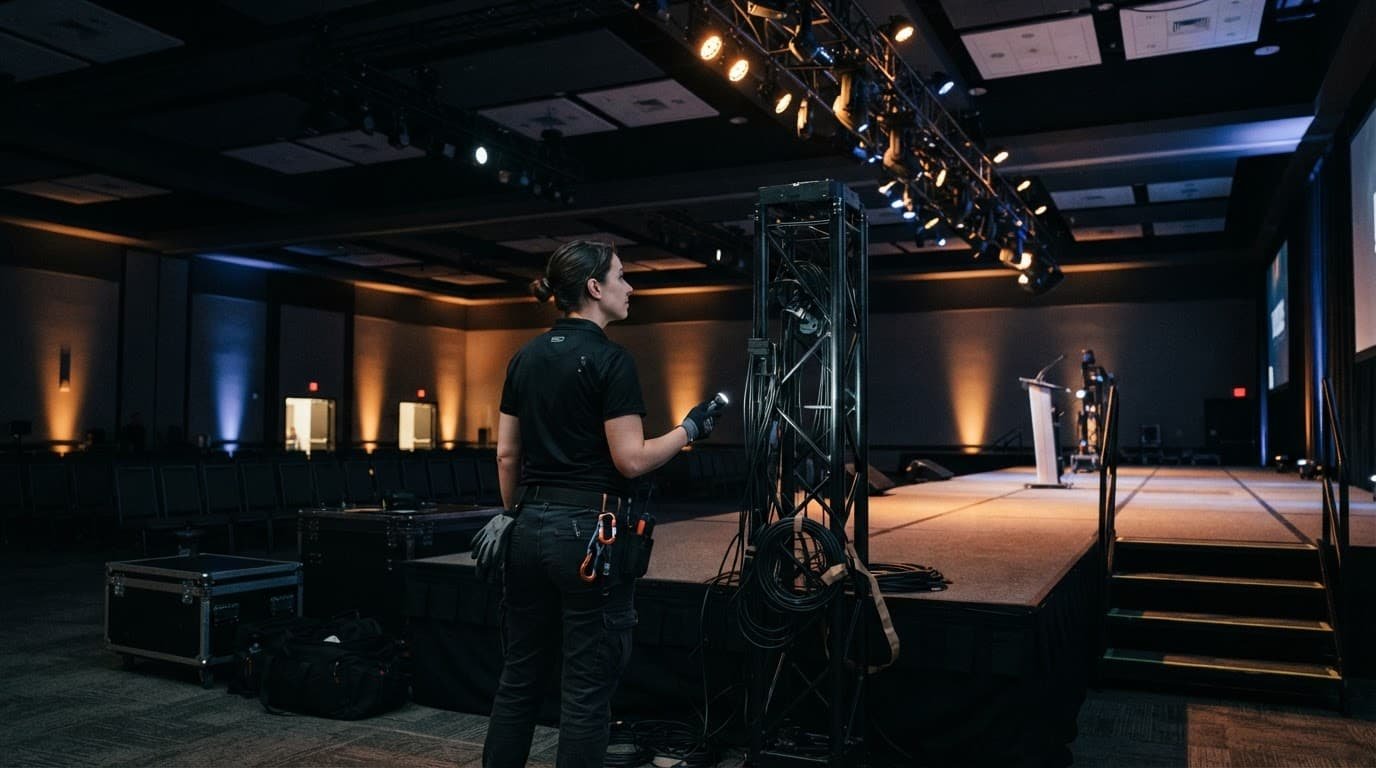
Venue capabilities can shape the lighting plan before the first fixture arrives. Event planners should review the room’s technical infrastructure before booking a lighting partner. A beautiful room may have low ceilings, limited power, strict rigging rules, or a short load-in window.
Questions to Confirm Before You Book
Ask the venue event manager these questions early:
- What house lighting is available, can individual zones be dimmed or controlled, and which lighting fixtures are included in the venue package?
- Where are the power sources, and what circuits are available for production equipment?
- Are there approved rigging points, ceiling-height limits, or restrictions on rig and truss systems?
- Where will the stage, screens, DJ, and video cameras be placed, and how will the lighting plan coordinate with the AV team during audiovisual production?
- How much time is available for load-in, programming, rehearsal, and teardown, and when can the crew access the room?
- Where may cables be routed, and are there restrictions on haze, fog, battery fixtures, floor cables, or wall-mounted equipment?
Temporary power and cable management aren’t small details. Cables must be protected, secured, and routed away from guest traffic. Review OSHA’s temporary wiring requirements with the production team when the setup includes added power distribution.
Program the Cues Before Guests Arrive
A cue sheet keeps the lighting plan tied to the actual event timeline. Include guest arrival, opening remarks, walk-ons, presentations, award announcements, video playback, dinner, networking, and dancing. Review the cues with the emcee, DJ, camera team, and operator before guests arrive.
The DJ’s music plan should fit that same schedule. Refined instrumental music may suit dinner and formal recognition, while brighter dance-pop, clean hip-hop, or familiar throwbacks can build energy after the program. Short cues keep the event moving and protect the moments where people need to speak.
Build a Lighting Budget Around Priorities
A lighting quote should include equipment, delivery, setup, programming, and an on-site operator. It should also cover teardown, venue labor, power distribution, and contingency for schedule changes.
A low equipment price can become expensive if it leaves out the technician needed to run cues during the event.
Spend First on What Guests Must See
Use this order when the budget needs focus:
| Priority Level | What It Includes | Best Fit |
|---|---|---|
| Core coverage | Stage lighting, speaker visibility, and safe power distribution | Conferences, panels, and awards programs |
| Room enhancement | LED uplighting, pin spots, and a polished entrance area | Dinners, galas, and networking events |
| Show effects | Moving head lights, custom gobos, and programmed reveal cues | Product launches, celebrations, and dance-focused parties |
If the event includes speeches, don’t compromise essential coverage to pay for decorative effects. Guests will forgive fewer color changes. They won’t forgive a presenter who can’t be seen.
Pay for Planning and Operation
Professional lighting production is more than renting fixtures. Someone has to place them safely, match the colors, program the cues, test the camera image, and adjust the room as the schedule changes.
A corporate event can look simple and still require careful coordination. That preparation protects the brand, the program, and the guest experience.
Avoid Common Lighting Mistakes
Problems That Can Distract Guests
- Using brand colors on faces during keynote speeches can make presenters look unnatural in person and on video.
- Filling the room with moving effects during dinner or networking can make conversation feel less comfortable.
- Treating venue house lights as the full lighting plan often leaves stages flat and ballrooms uninviting.
- Skipping a rehearsal can create glare on screens, missed award cues, and camera problems.
- Adding fixtures without a cable plan can create safety issues and clutter the room.
A Short Corporate Event Lighting Checklist
Before approving the final plan, confirm that it includes:
- Clear white light for every speaker, panelist, and awards presenter.
- Brand-color uplighting that fits the venue walls and company style.
- Camera testing for livestreams, video recording, and photography.
- Focused lighting with appropriate pin spots for signs, products, centerpieces, or photo areas.
- A shared cue sheet for the lighting operator, DJ, emcee, and AV team.
- Safe cable runs, approved power access, and enough setup time.
Frequently Asked Questions
How much does corporate event lighting cost?
The cost depends on the venue, event format, fixture package, setup time, and on-site staffing. Prioritize stage coverage, speaker visibility, safe power, and camera testing before adding decorative effects.
What lighting is best for a corporate keynote?
Soft, balanced white front light keeps the speaker visible without creating harsh shadows or screen glare. Test the stage with the actual cameras and presentation content before guests arrive.
Can event lighting incorporate company colors?
Yes, brand colors can be used with uplighting, wall washes, gobos, and short reveal cues. Choose one main color and a supporting tone so the room feels cohesive without making presenters or guests look unnatural.
Does a corporate event need a lighting operator?
An on-site operator can run cues, adjust the room, coordinate with the AV team, and respond to schedule changes. This support is especially valuable for conferences, awards programs, livestreams, and product launches.
What should be confirmed with the venue before booking lighting?
Ask about power sources, rigging points, ceiling height, cable routing, house lighting, haze restrictions, and the available load-in and rehearsal time. Confirming these details early helps prevent technical delays and unexpected production costs.
A Professional Room Starts With the Right Light
Corporate event lighting works best when it supports the people and moments that matter most. Clear visibility and comfort help presentations, conversations, photography, and celebrations feel polished without distracting from the program.
The strongest result is rarely the loudest lighting design. For corporate events, choose a prepared, collaborative lighting partner who understands the room and program instead of an effects package that competes for attention.