A polished business program depends on more than a good playlist. The right DJ helps shape the atmosphere, support clear communication, and keep the room comfortable through every stage of the event.
An emcee has a different responsibility. They are the voice guiding guests through introductions, awards, announcements, and transitions. Sometimes one experienced professional can handle both roles. Other programs are better served by separating them.
The decision comes down to your event format, audience engagement, professionalism, technical coordination, budget, and vendor fit. It also depends on how much formal programming the event includes.
DJ vs. Emcee: Understanding Each Role
DJs and emcees may work side by side, but they are not automatically the same role. The strongest business events make expectations clear before the first guest arrives.
| Role | Main Focus | Best For |
|---|---|---|
| DJ | Music, microphones, mood, lighting, and technical cues | Networking, meals, celebrations, awards music, and dancing |
| Emcee | Announcements, speaker introductions, audience direction, and program pacing | Formal programs, presentations, raffles, recognition, and ceremonies |
| DJ and emcee combined | Music and polished hosting from one professional | Smaller or moderately structured company functions |
When the roles are planned well, guests hear what they need to hear, enjoy the music, and never feel the behind-the-scenes work.
What a DJ Handles
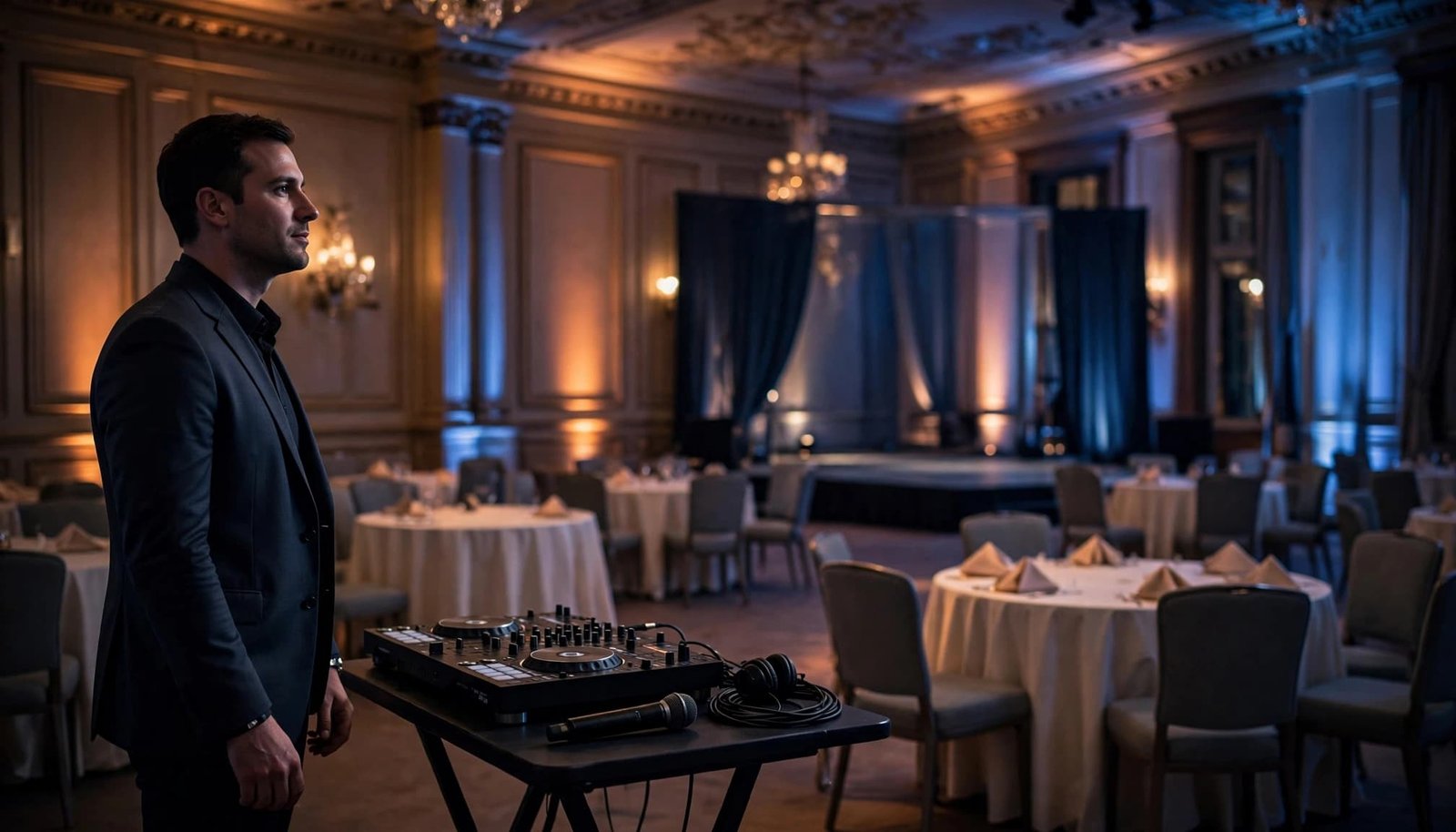
A DJ does much more than play songs. Music may begin with a welcoming arrival playlist, shift into polished background music for networking, stay comfortable during dinner, and build into a celebration later in the evening.
The DJ also supports the room with professional sound, wireless microphones, music cues, and volume adjustments. At an awards ceremony, that may mean starting walk-up music at the right moment, lowering it for a presenter, and coordinating cues that support the emcee without taking over the spoken program.
A dependable DJ watches how guests respond. A quiet room during cocktails may mean people are focused on conversation, not that the music needs to get louder. A packed dance floor later in the evening may call for more familiar songs and a stronger pace.
What an Emcee Brings to the Program
An emcee is responsible for speaking with purpose. They welcome guests, introduce leadership, direct attention to the stage, announce dinner service, recognize award winners, and help the audience understand what happens next.
The best corporate emcees are friendly and confident without taking over the room. A business audience usually doesn’t need a comedy routine between every announcement. They need clear names, correct pronunciations, appropriate energy, and a tone that reflects the company.
Good corporate emceeing is often noticed most when it is understated. The program moves forward, and the spotlight stays on the company, speakers, and honorees.
Corporate Events That Benefit From a DJ
Corporate events are not all built around a dance floor. A professional DJ adjusts the music, microphone use, lighting, and hosting style to fit the purpose of the gathering.
Celebrations, Galas, and Recognition Events
A holiday party, employee appreciation dinner, awards gala, milestone celebration, or fundraising event often needs a balance of structure and energy. Guests may arrive ready to reconnect with coworkers, hear remarks from leadership, enjoy dinner, and celebrate after the formal portion ends.
For these events, a professional DJ can provide tasteful arrival music, clear sound support for speakers, walk-up music for awards, and a more upbeat set once the program is complete. The right music and hosting scope depends on whether the company function is a reception, dinner, recognition program, or celebration. The music should feel intentional at every stage, not like a playlist that was started and forgotten.
Receptions, Launches, and Team Gatherings
A product launch, client reception, conference social, team retreat, or networking mixer may need less microphone time and more attention to atmosphere. Background music should support conversation rather than compete with it.
These settings also call for good judgment. A high-energy dance set can work well at an employee event, while a client-facing reception may benefit from a more reserved music style. Share the event goal, guest mix, brand expectations, and desired mood during planning.
For local programs that need music, sound, lighting, and hosting support, review these New Hampshire DJ services for business events before building your entertainment plan.
When You Need Both a DJ and an Emcee
One professional can often manage music and announcements for a company function or smaller awards presentation. A short, straightforward agenda may not require separate roles. Larger or more formal programs may need separate DJs and emcees, especially when there are many speakers, detailed stage cues, video elements, or rapid agenda changes.
One professional may reduce staffing costs. Separate roles can justify the additional fee when the event includes multiple speakers, video cues, awards, or high audience-engagement demands.
Complex Programs Need Clear Focus
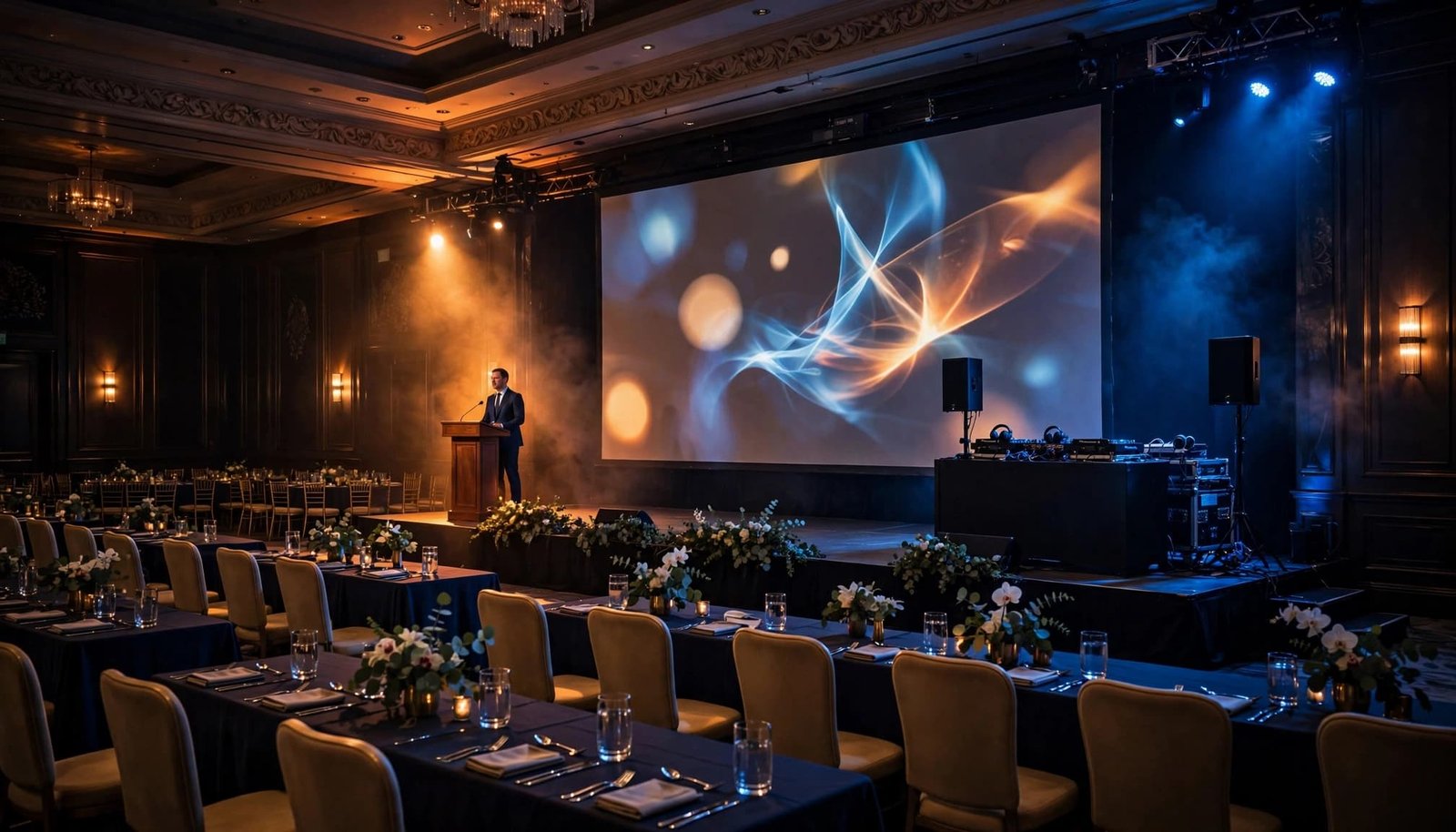
A conference awards dinner may include executive remarks, sponsor recognition, a video presentation, several award categories, dinner service, and an after-party. In that format, the DJ may focus on sound reinforcement, microphone levels, music cues, and technical transitions while the emcee manages the stage.
That division gives each role proper attention. The emcee can watch speakers and communicate with the planner. The DJ can monitor microphones, cue walk-up music, and adjust sound for the room.
Assign a named person or role to each important cue. The planner, venue captain, AV operator, emcee, and DJ should all know who has the final word if the timeline changes.
One Professional Can Be the Right Fit
A combined DJ and emcee is often practical when the program has a short welcome, a few announcements, awards with simple cues, and a larger focus on networking or dancing.
The key is preparation. Provide approved announcement language, names and pronunciations, planned music moments, content restrictions, and the desired level of microphone interaction. A holiday party may welcome more audience energy. A formal client dinner may call for brief, polished announcements only.
A DJ should match your company culture, not impose a party style that feels out of place.
Sound, Lighting, and Music Planning to Confirm
Before choosing a provider, compare the full scope of service. A quote should show what’s included for sound, audio visual services, microphones, lighting, staffing, setup, breakdown, travel, hosting, and production support. It should also clarify whether the provider supplies only music and hosting or coordinates with outside production vendors, venue staff, and technical teams.
Sound Support and Room Setup
Sound quality affects how confident leadership and presenters appear. Ask what sound reinforcement is planned for your guest count and room layout. A ballroom, brewery, conference room, outdoor tent, and renovated mill each present different acoustic challenges.
Confirm where speakers will stand, how many wireless microphones are needed, whether a podium is involved, and who is handling video audio. A helpful AV checklist for conferences and corporate events can help planners organize event venue questions and technical deadlines.
Also discuss access times, loading routes, stage location, and when the sound check can happen. Those details prevent a rushed setup while guests are already arriving.
Lighting, Playlists, and Requests
Event lighting can make a room feel more polished, especially at a gala, holiday party, or awards dinner. Uplighting may support company colors when requested, while dance lighting can be reserved for the celebration portion of the night.
Music planning should be tailored to the audience. Guest lists often include executives, employees, clients, vendors, spouses, and guests with different tastes. A strong music plan uses familiar songs, varied decades, appropriate genres, and clean selections that fit the workplace.
Employee requests can add energy, but they need boundaries. Decide whether requests are open, approved by a planner, or limited by a do-not-play list. Custom music, sound, and lighting planning can help bring those details together before event day.
Reliability and Vendor Coordination Matter
Corporate events have pressure points that guests may never see. A delayed speaker, a dinner schedule change, a video issue, or an unexpected announcement can affect the whole program. A prepared entertainment professional stays calm and works from the run-of-show.
Ask About Backup Planning
Technical problems aren’t always preventable, but the response should be planned. Ask what backup music playback, microphones, cables, and contingency procedures are available for the event.
SmartSource recommends backup wired handheld microphones, spare wireless microphones, and replacement cables for each connector type in use in its event AV backup checklist. Your exact needs will depend on the venue and program, but the conversation should happen before signing an agreement.
A written agreement should also clarify performance hours, setup and breakdown, overtime terms, weather-related travel planning for outdoor events, and each vendor’s responsibilities. Reliable vendor coordination is part of the value you’re purchasing, not an optional extra.
Coordinate the Cues Before Event Day
Event planners, venue managers, caterers, the AV team, and the emcee should know the schedule and communication path. Confirm who gives the cue for dinner service, when speakers are ready, how award recipients approach the stage, and what happens if a presentation runs long.
Share final names, pronunciations, award order, presentation files, and music requests in advance. For more detailed production planning, Five Stone Creative’s corporate event production guide offers a useful framework for aligning the event experience with the program itself.
A few minutes of coordination before doors open can prevent awkward pauses later.
How to Choose the Right Corporate Event DJ
When comparing disc jockeys, look beyond the lowest quote. It may not cover the planning time, equipment, communication, and schedule support your program requires.
Ask Questions That Reveal Preparation
Use the consultation to understand how the provider works with corporate clients. Helpful questions include:
- Have you handled our event format, event venue, and guest count?
- What sound reinforcement, wireless microphones, and lighting are included in the proposal?
- Can you provide emcee support for introductions, awards, and company announcements?
- How do you coordinate with our planner, venue staff, caterer, and outside AV team?
- What is your backup plan for music playback, microphones, cables, and equipment issues?
- How do you handle employee requests and workplace-appropriate music?
- What attire will you wear for our event’s level of formality?
The answers should be clear and specific. Vague promises are not a substitute for a well-organized plan.
Look for Professional Restraint
The right provider needs enough presence to guide the room, but enough restraint to let the company remain the focus. Listen for how they describe awards, presentations, formal dinners, networking events, and employee celebrations. Their approach should change with the format.
DJ Steve Neff Entertainment LLC has provided professional entertainment since 1999 and is run by Steve Neff and Jon Turgeon. The company was named the 2026 Best DJ Service in Concord, New Hampshire by Quality Business Awards. That recognition is one point to consider alongside planning style, service scope, communication, and the fit for your event.
Key Takeaways
A corporate event DJ manages music, sound, atmosphere, and important transitions. An emcee manages the spoken program, audience direction, speaker introductions, and event pacing.
A simple agenda with limited hosting needs may suit one professional. A formal program with multiple speakers, extensive awards, video cues, or heavy audience direction may justify separate roles.
The right choice is prepared, adaptable, appropriately dressed, and comfortable working with your event team. Weigh the budget against technical coordination, professionalism, audience engagement, and the cost of managing multiple vendors. Clear communication before the event creates a smoother experience for everyone in the room.
Final Thoughts
Business programs feel polished when music, announcements, and technical details support the same goal. The best entertainment plan is not the loudest or most elaborate. It’s the one that fits your audience and keeps the focus where it belongs.
Choose a DJ or emcee who understands the event format, audience expectations, and program complexity. The right choice should also match the level of technical and hosting support required, while allowing unexpected moments to pass without distraction.
Frequently Asked Questions
Do corporate event DJs also act as emcees?
Many corporate event DJs can provide emcee support for introductions, awards, dinner announcements, and transitions. Confirm the exact scope before booking, including the desired style, approved language, and who handles formal announcements.
A strong emcee doesn’t need to speak constantly. Clear, well-timed communication is usually more effective than a high-volume party-host style.
Do we need both a DJ and an emcee?
One professional can often cover a short business program or networking-focused agenda. Separate roles are usually better for formal programs with multiple speakers, awards, video cues, complex sound reinforcement, or substantial audience engagement.
Hiring one professional can simplify the budget, while separate roles provide more focused support. Confirm whether the vendor handles spoken hosting, technical coordination, and communication with the planning team and venue.
How early should we book a DJ for a corporate event?
Book as early as possible once the date and venue are confirmed, especially for holiday parties, awards dinners, summer events, and popular venues. Early planning gives your DJ time to review the agenda, coordinate with vendors, prepare music, and plan equipment around the room.
What should be included in a corporate DJ proposal?
Look for performance hours, setup and breakdown details, travel, sound equipment, microphones, lighting, emcee duties, staffing, backup planning, and overtime terms. If the event requires outside AV, photo booth services, staging, or video production, confirm whether those services are included or managed by another vendor.