Music can decide whether a company event feels polished and purposeful or loses energy before dessert is served. A great meal and a beautiful venue matter, but the entertainment guides the room through every speech, toast, award, and celebration.
For planners, corporate event entertainment should support the event’s purpose, audience, and schedule. The corporate event DJ vs live band decision isn’t about choosing a universally better option. It’s about matching the entertainment to guest demographics, budget, venue constraints, and the atmosphere you want guests to remember.
Start with the event’s purpose, then choose the performance style that supports it.
Key Takeaways
- Choose between a corporate event DJ and live band based on the event’s purpose, schedule, audience, venue, and desired atmosphere—not on a universally better option.
- A professional DJ offers broad music selection, flexible program cues, controlled volume, and a compact setup, making it practical for complex agendas and mixed-age groups.
- A live band creates visual excitement, strong crowd engagement, and a memorable sense of occasion, especially for product launches, anniversaries, and featured celebrations.
- Compare complete quotes, including equipment, lighting, microphones, travel, setup time, technical support, and space requirements before booking.
- A hybrid setup with a DJ and live instrumentalist can combine playlist flexibility with the energy and visual appeal of live performance.
Let Event Goals Lead the Music Choice
When weighing a live band vs DJ, consider the event’s structure, audience, and desired level of performance energy. A DJ may be the stronger choice for a structured awards program, while a live band may suit a milestone anniversary where visual excitement matters.
Match the entertainment to the moments that matter most. Think about when guests arrive, how long formal programming will run, when networking happens, and whether dancing is a central goal or a welcome bonus.
Use the following comparison to narrow the entertainment options during early planning:
| Event Priority | A Professional DJ May Fit Best | A Live Band May Fit Best |
|---|---|---|
| Broad age range | Large music library across decades and genres | Familiar covers performed with a distinct style |
| Formal agenda | Walk-on music, award cues, and flexible background audio | Short featured performances between program segments |
| High visual impact | Lighting, polished setup, and focused dance-floor energy | Musicians, vocalists, and a strong stage presence |
| Limited venue space | Compact equipment footprint | Best when a dedicated performance area is available |
| Custom requests | Fast adjustments based on guest response | Planned requests that fit the band’s repertoire |
An annual gala with executives, clients, and employees may need a refined soundtrack during dinner, then an upbeat dance set after the final award. A DJ can shift easily between those moods. A band may create a memorable showpiece when the performance itself is a featured moment.
The best entertainment choice supports the schedule rather than competing with it.
Atmosphere, Crowd Engagement, and a Smooth Program

A live music performance brings personality to the room right away. Its visual presence includes singers, musicians, instruments, and movement on stage. That energy suits a product launch, company anniversary, or celebration where entertainment is featured.
Live vocals, movement, and familiar songs can build a strong connection with the crowd, creating an interactive atmosphere. The trade-off is that a band’s sound is shaped by its arrangements, vocal range, and musical repertoire. A talented band can learn selected songs, but special requests need early discussion, especially when rehearsal is required.
A professional DJ offers a different kind of flexibility. With an extensive playlist, the DJ can shift among Motown, country, Top 40, hip-hop, EDM, classic rock, and oldies smoothly. It matters when the CEO loves classic soul, the sales team wants current hits, and newer employees want something different.
Corporate entertainment should support conversation when it matters, then raise the energy when the program gives guests permission to celebrate.
A DJ is also well suited to events with multiple speakers. Seamless transitions let background music greet attendees, soften for dinner, pause for recognition moments, and return with each presenter’s walk-on track. Clean microphone handoffs and carefully timed cues make the entire program feel organized.
Budget, Space Requirements, and Technical Coordination
For many planners, a DJ is the more budget friendly option, but the lowest quote isn’t always the best value. A professional DJ may be quoted around $800 to $2,500 for a standard event, depending on the market, event length, equipment, travel, lighting, and hosting responsibilities.
A full live band often starts near $3,500 and can reach $25,000 or more for larger, established acts. That higher cost reflects several performers, rehearsal time, instruments, transportation, and technical needs.
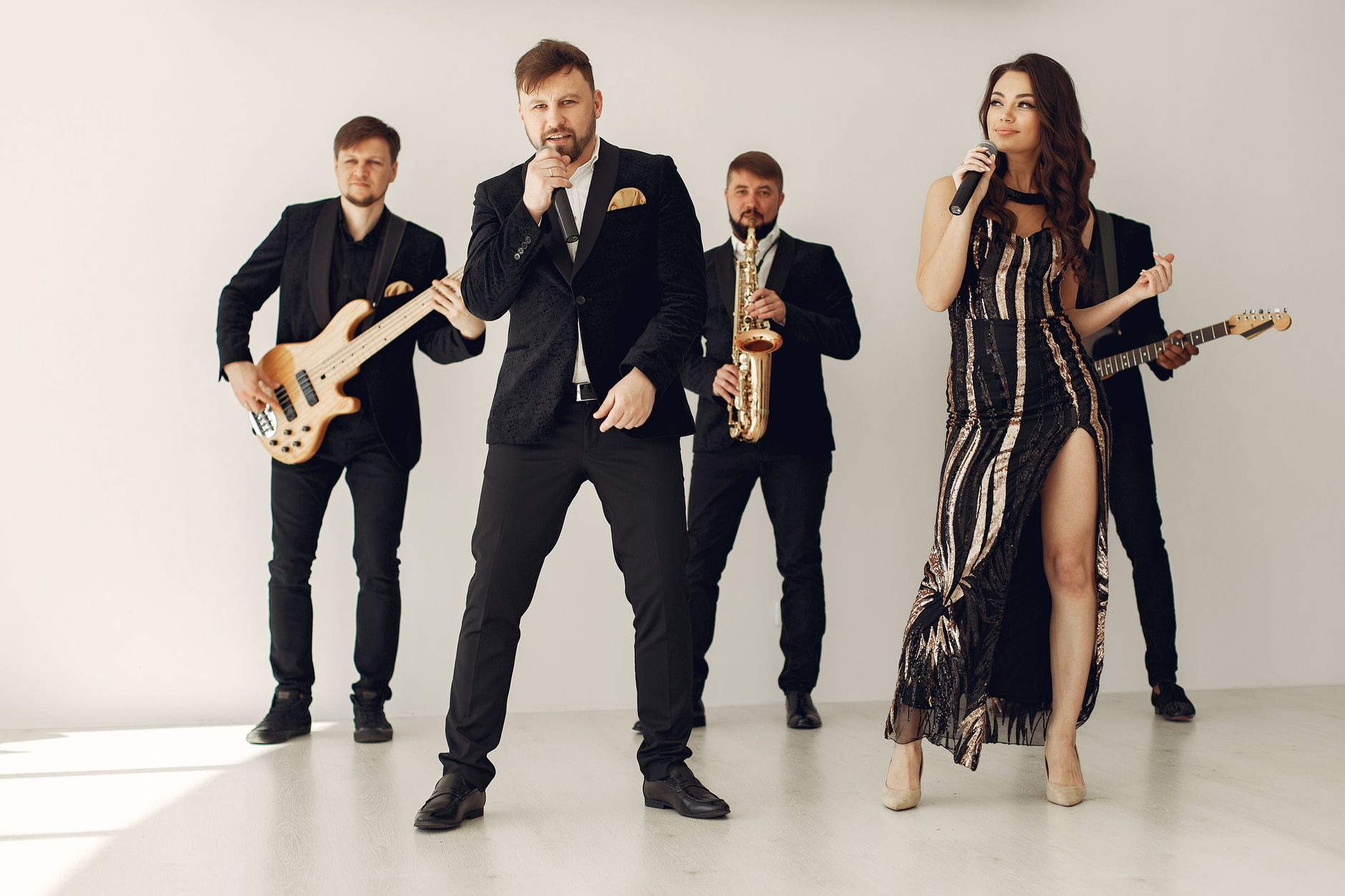
Photo by Gustavo Fring
Ask what each quote includes. Some entertainers provide their own sound equipment, wireless microphones, dance-floor lighting, and an experienced host. Others require the venue or an outside A/V company to supply pieces of the setup and handle audio engineering for complex programs. Those details affect both the budget and the event-day timeline.
The setup footprint is another major factor in this comparison. A DJ usually needs a table, speakers, lighting, and room for safe cable placement. A full band needs room for every performer, instruments, monitor speakers, a mixing area, equipment cases, and clear access for load-in.
A five- or six-piece band may request about a 16-by-20-foot performance area, though the band’s stage plot is the final word. Power needs also vary. Ask for written electrical requirements, then have the venue and A/V team confirm available circuits before signing.
For either choice, coordinate early with the venue. Confirm load-in times, elevator access, ceiling height, sound restrictions, stage placement, speaker locations, venue layout, and guest-flow considerations. Reliable planning prevents last-minute changes that can affect the guest experience.
Match the Music to the Type of Company Event
A corporate sales kickoff often benefits from a DJ because the schedule is usually detailed and fast-moving. Sales leaders may need entrance music, product videos may need clean audio transitions, and team awards may need short music cues. A DJ can keep the program moving while adjusting the energy between presentations.
Executive dinners and client receptions call for a more restrained approach. During cocktail hour, guests need to talk comfortably, so the music should feel polished without taking over the room. At a reception party, a DJ can maintain a refined background playlist and gradually increase the energy after dinner. A smaller live jazz or acoustic group can also fit this setting if the venue supports it.
For a product launch or major company anniversary, a live band can add a sense of occasion. The performance can become part of a brand activation, reveal, celebration, or closing party. If the company has a meaningful song request, ask whether the band can include it in the set. Many bands can accommodate a few requests, but they may decline songs that do not suit their style or require extensive rehearsal.
When comparing a wedding DJ or live band, planners often prioritize the social dance experience. A live wedding band may suit that goal, while corporate events also require agenda cues, branding, and controlled volume.
Guest demographics should guide the final music plan. Planners must balance musical style and personal taste with the age range, client expectations, and business purpose of the event. A mixed workforce usually responds best to familiar songs across several decades. A younger team may enjoy a current, high-energy dance set. A client-facing event may call for sophisticated music that stays in the background until the formal business is complete.
Hybrid Music Setups Offer a Practical Middle Ground
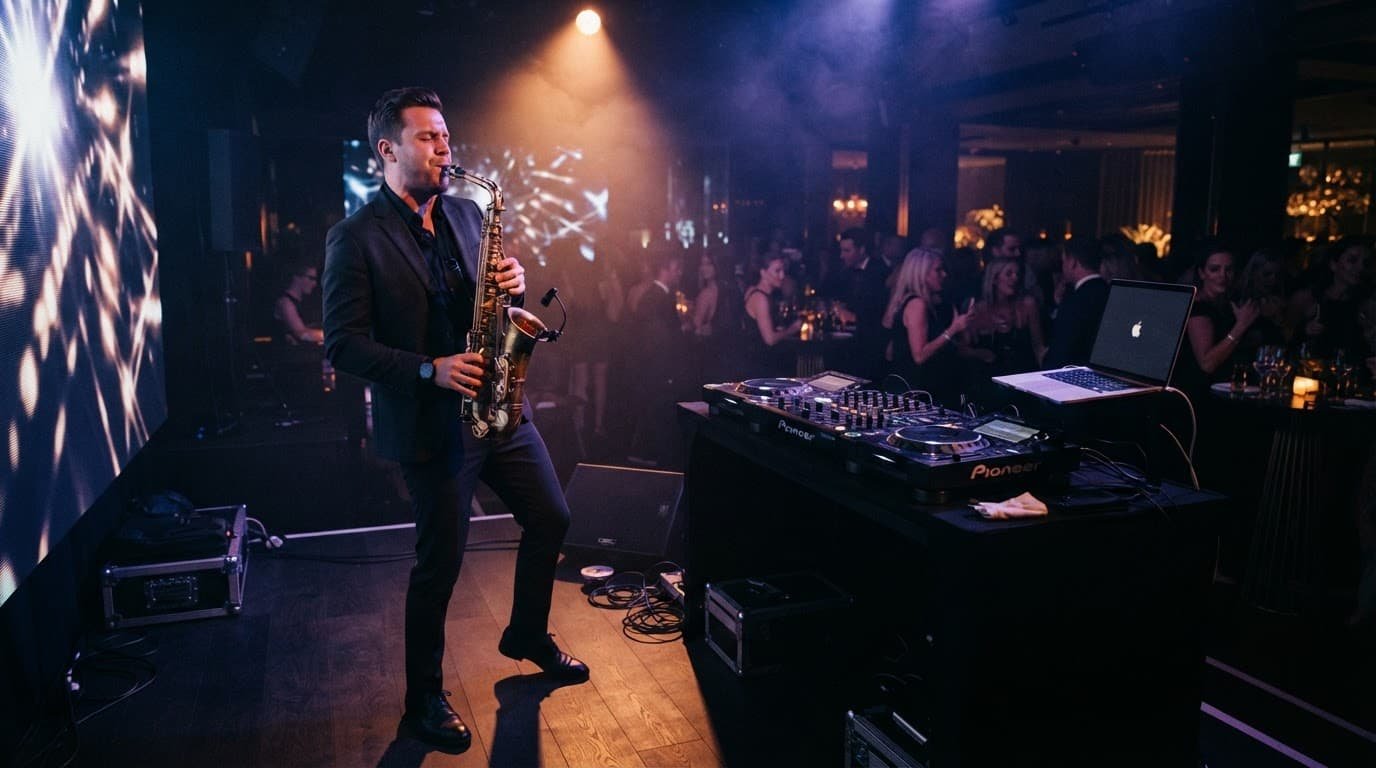
A hybrid music setup combines a DJ with live instrumentalists, such as a saxophonist, percussionist, or electric violinist. It gives a corporate holiday party the flexibility of a DJ library with the visual appeal and live energy of a performance.
This option can work especially well when planners want a packed dance floor without the cost and space demands of a full band. The DJ keeps music moving throughout the night, while the live performer can step in during key moments and create a memorable peak.
Questions to Ask Before You Book
The right questions reveal how prepared an entertainer is for a corporate setting:
- Can you provide music for guest arrival, dinner, awards, and dancing without long gaps or abrupt changes?
- How do you coordinate walk-on music, wireless microphones, and speaker cues with our A/V team?
- What equipment, lighting, and power connections are included in your quote?
- How much space do you need for your setup, mixing position, and load-in access?
- Can you work from a must-play list, a do-not-play list, and requests from several age groups?
- If we need a song for an award, anniversary, or product reveal, how much advance notice do you need?
A clear conversation before booking gives the DJ or band time to prepare a personalized plan. It also gives your team confidence that the entertainment will fit the schedule, venue, and tone of the event.
Frequently Asked Questions
Is a DJ or live band better for a corporate event?
Neither option is universally better. A DJ often suits events with detailed schedules, varied guest demographics, and frequent music cues, while a live band works well when the performance is a featured part of the celebration.
Which option is usually more affordable?
A professional DJ is generally more budget friendly because one performer can provide music, equipment, and program support. A live band costs more because the quote typically includes several performers, instruments, transportation, rehearsal, and greater technical needs.
How much space does a corporate event band need?
A full band may request a performance area of about 16 by 20 feet, although the band’s stage plot should determine the final requirement. Planners should also confirm space for monitors, a mixing position, equipment cases, safe cable placement, and load-in access.
Can a DJ handle awards, speeches, and dancing at the same event?
Yes. A professional DJ can provide arrival music, dinner background audio, walk-on tracks, microphone support, award cues, and a dance set while adjusting the energy as the program changes.
Is a hybrid DJ and live music setup a good compromise?
A hybrid setup combines the flexibility of a DJ library with the visual energy of a saxophonist, percussionist, electric violinist, or another live performer. It can create a memorable dance-floor experience while requiring less space and budget than a full band.
The Right Choice Supports the Entire Experience
The decision comes down to the experience you want guests to have. DJs offer flexibility, broad music selection, controlled program timing, and a compact setup. Live bands provide performance energy, visual presence, and a strong sense of occasion.
When your agenda is complex and your guest list spans generations, a professional DJ is often the most practical choice. When the entertainment itself is the headline, a live band or hybrid setup can create a memorable finish.
The strongest choice is the one that makes your event feel organized, personal, and ready to celebrate.