If your corporate event DJ has an emergency, the response should follow the replacement process in your agreement. A prepared substitute needs your schedule, music preferences, announcement notes, and suitable equipment to take over professionally.
The strongest contingency plan protects continuity, not simply the booking. Before event day, establish who will communicate, how a replacement will be arranged, and what happens if coverage isn’t available.
Key Takeaways for Corporate Planners
- Put replacement arrangements, communication responsibilities, and cancellation terms in writing.
- Keep the schedule, approved music, pronunciations, and vendor contacts in one accessible event file.
- Plan separately for an unavailable DJ, technical failure, and temporary playback.
Who Takes Over If Your DJ Cannot Attend?
Agency Rosters and Dedicated Backup Coverage
When choosing a corporate event DJ, distinguish access to a roster from a performer reserved for your date.
Melbourne Entertainment Company cites more than 400 musicians, DJs, and performers as a resource for sourcing replacements when someone is sick. That demonstrates an agency’s potential reach; it doesn’t establish that every roster member is available.
A reserved substitute means someone is assigned or held available under the agreed arrangement.
Independent DJs and Information Handoffs
An independent DJ can also have an established replacement network. The important distinction is how that arrangement works.
MyDeejay’s published substitution system retains event notes, paperwork, and custom music for substitutes. The practical lesson applies to any booking: your replacement needs the program details alongside the music.
What Should the Emergency Agreement Include?
The contract should state arrival time, setup duration, performance window, provided system inventory, and breakdown access. It should also explain overtime, site curfews, and what happens if speeches or dinner run late.
For performer emergencies, document the primary contact, notification process, replacement qualifications, and how the substitute receives your event file. Name the event planner who confirms replacement approval and can authorize additional charges, and document any approval or objection rights.
Record how additional charges are authorized and what cancellation, refund, credit, or rescheduling provisions apply if no acceptable replacement can perform. Avoid treating a broad promise of “emergency coverage” as a complete arrangement.
Equipment backup deserves separate wording. A substitute performer and a spare microphone solve different problems; neither automatically supplies the other.
How Do You Prepare a Replacement-Ready Brief?
Define the Audience, Atmosphere, and Music
A useful brief explains the event purpose, attendees, and desired tone. A buttoned-up conference afterparty needs different programming than a casual summer celebration.
Include preferred genres, must-play selections, clean-music requirements, and a do-not-play list. Choose familiar music without defaulting to overplayed wedding tracks or a generic “work vibes” playlist. The DJ should read the room and adapt selections to the audience and event tone.
Ask an agency’s office team to help organize approved selections beforehand. That avoids leaving on-site staff to assemble an emergency soundtrack.
Share the Schedule and Assign Authority
Keep one current run of show with speaker names and pronunciations, emcee announcement notes, awards, walk-on songs, and vendor contacts. The event planner should keep it current. Assign one company representative to authorize changes.
Identify who handles setup and microphones, cues each entrance, and signals dinner readiness. Walk-on music should land at the intended moment, and music should fade cleanly for unexpected toasts.
Our corporate DJ and AV coordination checklist helps organize these responsibilities. A replacement should receive the same instructions as the original DJ.
What If the Equipment Fails Instead?
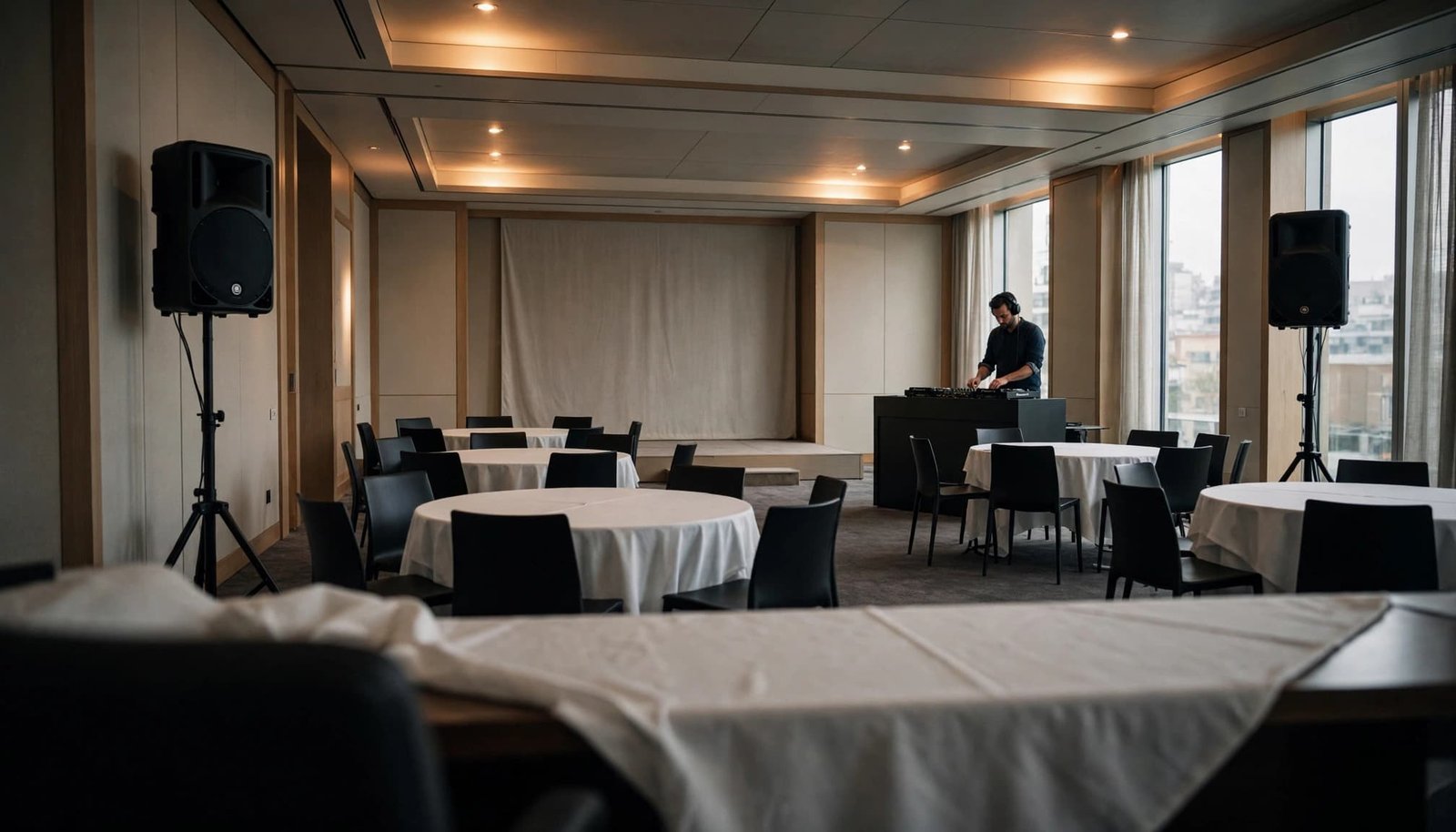
Professional preparation starts with a virtual or in-person site walkthrough, suitable speaker placement, and full sound that doesn’t overwhelm conversation. Contingency planning should cover microphones, cables, power supplies, and a second music source.
Quality microphones are non-negotiable. Feedback or unclear speech can undermine an awards presentation regardless of the playlist. Test microphones before showtime, including the backup option.
Coordinate lighting with the planner or AV team, and avoid strobes, shouting over drops, and club-style hype. Keep the program’s energy appropriate for the crowd by reading the room and adjusting volume or pacing. If the DJ also serves as an emcee, clear announcements and professional delivery matter more than forced jokes or exaggerated enthusiasm.
What Should You Do During the First Hour?
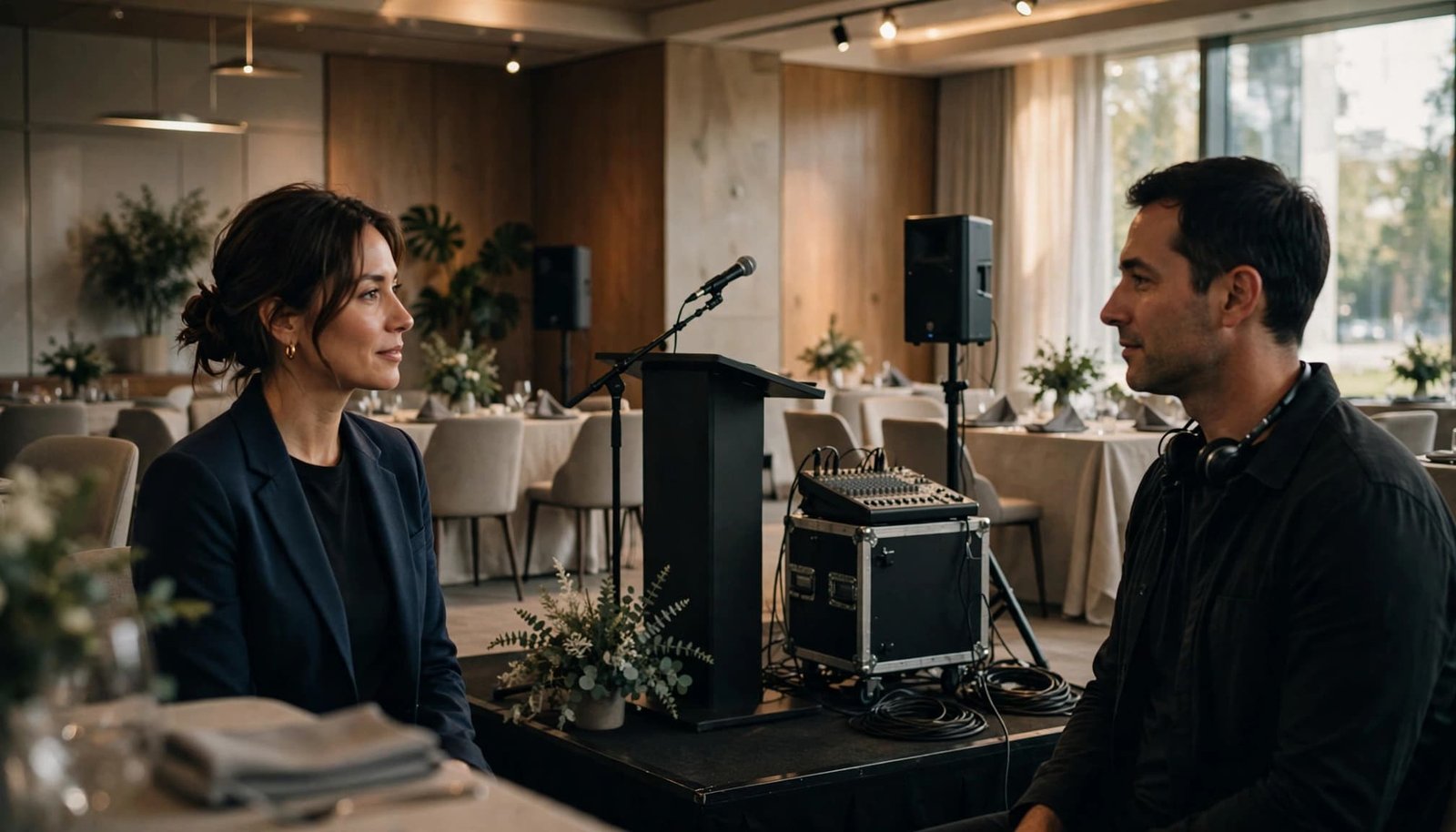
Keep decisions organized through the designated event lead.
- Activate the agreed contact process. Establish whether the DJ is delayed or unable to perform. Request the replacement’s identity, sound-system arrangements, expected arrival and setup timing, and next update.
- Protect essential program moments. Coordinate with venue and AV staff on working microphones, presenter support, and approved temporary playback. Send the replacement the latest schedule immediately.
- Adjust the program deliberately. If coverage remains unavailable, use the agreed simpler format. Assign a capable operator, prioritize announcements, and postpone music-dependent moments where practical.
A prepared playlist can support arrivals or dinner, but it doesn’t replace live cue management. The eventual DJ should adapt to guest response by reading the room rather than following a setlist locked hours earlier.
Frequently Asked Questions
Does Every Corporate Event Need a Dance Floor?
No. A dance floor is optional at networking receptions, where conversation, toe taps, and comfortable guest engagement can be successful outcomes.
Can Venue Staff Operate the Emergency Playlist?
Only as an agreed responsibility with suitable playback access. Assign an operator before the event rather than assuming venue staff will take over.
Preparation Keeps the Event Moving
A corporate DJ emergency is easier to manage when responsibilities, information, and alternatives are already organized. A replacement needs both the right skills and a complete brief.
Put the handoff process in writing before event day. That preparation supports clear announcements, comfortable guests, and a professionally managed program.