A recruiting reception should make it easy for candidates to introduce themselves, ask questions, and picture joining your company. A professional corporate event DJ can support that experience with welcoming music, clear announcements, and conversation-friendly sound.
Your entertainment plan should reflect the hiring goals, audience, and setting, rather than follow a standard company-party format. Thoughtful preparation gives your recruiting team more room to connect with guests.
Start by defining the atmosphere and the moments that need professional coordination.
Key Takeaways
- Choose a DJ who understands business receptions and can keep candidate conversations at the center of the event.
- Match music, microphone support, and announcements to each part of the recruiting schedule.
- Compare written proposals, clarify venue responsibilities, and confirm backup arrangements before booking.
What a Corporate Event DJ Should Handle
A recruiting reception brings together candidates, hiring managers, employees, and leadership. A corporate event DJ can provide dependable support for music and event flow while helping everyone feel comfortable.
SHRM’s guidance on effective recruiting connects a positive candidate experience with employer reputation and offer acceptance. The reception is one opportunity to make that experience welcoming and organized.
Support Connections Without Demanding Attention
The DJ’s first responsibility is to support the purpose of the gathering. Candidates should be able to hear introductions, speak with employees, and move between conversations without competing with the entertainment.
Unlike a typical corporate party, a recruiting reception centers on conversation and connection. Discuss whether the evening includes informal networking, leadership remarks, office tours, or a closing celebration. These details shape the music and hosting approach.
A busy room full of conversation doesn’t need encouragement to dance. It needs a professional who recognizes that engagement is already happening.
Ask how the DJ adjusts when guests remain focused on discussions.
Define the DJ and MC Responsibilities
A combined DJ and MC can coordinate music changes, introduce speakers, and direct guests toward scheduled activities. Agree on those responsibilities before signing the proposal.
For recruiting receptions, hosting usually benefits from a light touch. Short announcements can explain where candidates should gather or when remarks will begin.
Keep job information, application instructions, and hiring questions with your recruiting team. Give the MC approved language, names, pronunciations, and one company contact authorized to make changes. That division keeps announcements accurate and reduces last-minute confusion.
Build a Music Brief That Fits Your Company
Choose the atmosphere before choosing individual songs. Three descriptive words, such as welcoming, polished, and energetic, give the DJ a useful starting point.

Select Styles That Leave Room for Conversation
Instrumental jazz, bossa nova, soul, light electronic music, and restrained nu-disco can add movement without dominating the room. Keep vocals limited during the main networking period, and decide whether live music would complement or replace recorded selections at a conversation-friendly volume.
For music direction, instrumental recordings by The Budos Band and El Michels Affair offer a warm, rhythmic approach. GoGo Penguin and instrumental Antonio Carlos Jobim recordings provide different jazz-oriented options.
These are starting points for discussion, not a required playlist. Share your company culture and the event’s purpose, then let the DJ suggest an appropriate selection. Avoid assuming that candidates of a certain age all prefer the same music.
Review Track Versions and Guest Requests
A familiar song can still contain unsuitable language or themes. Review the exact recording or edit, rather than approving a title alone.
Provide preferred styles, a do-not-play list, and clear content restrictions. Decide whether guests may request songs and who can approve exceptions.
The soundtrack should also follow the schedule. Relaxed arrival music can become steadier during networking, pause for remarks, and brighten toward the close. That progression provides variety without turning every recruiting reception into a dance event.
Plan Sound Around the Room, Not Just Attendance
Guest count helps describe the event, but room shape, ceiling height, reflective surfaces, and adjoining spaces also affect sound. Share a floor plan and discuss where conversations, registration, and remarks will take place.
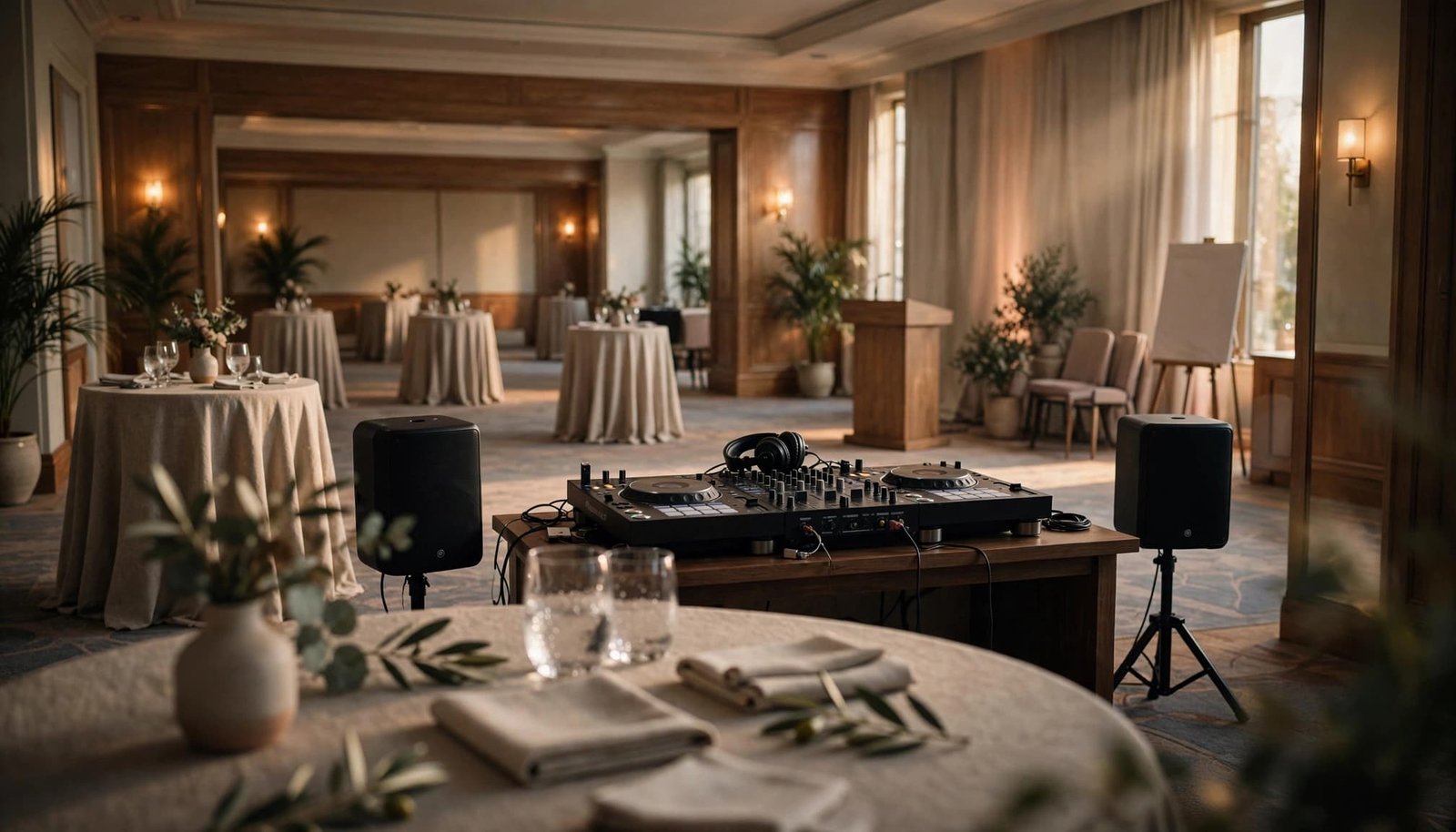
Test the Spaces Candidates Will Use
Walk the room during sound check. Listen at cocktail tables, near registration, and wherever hiring managers will meet candidates.
Music should remain below a normal speaking voice. Recheck levels after guests arrive; an empty room won’t sound exactly like an occupied reception.
Test sound where candidates will talk, not only beside the DJ console. A comfortable level in one location can still overwhelm a nearby conversation area.
Request an easy way for your event lead to ask for adjustments. Where practical, provide a quieter seating area and keep accessible routes clear of equipment and cables.
Confirm Microphones, Lighting, and AV Boundaries
Specify whether remarks need a handheld microphone, a fixed presentation position, or another arrangement. Confirm whether the venue, DJ, or a separate AV operator supplies the AV equipment and which audio visual services are included.
Ask the DJ and venue to confirm sound support, microphone testing, power access, and setup locations.
Subtle event lighting may suit a recruiting reception better than active dance lighting. Discuss presentation visibility and any guest access requirements before choosing effects.
If interviews or discussions take place in separate rooms, review breakout-room audio planning. Additional spaces need their own scope; don’t assume the reception system covers them.
Video playback, remote participation, and larger presentation systems may require separate AV support.
Give Every Program Moment a Clear Cue
Share a run of show with the DJ, recruiters, venue staff, presenters, and any event planner involved so everyone can work from the same schedule. Include setup access, doors opening, remarks, activities, and the contracted finish time.
Prepare Speaker Introductions and Transitions
For each formal moment, record the time, speaker, microphone requirement, music instruction, and person giving the cue.
Confirm whether the DJ introduces leadership or simply makes the microphone available. Provide names and pronunciations early, along with the approved wording for any closing instructions.
Short music fills can bridge planned transitions when appropriate; ask whether the DJ can prepare and cue them. Keep those fills separate from spoken content. Music under application instructions or a leadership welcome can make important information harder to follow.
Rehearse any video or presentation handoff with the responsible AV operator.
Allow Changes Without Confusing Guests
Recruiting conversations don’t always finish on schedule. Your event lead may need to delay remarks while guests complete a tour or while a presenter becomes available.
Choose one person to approve timing changes. The DJ should receive those decisions directly, rather than conflicting requests from several staff members.
Build modest breathing room between formal moments. Clear cues allow the entertainment team to hold background music, postpone an announcement, or resume the reception calmly.
Keep candidate conversations private. The microphone should never be used to comment on an individual’s application, qualifications, or interview progress.
Compare DJ Proposals by Scope and Value
A useful quote explains what your company is buying. An hourly rate alone doesn’t show planning time, equipment, hosting duties, setup requirements, or additional charges.
Ask each provider to quote the same event brief. Include the venue, expected attendance, service window, room layout, remarks, and any presentation requirements.
Use these categories to compare proposals.
| Proposal item | What to confirm |
|---|---|
| Planning and hosting | Meetings, music preparation, approved announcements, and MC duties |
| Sound and microphones | Coverage areas, microphone needs, and responsibility for presentation audio |
| Setup and travel | Access times, installation, removal, parking, and travel charges |
| Lighting and extras | Included lighting and separately priced optional services |
| Contract terms | Payment schedule, overtime, cancellation, and backup coverage |
The strongest proposal matches your reception’s needs without leaving important responsibilities undefined.
Request an itemized price rather than assuming a published party package applies. A conversation-focused reception may need limited lighting but careful microphone coordination. A multi-room program may require additional equipment or technicians, subject to the provider’s capabilities.
Ask how overtime is authorized and billed. Confirm whether setup and removal occur outside the guest-facing service window, and identify any venue charges for outside vendors.
Optional services, such as a photo booth, should have a clear purpose and separate price. Add them only when they support the candidate experience and available space.
Verify Reliability Before You Book
Professional preparation matters as much as music selection. Ask professional DJs about recruiting receptions and other corporate events, including experience with holiday parties, awards ceremonies, a product launch, or team building. Those formats don’t automatically demonstrate skill in supporting candidate conversations.
Discuss backup arrangements directly. Confirm the response to playback failure, microphone problems, staff illness, or weather-related travel disruption. Ask which provisions are included in writing; don’t assume every DJ supplies the same coverage.
Review liability insurance requirements with the venue. Confirm who handles music permissions and whether recording, livestreaming, or promotional videos create additional responsibilities.
DJ Steve Neff Entertainment LLC offers New Hampshire corporate DJ services and entertainment services for corporate clients, including music, hosting, professional sound, and venue-based planning for corporate events. Run by Steve Neff and business partner Jon Turgeon, the company began in Maine and is now based in Concord, New Hampshire. The team has professional DJ experience dating back to 1999.
When you’re ready to plan your corporate event entertainment, share the reception brief and request a written scope.
Afterward, ask candidates and recruiters whether conversations and announcements were easy to hear. SHRM’s discussion of candidate-experience auditing supports reviewing the hiring journey; reception feedback can help improve the next gathering.
Frequently Asked Questions
How Early Should We Book a Recruiting Reception DJ?
Check availability once the date, venue, and general format are established. Earlier conversations give your team more time to resolve equipment needs, music direction, and presentation responsibilities.
Confirm when the booking becomes secured, when payments are due, and when the provider needs final planning details. Availability and contract requirements vary, so ask directly rather than relying on a general booking window.
Can We Use a Playlist Instead of Hiring a DJ?
A playlist can suit a small, informal gathering with dependable sound equipment and a designated operator. That person still needs to manage volume, pauses, and any microphone use.
A professional DJ becomes more useful when the reception includes speakers, changing schedules, multiple music phases, or hosting duties. Choose according to the support your recruiting team needs, rather than whether dancing is planned.
Create a Reception That Makes Connection Easier
Personalized music, clear cues, and dependable sound make event entertainment welcoming and give candidates room to connect.
Prioritize preparation and communication when selecting your DJ. A detailed brief and written agreement help the entertainment fit your company, your guests, and the conversations that matter.