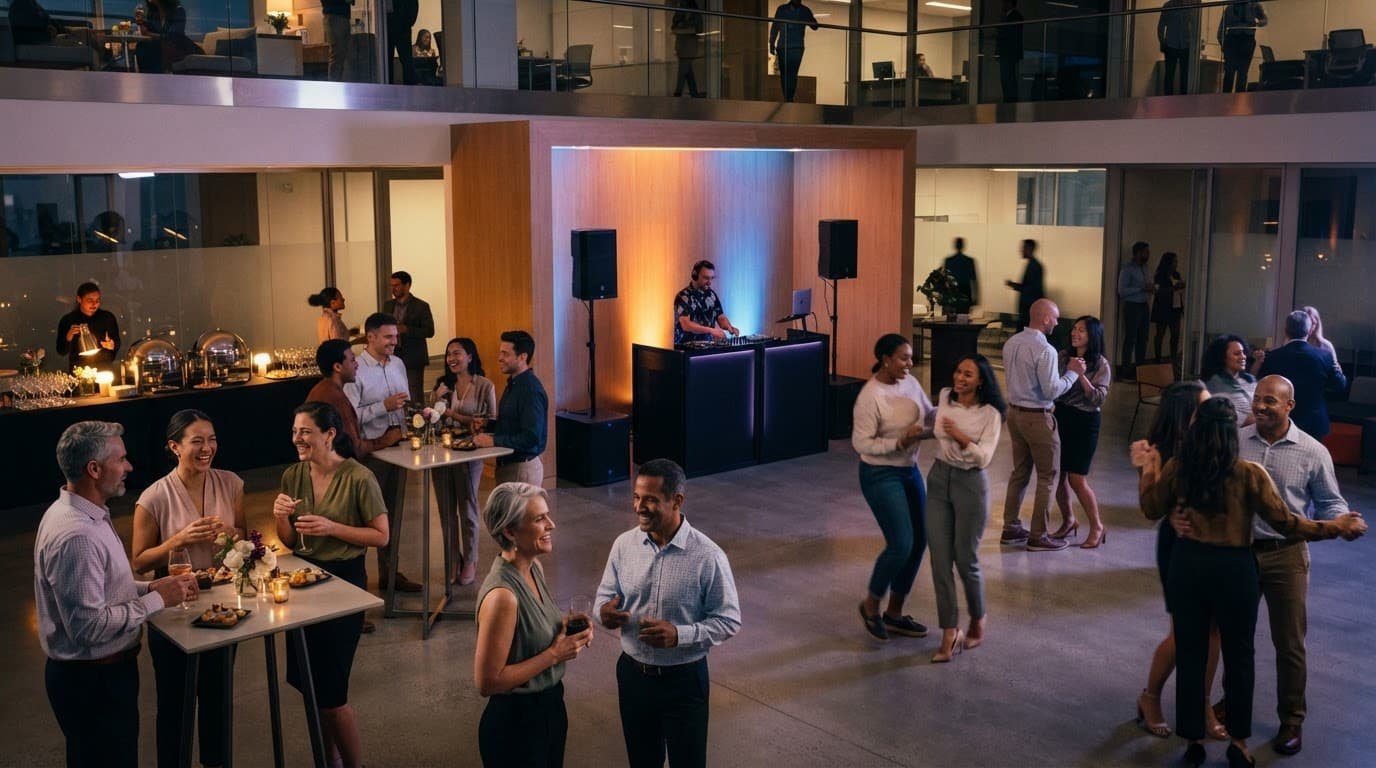
A new office can feel unfamiliar until people have a reason to settle in together. The right music brings warmth, energy, and a sense that the company is ready for its next chapter.
Employees, clients, and partners may arrive with different expectations. Some want to reconnect over refreshments, while others are ready to celebrate. Unlike a generic corporate party, a relocation celebration should feel personal and welcoming.
The goal is not to turn the new workplace into a nightclub. It is to create an atmosphere that feels organized, comfortable, and true to the company.
Key Takeaways
- Begin with warm, moderate-volume music that supports conversation, networking, and tours before building energy later in the celebration.
- Create a short music brief based on the company’s culture, then match the DJ’s selections and transitions to the event schedule.
- Review clean versions carefully, use an approved and do-not-play list, and choose varied music with broad appeal for a mixed corporate audience.
- Gather employee requests through a short survey, but let the professional DJ decide when each request fits the room and program.
- Coordinate the DJ with the event planner, presenters, venue, catering, and AV team, and compare written proposals that cover equipment, cues, licensing, and backup plans.
Start With a Warm Welcome, Not a Dance Floor
Relocation celebrations are often a first impression of a new space. Music can make a large office, renovated lobby, or event venue feel more personal before the first toast begins.
Keep Arrival Music Comfortable for Conversation
During arrivals, check-in, tours, and early networking, choose background music with a pleasant rhythm and moderate volume. The same restrained approach works at networking events, where guests are meeting colleagues in a new office.
Songs with a steady feel can create energy without forcing anyone to dance. Artists such as Earth, Wind & Fire, Stevie Wonder, Bruno Mars, Dua Lipa, and Pharrell Williams can serve as reference points. Use approved versions that fit the event.
The sound should fill empty space, not fill every silence. Guests need to hear colleagues, greet leadership, and take in the new location.

Turn Company Culture Into a Clear Music Brief
Before finalizing the music selection, write down three to five words that describe the celebration. A professional DJ can turn “welcoming, modern, upbeat, and professional” into a coherent set of choices. That brief gives better direction than a long list of unrelated requests.
A financial firm may prefer contemporary pop, classic soul, and refined electronic tracks. A creative company may welcome brighter disco-pop, indie favorites, and tasteful remixes. A family-owned business may want country, Motown, rock, and singalong songs that feel familiar across generations.
For corporate events, this short brief connects the soundtrack to the company’s brand identity without making the music feel like a marketing exercise.
Match Corporate DJ Music to the Event Schedule
Well-planned music follows the program. It builds as guests become comfortable, supports important announcements, and helps the room shift naturally into celebration.
Use the agenda as the starting point for each transition. A professional DJ adjusts levels as corporate events move from formal remarks to networking and celebration.
| Event Moment | Music Direction | DJ Focus |
|---|---|---|
| Guest arrival and office tours | Warm, polished, mid-tempo background music | Set a comfortable welcome |
| Networking and refreshments during cocktail hours | Light funk, soul, pop, and familiar classics | Support conversation |
| Executive remarks or ribbon cutting | Low-volume music, then a clean stop | Keep attention on presenters |
| Awards ceremony and key announcements | Short confident walk-on cues | Add energy without delaying the program |
| Open celebration | Dance-pop, funk, throwbacks, and approved requests | Build energy in waves |
Use Short Cues for Important Moments
An award recipient or executive introduction usually needs 10 to 20 seconds of music, not an entire song. A strong opening beat, recognizable hook, and clean ending keep the program moving.
The DJ and presenter should agree on entrance cues, microphone handoffs, walk-up music, and the signal for music to fade. Those details prevent the awkward pauses that can make a well-planned event feel uncertain.
Save the biggest party songs for when the formal agenda is complete. “I Gotta Feeling,” “Can’t Stop the Feeling!,” “September,” and “24K Magic” can create a shared moment when they fit the audience and the approved music policy.
Choose Clean Music With Broad Appeal
Corporate events need more care than a personal party playlist. Employees may bring spouses, clients, families, senior leaders, or guests from different cultures and age groups.
A Radio Edit Still Needs a Real Review
A track labeled “clean” may still have themes, references, or edited gaps that do not fit a workplace audience. Some edits replace a word with a long silence. Others leave the original message mostly intact.
Have a professional DJ review the exact version planned for playback. Provide an approved list, a do-not-play list, and one company contact with final authority when a request is questionable.
A song can be popular and still be wrong for a company event. The best choice supports the room, the schedule, and the people in it.
Public music rights also deserve an early conversation. ASCAP’s music licensing guidance explains that licenses from individual performing rights organizations cover the music in that organization’s catalog. Ask the venue and DJ who handles music licensing for the event format.
Build Energy in Short, Varied Runs
A mixed crowd rarely responds well when the same music genres fill a long block. Short, varied runs can move between dance-pop, funk, rock, country crossover, Latin pop, and throwbacks.
This approach gives people more chances to hear something they enjoy. It also avoids the feeling that one group has taken over the event.
Keep cultural, religious, national, and political references out of joke music or novelty moments. A relocation celebration should bring people together, not put anyone on display.
Gather Requests Without Giving Up Control
Employee input matters because it helps reveal what the room may respond to. Still, requests are suggestions, not guarantees.
Use a Short Music Survey Before the Event
A simple Google Form can take less than two minutes to complete. Keep it easy to answer on a phone. Use the results to refine the event playlist, not create a list of guaranteed requests.
Ask questions such as:
- Which part of the event matters most, networking, recognition, or dancing?
- Which genres would you enjoy hearing?
- Name one current favorite and one throwback favorite.
- Are there songs, artists, or styles you would rather avoid?
- Would you prefer a relaxed reception or a more active celebration later?
- Do you have accessibility, cultural, or comfort considerations the event planner should know?
Anonymous responses often encourage more honest feedback. If attendance details are needed, collect them separately from music preferences.
Let the DJ Read the Room in Real Time
A request that sounds perfect on paper may interrupt the flow at the wrong moment. A professional DJ watches the dance floor, conversation areas, age range, and overall comfort level before deciding when a request belongs.
For example, a high-energy hip-hop request may work after awards and dessert. It may not fit during a client presentation or while guests are still meeting new colleagues.
A thoughtful corporate event DJ can acknowledge requests, use appropriate ones at the right time, and decline others without making the guest feel dismissed.
Coordinate the DJ With the Full Event Team
Music works best at corporate events when it is part of the overall plan, not an entertainment detail added at the end. The corporate DJ, venue staff, catering team, presenters, and AV provider should work from the same schedule.
Share One Detailed Cue Sheet
The event planner should give the DJ the final timeline before event day. It should include guest arrival, food service, executive remarks, office tours, photo moments, awards, ribbon cuttings, and the intended end time.
Include presenter names, pronunciation notes, microphone needs, walk-on cues, and the person who can approve schedule changes. Catering also needs to know when louder music or dancing will begin, especially if dessert, coffee, or bar service is still underway.
Good event AV planning treats audio-visual equipment, lighting, presentation audio, and visual systems as connected parts of the same guest experience.
Test Sound, Power, and Room Layout Early
Ask about sound system coverage, speaker placement, available power, and venue volume limits. Open offices, high ceilings, glass walls, and hard floors can create echo. The answer is not always more volume. Proper placement and sound checks matter more.
The professional DJ should also coordinate with the AV team before presenters arrive. A shared microphone channel, projector audio, or presentation laptop can create problems if nobody has tested it in advance.
If the event uses recorded music, confirm rights and responsibilities with the venue. BMI’s licensing overview explains the role of business licenses for public music use. Personal streaming accounts and venue policies may not cover every event use.
Choose a DJ Team and Budget for the Real Scope
A professional DJ does more than play songs. A corporate DJ also manages timing, announcements, sound quality, backup equipment, and the changing energy of the room.
Compare Written Scopes, Not Just Hourly Prices
A low quote may omit microphones, speaker coverage, lighting, setup time, travel, MC services, custom music cues, and backup equipment. Compare both scopes if you’re considering live music, then ask how delays or equipment failures are handled.
Questions used to select an AV provider can help here as well. MeyerPro’s corporate AV selection guide highlights the value of planning, communication, crew support, and show-day readiness.
Ask each DJ team about experience with corporate functions, including product launch events, team-building events, and holiday parties. Ask for a written proposal covering clean music standards, insurance, presenter support, backup systems, custom playlists, cue design, and request handling. A clear written plan is more valuable than an impressive song list.
Frequently Asked Questions
What music works best for a new office celebration?
Warm, polished background music works well during arrivals, tours, and networking. Later, the DJ can introduce dance-pop, funk, throwbacks, and other approved styles as the formal program ends.
How loud should the music be during the event?
Music should fill empty space without making conversation difficult. The DJ can raise the energy and volume gradually when guests are ready to celebrate and lower it for remarks, awards, and announcements.
Should employees be allowed to request songs?
Yes, a short survey can help identify genres and favorites that will suit the audience. Requests should remain suggestions so the DJ can protect the schedule, company standards, and overall flow of the event.
What should be included in a corporate DJ plan?
The plan should cover the timeline, entrance cues, presenter support, clean music standards, sound coverage, setup time, equipment, and backup systems. It should also identify who approves changes and clarify music licensing responsibilities.
How can a company choose the right corporate DJ?
Compare written proposals rather than hourly prices alone, and look for experience with corporate events, cue design, announcements, and mixed audiences. A clear scope that includes communication, equipment, insurance, and show-day support is more valuable than an impressive song list.
A New Location Deserves the Right Soundtrack
A company relocation celebration does not need nightclub volume or a packed dance floor to feel successful. It needs music that welcomes people, supports the schedule, and reflects the company’s culture and brand identity as employees build something together.
When corporate DJ music is planned with care, the new office feels less like an unfamiliar building and more like a place where people want to gather.