People notice a DJ’s appearance before the first announcement, background track, or award walk-up song. A polished corporate DJ dress code helps the entertainment team fit the event, respect the company’s brand, and keep attention where it belongs.
For a business function, the right outfit is more than a style choice. Coordinated attire supports confident hosting for the event host and creates a consistent guest-facing presentation from arrival through the final song.
A Corporate DJ’s Appearance Sets the Tone
Corporate events often combine networking, dining, speeches, recognition, and celebration in one room. The DJ may be visible throughout every stage, making their appearance part of the overall presentation. The entertainment team should look intentional without competing with executives, presenters, guests, or event decor.
A well-planned appearance should look intentional, clean, and appropriate for the venue. It should never compete with executives, presenters, guests, or event decor.
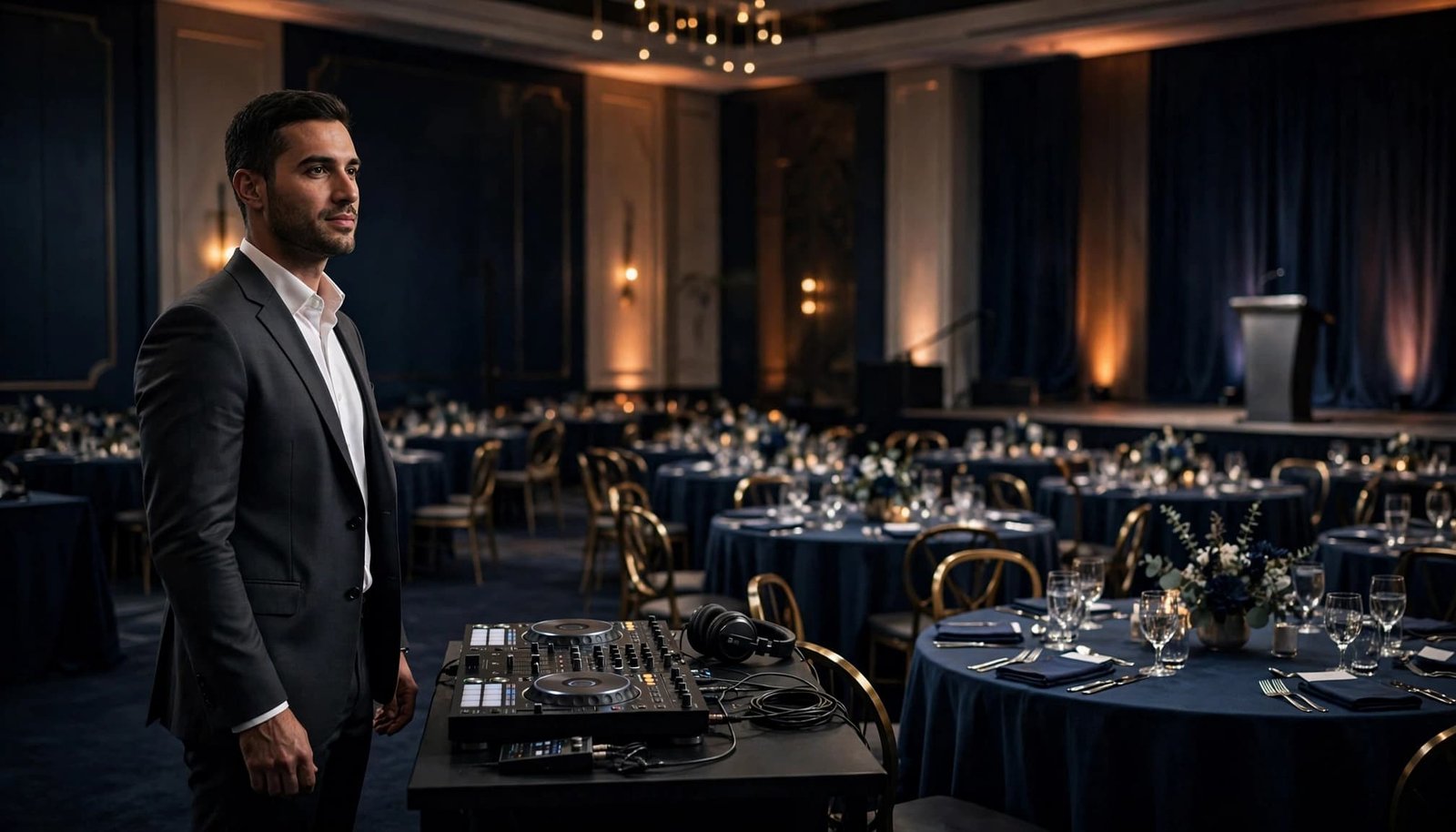
Professional Does Not Mean Overdressed
A DJ doesn’t need to look like a guest heading to a formal dinner. They’re also managing equipment, reading the room, making announcements, and responding to timeline changes.
The best outfit respects the level of formality while still allowing movement. A tailored suit, pressed button-down shirt, dark dress slacks, and polished dress shoes are reliable choices for many business functions.
The Goal Is to Support the Company
A corporate DJ is part music director, part audio professional, and part event host. Their clothing should communicate the same calm, prepared approach as their microphone work and music selections.
At a client reception, gala, or awards program, a wrinkled shirt or casual sneakers can pull attention away from an otherwise organized event. Details matter because the event reflects the company hosting it.
A DJ should look like they were invited to support the program, not like they arrived to perform at a nightclub.
Match the Corporate DJ Dress Code to the Event
Use these dress code tips when reviewing the invitation, venue, event schedule, and company culture. Ask the planner what guests, speakers, and vendors should wear, and whether the DJ will also serve as the event host.
When the direction is unclear, dressing one level more polished than the room is usually safer than arriving underdressed.
Conferences and Daytime Business Functions
Business casual is often a practical choice for conferences, training sessions, trade events, and daytime networking programs. A button-down shirt, tailored trousers, belt, and clean leather shoes usually fit well.
A blazer is useful when the DJ is making introductions, managing microphones for speakers, or working in a hotel meeting space. It can be removed later if equipment work or room temperature calls for it.
Avoid assuming business casual means jeans and a polo. Some companies welcome that look, but many expect a more refined version of casual business attire.
Awards Ceremonies and Corporate Galas
Awards dinners and evening galas are formal events that call for a darker, more formal look. A navy, charcoal, or black tailored suit is a dependable choice, especially when the DJ is visible near the stage or involved in introductions.
Emily Post’s guide to formal dress codes describes business formal as a matching suit jacket and pants or skirt, with darker suits carrying a more formal feel. That makes a tailored suit a strong starting point for executive-facing events.
A tuxedo should not be automatic. If the invitation says black tie, ask whether vendors are expected to follow it. A dark suit may be the better fit when the company wants formal style without placing the DJ on the same visual level as keynote speakers or honorees.
Networking Receptions and Company Parties
Company holiday parties, product launches, and networking receptions can vary widely, so the entertainment team should choose an outfit that supports a polished reception experience. A tailored blazer with dress slacks may feel right for a creative agency event, while a conservative company may prefer a full suit.
Ask about the planned energy. A DJ supporting quiet cocktail conversation should blend in more than a DJ leading a dance floor after dinner. A leather jacket may suit some casual events, but confirm it fits the venue and company culture; the outfit can still be polished, though the level of formality may differ.
Separate Load-In Clothing From Performance Wear
A DJ’s workday includes load-in and load-out, often beginning hours before guests arrive. Speakers, lighting, cables, cases, and microphones must be moved, placed, and tested during the sound setup.
That physical work makes two outfits practical. It isn’t a reason to wear setup clothing throughout the evening.
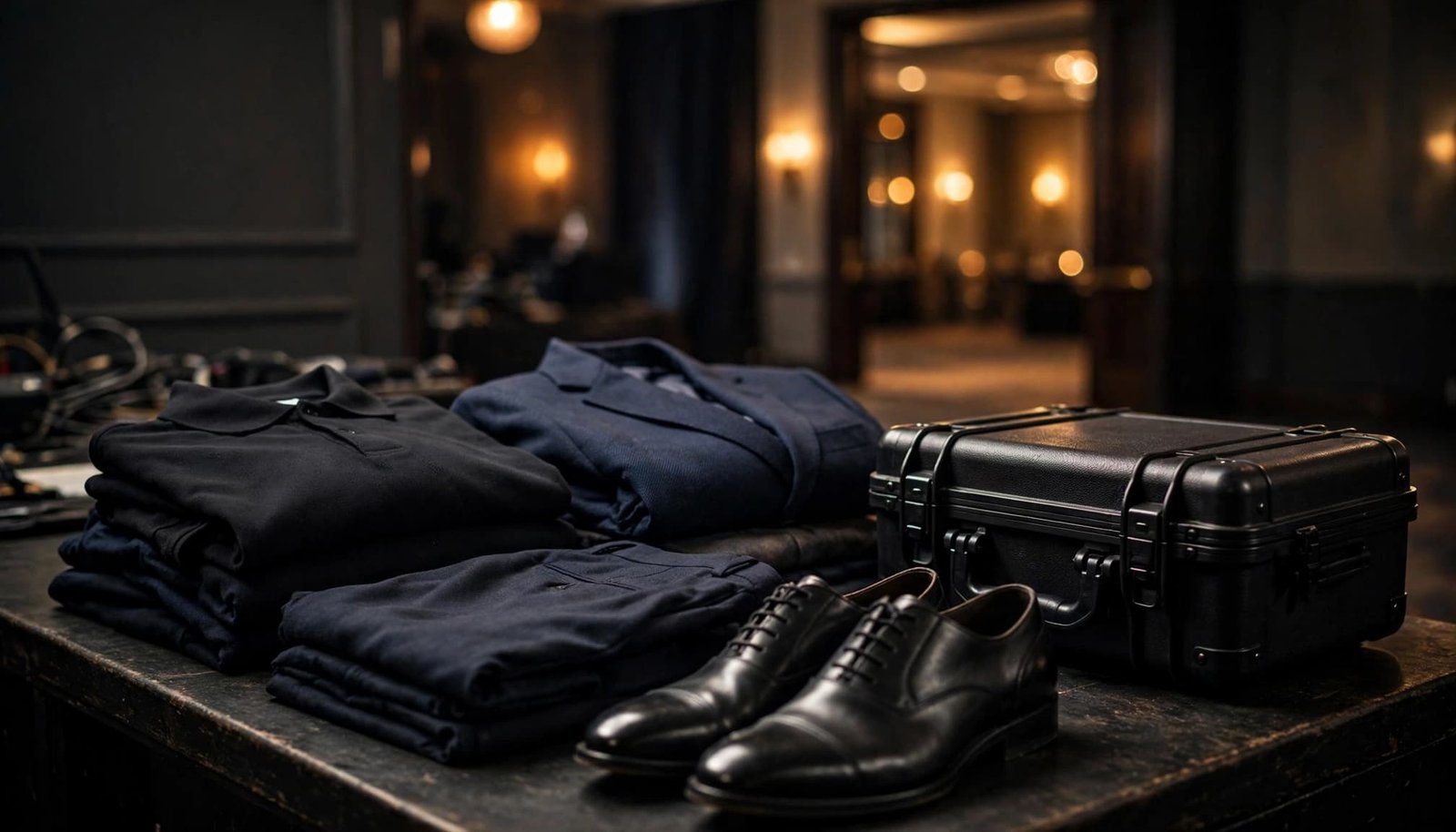
Wear Durable Clothing for Setup
Clean work pants, comfortable shoes, and simple branded apparel can be appropriate during load-in and equipment handling. These clothes should be durable enough for lifting cases and moving through service entrances without worrying about scuffs or wrinkles.
Branded apparel works best when it’s neat, subtle, and approved by the client or venue before guests arrive. A large logo, bold graphic, or casual T-shirt may be fine for a warehouse load-in, but it is rarely right for a guest-facing ballroom.
Change Before the Doors Open
Treat clothing for load-in and load-out as separate from performance attire. Bring the performance outfit on a hanger or in a garment bag, then change after the major equipment work is complete and before guests arrive.
This small routine keeps sweat, dust, cable marks, and worn setup shoes out of the event photos. It also helps the DJ begin the guest-facing portion of the evening looking prepared and focused.
If assistants or photo booth attendants are part of the entertainment team, their clothing should follow the same guest-facing standard. Outfits don’t need to match exactly, but the group should look coordinated.
Add Personal Style Without Distracting From the Room
Personal branding matters, especially for professional DJs who want a recognizable look. Corporate attire doesn’t require everyone to look identical or lose all personality.
The key is choosing details that feel intentional and fit the company, venue, and audience. Fit, color, and subtle branding can show personality while keeping attention on the event host.
Use Fit and Color as Your Signature
A well-fitted blazer, a subtle pocket square, a quality watch, or a consistent color palette can create a professional personal style. These details read better than flashy accessories or clothing that demands attention.
For example, a DJ may favor a charcoal suit with a crisp white shirt for formal events, then wear a navy blazer and dark trousers for a more relaxed company celebration. The overall appearance stays recognizable without looking like a uniform.
Leave Novelty Pieces for Other Gigs
Graphic T-shirts, large chains, bright sneakers, distressed denim, and loud branded apparel may fit a nightclub dress code, but they’re usually too distracting for a professional business function.
A leather jacket may work for a casual rooftop event, but can feel out of place in a formal hotel ballroom. When in doubt, choose clothing that looks refined in photos, suits the venue, and doesn’t distract from the event host.
Plan for Comfort, Weather, and Long Hours
Professional appearance has to last longer than a quick arrival photo. A DJ may handle a physically demanding load-in and load-out before standing through cocktail hour, dinner, presentations, awards, and dancing.
Comfortable clothing helps the DJ manage event host responsibilities, music timing, announcements, and guest engagement. It also keeps attention away from a stiff collar or painful shoes.
Choose Shoes Built for Real Work
Dress shoes should be clean, supportive, and stable on a ballroom floor, outdoor patio, or temporary staging area. A cushioned insole can make a long night more manageable without changing the polished appearance.
For outdoor events, rain, mud, uneven surfaces, and temporary staging areas can quickly damage footwear. Keep a second pair in the vehicle when possible, so an unexpected scuff or spill doesn’t disrupt the performance.
Dress for the Venue’s Temperature Changes
Outdoor events and tented company gatherings may require breathable shirts, lightweight suit fabrics, and a tailored layer for cooler evening temperatures. Indoor spaces can also shift from warm during setup to cool during dinner service.
A backup shirt is a smart addition for summer events or physically demanding load-ins. A clean jacket or blazer can be added before guests arrive without making the DJ look bulky or uncomfortable behind the booth.
Key Takeaways for Professional DJ Attire
A corporate event outfit should support the company’s event goals while allowing the DJ to work comfortably and confidently. These checks help avoid last-minute uncertainty:
- Confirm the written dress code with the planner, including whether black-tie or business formal applies to vendors.
- Match the outfit to the venue, guest list, event agenda, and level of DJ or MC visibility. Confirm whether the DJ will also function as the event host.
- Keep setup clothing and guest-facing performance attire separate whenever possible.
- Choose polished shoes, pressed clothing, and subtle accessories that can handle a full event timeline.
- Avoid distracting logos, graphic T-shirts, worn denim, oversized jewelry, and clothing that restricts movement.
- Coordinate the entertainment team’s appearance so DJs, MCs, and attendants look clean and appropriate together.
For business receptions, awards programs, holiday parties, and other professional functions, corporate party DJ services should bring the same attention to appearance as they do to sound quality, timing, announcements, and event flow.
Frequently Asked Questions
Can a Corporate Event DJ Wear a Branded Polo?
A branded polo can work well for load-in, soundcheck, and equipment setup. It may also suit casual events if the planner confirms that it matches the expected vendor attire.
For a gala, client reception, awards ceremony, or formal dinner, business casual or a formal suit is usually the stronger choice. The DJ should change before guests arrive unless the company specifically requests branded apparel during the event.
What Is Appropriate Wedding DJ Attire?
A full tuxedo is appropriate when the couple or venue clearly requests a black-tie wedding for vendors. It shouldn’t be assumed simply because the wedding is formal.
For many formal receptions, a dark suit offers the right balance. It looks polished near the head table and photographs well, while remaining comfortable for announcements, equipment checks, and hours behind the booth.
Why Does DJ Attire Matter at Corporate Events?
The DJ is often visible during arrivals, presentations, awards, dinner, and dancing. Their clothing is part of the event’s overall impression, along with clean sound, appropriate music, and professional microphone presence.
DJ Steve Neff Entertainment LLC provides professional DJ entertainment, sound, lighting, and event support for business functions and celebrations. Learn more about the team’s professional DJ and MC services and the role thoughtful coordination plays in a well-run event.
A Polished Look Supports a Polished Event
The right corporate DJ dress code is simple: match the event’s formality, plan for the work behind the scenes, and arrive guest-ready before the first attendee enters the room.
A tailored, comfortable, and well-maintained outfit builds confidence without taking over the spotlight. Professional appearance is one more detail that helps the music, announcements, and event atmosphere feel organized from start to finish.