A corporate event can have great music and still feel disorganized if the microphones, presentations, lighting, and timing aren’t working together. Strong corporate DJ AV coordination gives corporate event planners a shared event timeline and predictable audio environment, keeping attention on guests, speakers, and event goals.
For an awards dinner, conference, holiday party, or company celebration, the DJ is often more than the person choosing music. They may support speaker introductions, background music, walk-on cues, wireless microphones, formal announcements, and the pace of the room.
A clear plan gives every partner the information they need before doors open.
Key Takeaways
- A corporate DJ should work with the planner, venue, and AV company as part of one coordinated production team.
- The run of show should identify each cue, the person responsible, the music or audio action, and a backup plan.
- Wireless microphone handoffs, presentation audio, speaker placement, and room acoustics need a full soundcheck before guests arrive.
- A written agreement should clarify setup time, equipment, staffing, MC services, overtime, cancellation terms, and backup coverage.
- Venue insurance requirements vary, so ask early about Certificates of Insurance and additional insured language.
- Music should fit the company culture, support conversation when needed, and build energy at the appropriate time.
The best technical setup is often the one guests never notice. They hear every speaker, transitions happen on time, and the room feels comfortable throughout the program.
Why Corporate DJ AV Coordination Matters
Corporate events have more moving parts than a typical dance-focused celebration. There may be executive remarks, award recipients, a video presentation, sponsor recognition, meal service, and a packed schedule that cannot drift too far off time.
A DJ and AV team don’t need to perform the same jobs. They do need a shared plan that explains where one responsibility ends and another begins.
The DJ Is an Event Production Partner
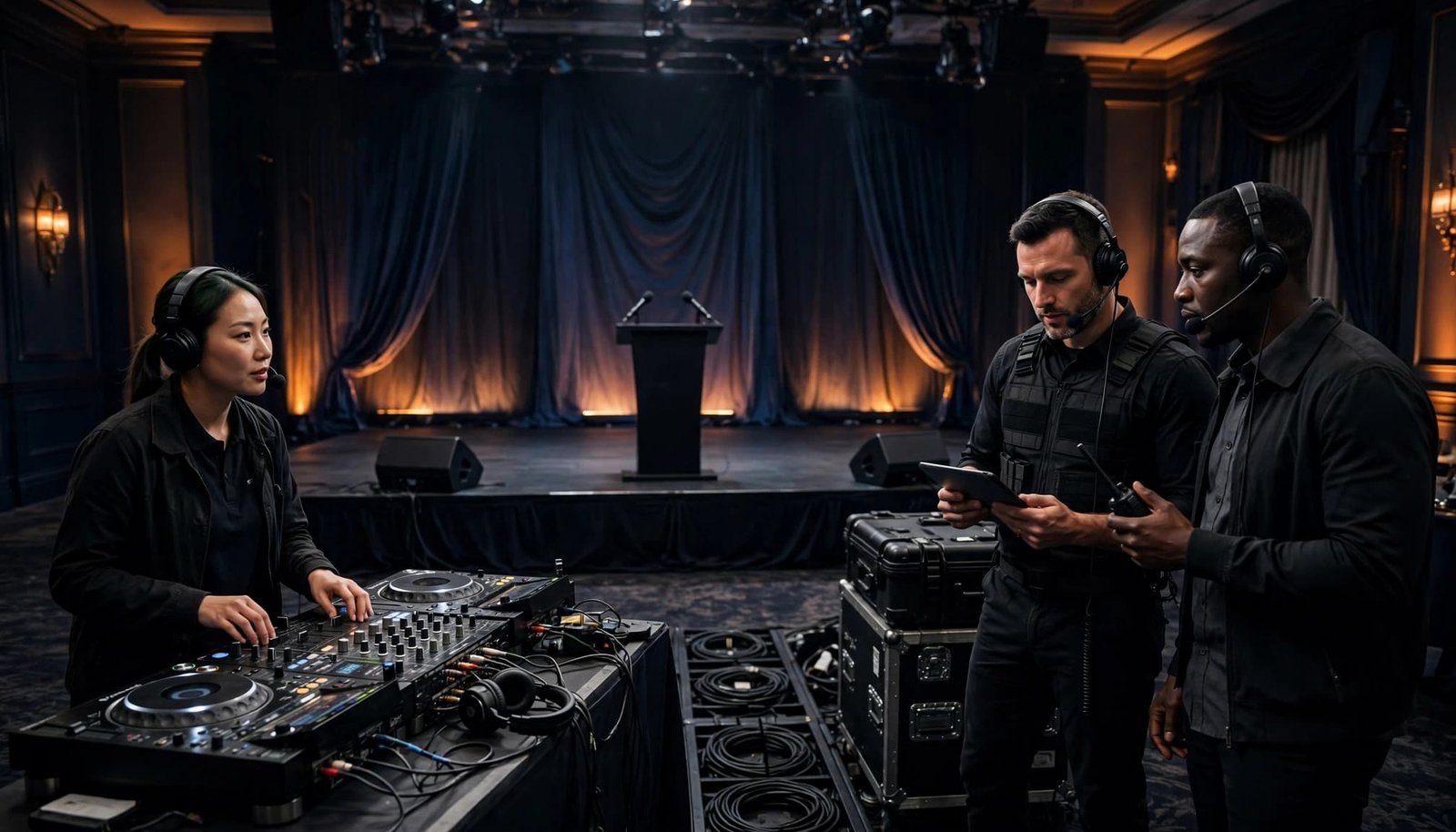
A corporate event DJ manages music, but their role can also include microphone support, walk-up music, announcements, pacing, and polished hosting. Corporate clients may expect a polished experience that fits both the program and the business audience.
For example, an awards gala may need quiet music while guests are seated, a clean cue for every recipient, and a quick return to background music while the next presenter takes the stage. A professional DJ keeps those transitions intentional without pulling attention away from the program.
New Hampshire corporate event DJ services can include professional audio, wireless microphones, lighting, background music, and event entertainment shaped around the venue and audience.
The Venue AV Team Has Its Own Responsibilities
Venue AV teams may manage installed speakers, projection screens, staging, video playback, house lighting, or livestreaming. They also help shape the room’s audio environment, so confirm who controls each item before load-in, especially if the DJ will connect to house sound or provide audio for a presentation.
Assign one direct contact from the corporate event planners, DJ team, venue, and AV company. AVIXA’s overview of live event roles and responsibilities highlights why clear communication and appropriate staffing matter when several production partners are involved.
Corporate DJ Responsibilities Beyond the Playlist
A corporate event DJ needs to read the room, but they also need to follow the program as an event production partner. Music selections are only one part of a successful event. Timing, tone, and clear communication often matter more.
Run of Show, Introductions, and Awards Cues
Build the shared run of show and event timeline in one document, then distribute the final version to the planner, host, DJ, AV contact, venue captain, and caterer. Include setup, soundcheck, doors opening, speaker order, meal service, awards, video playback, and the planned end time.
Every major cue should have an owner. “DJ plays walk-on music” and “AV operator advances slides” are clearer than assuming someone will react in the moment.
Allow five to 10 minutes of buffer around high-profile transitions when the schedule allows. This flexibility supports event pacing when dinner runs late or a speaker talks longer than planned. The DJ can extend background music or hold the next cue while the planner adjusts the schedule.
Emcee Services and Room Awareness
A polished emcee can handle speaker introductions, recognize sponsors, announce award recipients, and keep the audience informed. Confirm in advance whether the DJ is providing emcee services, who approves the wording, and how name pronunciations will be handled.
Corporate audiences often include employees, leadership, clients, and guests with different expectations. At an awards gala, music should be clean, appropriate, and flexible enough to move from networking to celebration without becoming too loud too early.
For additional help with music selection and event flow, review these corporate event DJ planning tips. The right approach is usually less about building a long playlist and more about matching the atmosphere to each part of the event.
Technical Details to Confirm Before Signing
Technical planning should begin with the room, not the equipment list. A hotel ballroom, outdoor tent, brewery, conference center, and multi-room venue all create different audio concerns.
Wireless Microphone Handoffs and Feedback Prevention
Microphone management is a pre-event responsibility. List every need before the event, including a podium mic, handheld wireless microphones for presenters, a lavalier for a keynote speaker, and a separate microphone for audience Q&A.
Test each microphone with the person expected to use it whenever possible. Check battery status, mute controls, speaker placement, and the distance between microphones and loudspeakers. Feedback happens when a microphone picks up amplified sound and repeats it through the system. Check microphone levels and locations before the room fills.
Keep a wired handheld microphone, fresh batteries, spare cables, and an alternate wireless option close to the mixing position for formal moments.
Ballroom Acoustics and Speaker Placement
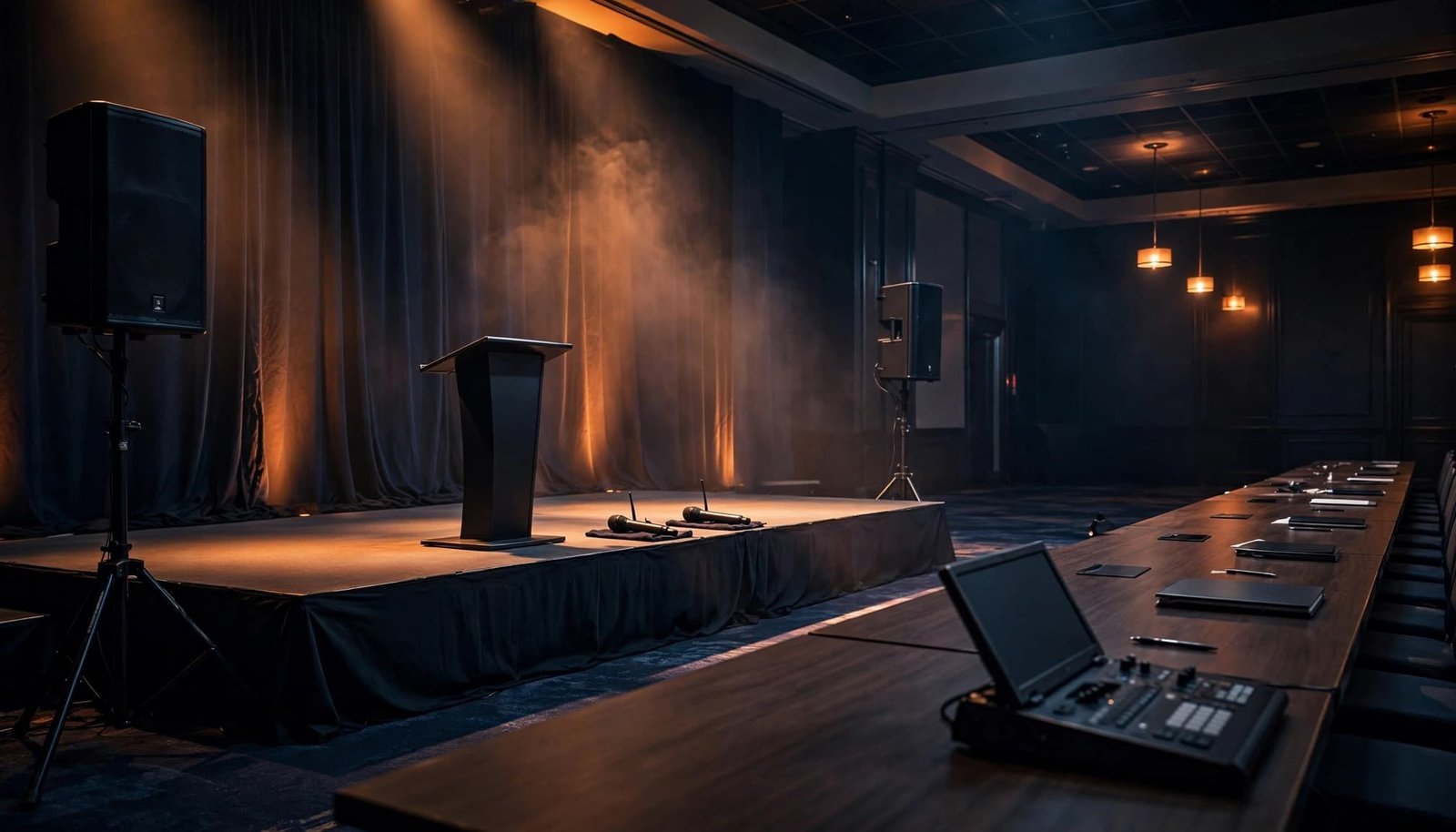
Walk the room during soundcheck. Listen near the stage, at the back of the room, and along the side walls. Evaluate the audio environment for volume and speech clarity in each area. A system that sounds fine from the DJ position may be too loud, too quiet, or unclear elsewhere.
Ask where speakers can be placed, whether the venue has sound restrictions, and where the sound system can draw power. Keep cables secured and out of guest pathways. If the room includes a cocktail hour, dinner space, and dance floor, discuss whether separate audio zones are needed or whether one system can support the full event.
Hybrid Events Need an Audio Plan
A virtual audience needs more than a camera pointed at the stage. Confirm how remote guests will hear presenters, video clips, audience questions, and walk-on music. The streaming provider, DJ, and AV team should decide who sends audio to the livestream and who monitors it during the event.
AVIXA’s hybrid event production guide is a useful reference when in-room production and virtual attendance need to work together. Test presentation audio and video playback before guests arrive, not during the first speaker’s introduction.
Book Early and Compare the Full Scope
Popular dates, complex programs, and seasonal events often require more lead time. November and December dates can fill quickly, especially for corporate holiday parties needing DJ entertainment and coordinated AV support.
A simple office gathering may have modest requirements. A recognition dinner with leadership, clients, several speakers, and presentation playback needs more planning time and a detailed proposal.
What Shapes Corporate DJ Pricing
Avoid comparing proposals by hourly rate alone. A lower price may not include setup, breakdown, travel, wireless microphones, lighting, MC services, staffing, sound support, or overtime.
Corporate event planners should request a written scope stating what’s included and what may cost extra. The proposal should also account for venue access, venue load-in distance, stairs or elevators, event length, and program complexity.
Backup Equipment Is Part of the Conversation
Not every event requires two of every piece of gear. Still, a professional provider should be ready for failures that could interrupt important moments.
Ask about backup music playback, spare microphones, batteries, cables, adapters, and power accessories. For larger corporate functions, ask how the team would respond if a laptop, controller, microphone, or speaker has an unexpected issue.
A prepared answer is more reassuring than “it has never happened before.” Contingency planning protects the program when a small technical problem appears at the wrong time.
Contracts, Insurance, and Clear Expectations
A written contract turns general expectations into practical details. Review it before the event week, when changes are easier to manage.
Confirm the Schedule and Service Details
Your agreement should cover the performance window, access time, setup and breakdown estimates, music planning, microphone count, lighting, staffing, travel, overtime, cancellation terms, and payment schedule.
Also confirm whether the DJ provides emcee services, speaker introductions, and awards hosting. If the company has an outside AV provider, state how the DJ will coordinate with that team and whether additional technicians are needed.
Ask About Liability Insurance Early
Many venues and institutions request proof of liability insurance from outside vendors. Georgia Tech’s event planning checklist includes submitting a required certificate of insurance and holding a pre-event meeting with significant stakeholders.
Requirements vary by venue. Ask whether the certificate of insurance needs a particular coverage amount, a deadline, or additional insured wording. Entertainment insurance can cover areas such as production equipment and liability, as outlined by Higginbotham’s event insurance overview.
Don’t leave this question until the week of the event. Documentation delays can create avoidable pressure for the planner and vendor.
Corporate DJ AV Coordination Checklist
Use this checklist during the final planning call and again before doors open:
- Confirm the venue contact, designated contact for the corporate event planners, DJ, AV lead, caterer, host, and after-hours emergency contact.
- Share the final run of show as part of the overall event timeline, with speaker names, phonetic pronunciations, award order, presentation times, and cue notes.
- Confirm the venue load-in route, parking, room access time, elevators, power locations, and venue sound limits.
- Decide who controls house speakers, presentation audio, video playback, lighting, streaming, and stage microphones.
- Test every wireless microphone, including batteries, mute switches, range, and backup options.
- Walk the room during soundcheck to check speech clarity, music volume, and potential feedback points.
- Test walk-on music, speaker introductions, award cues, opening announcements, videos, and the first formal program transition.
- Keep spare microphones, batteries, cables, adapters, and a backup music source available for key transitions, including the cocktail hour.
- Build buffer time around doors opening, meal service, awards, and presentations.
- Confirm who has authority to pause the program if an audio, safety, or venue issue needs attention.
A final 10-minute meeting before guests arrive can prevent the awkward moment when a speaker is ready but the microphone is not.
Frequently Asked Questions
How is a corporate event DJ different from a wedding or club DJ?
A corporate event DJ supports the brand, schedule, presenters, and guest experience. Music still matters, but clean announcements, appropriate volume, speaker handoffs, awards cues, and workplace-appropriate requests are often just as important.
What should I ask before signing a corporate DJ contract?
Ask about event experience, included equipment, microphone support, backup gear, setup time, MC services, insurance, overtime, music standards, and coordination with venue AV teams. Request the answers in a written proposal so the scope is clear.
Who handles presentation audio and video playback?
Decide this before the event. The venue AV team, outside production company, or DJ may handle part of the process, but one person should own the final test and be ready to respond if a video has no sound.
How far ahead should we book a corporate DJ?
Book early when the date is popular, the program is complex, or you need specific production support. Holiday parties, awards events, and multi-room functions often benefit from early coordination with the venue and AV team.
A Better Event Starts With a Shared Plan
Corporate DJ AV coordination is not about adding unnecessary complexity. It is about giving every person a clear role, a tested setup, and a practical backup plan before the program begins.
Professional DJ Entertainment Since 1999, DJ Steve Neff Entertainment LLC brings DJ, MC, sound, lighting, and event-flow support to corporate functions across New Hampshire. With the right preparation, your speakers can be heard, your timeline can stay on track, and your guests can enjoy a polished, memorable event.