A corporate dinner can have beautiful tables, great food, and a strong guest list, yet still feel flat if the room sounds wrong. Corporate dinner music should welcome guests, support conversation, and set a polished pace as background music, without competing with speakers.
New Hampshire business events span hotel dining rooms, historic inns, resorts, ballrooms, and tented receptions. Corporate events may differ from a casual dinner party, while formal events call for a polished sound, including classical music.
A thoughtful plan uses ambient music during a cocktail hour, keeps networking comfortable early, gives dinner service a relaxed rhythm, and leaves room for dancing if the program calls for it.
Key Takeaways
- Match corporate dinner music to the event purpose, guest profile, room, and desired atmosphere rather than treating the evening as one continuous mood.
- Plan music around the full event flow, using restrained background music for conversation, short cues for entrances and awards, and gradually higher energy only after dinner and speeches.
- Choose between live musicians, a professional DJ, and curated playlists based on the schedule, formality, room layout, coordination needs, and whether dancing is planned.
- Protect conversation and speech clarity with careful volume control, a professional sound check, reliable backup equipment, and safe cable and power placement.
- Confirm New Hampshire venue rules, local outdoor sound requirements, music licensing, and the entertainment brief before event day.
Start With the Purpose of the Dinner
Music should match what guests are there to do. Awards banquets, holiday parties, leadership retreats, client dinners, and product launches may all include a meal, but they need different energy.
An awards banquet may need music for walk-ups and applause, while a holiday party can move toward familiar favorites later. A leadership retreat may need a quieter, thoughtful tone, while client dinners can call for warmth or a polished, modern progression.
Formal events should feel intentional, not like a restaurant playlist that happened to be playing. The right approach considers the program, the room, and how guests should connect.
Decide What Guests Need Most
Ask one direct question before choosing songs or performers: what should guests be doing during each part of the event?
If introductions and relationship-building lead the program, conversation comes first. If awards are central, music should support walk-ups, applause, and transitions. If employees are expected to celebrate after dinner, don’t spend the entire budget on low-key arrangements.
Even the same audience may need a restrained start, then a more recognizable finish with dance music. Choose a music selection that follows those changes instead of treating the dinner as one continuous mood. Choose live music when the performance should shape the room, or a DJ when the evening needs quick changes and broad variety. Live music can also build toward the celebration, while live musicians offer a visible presence and flexible pacing.
Your target audience affects lyric tolerance, familiarity, cultural preferences, and the balance between conversation and celebration. Consider age range, professional roles, and whether guests already know one another.
Write down three to five words that describe the desired atmosphere. “Warm, professional, welcoming, and celebratory” gives a DJ, musician, or planner a clear direction.
Match Formality With the Right Sound
Classical music brings a composed, elegant feeling to black-tie dinners, executive gatherings, and donor-facing programs. For formal events, a string quartet or solo pianist can provide background music without adding lyrics that distract from conversation.
Jazz music works well when you want sophistication with a little movement. Instrumental jazz suits arrivals and cocktail hour, while smooth jazz offers a softer variation for dinner. Keep the set relaxed. Formal events aren’t the place for long solos at performance volume.
Acoustic music is a strong choice for smaller company dinners, historic venues, private clubs, and rooms where guests sit close to performers. Classical music can also suit refined dinner settings when the room calls for a composed tone. For formal events in those settings, a guitar and vocalist or small acoustic duo can create warmth when song choices fit the audience and vocals remain gentle.
Plan Corporate Dinner Music Around the Evening
The strongest soundtrack for formal events follows the flow of the room. Guests shouldn’t hear the same mood for four hours straight. A well-planned soundtrack has a beginning, middle, and finish.
Use this pacing guide as a starting point:
| Event Moment | Music Direction | Volume and Energy Goal |
|---|---|---|
| Guest arrival | Ambient music, piano, mellow soul, or light acoustic covers | Keep volume low and energy restrained while guests settle in |
| Pre-dinner reception | Jazz trio, instrumental jazz, bossa nova, tasteful indie, or lounge playlists | Raise energy slightly while keeping introductions easy |
| Dinner service | Piano, strings, classical music, soft jazz, or instrumental pop covers | Keep levels low and steady for comfortable table conversation |
| Speeches | Silence under remarks, with brief transition beds between speakers | Stop playback fully before remarks and protect microphone clarity |
| Awards | 10-to-20-second walk-up cues and clean celebratory clips | Use brief bursts, then fade promptly after each entrance |
| Post-dinner networking | Funk, disco-pop, smooth jazz, familiar throwbacks, or upbeat soul | Increase energy gradually and introduce dance music only after the program |
| Dancing, if planned | DJ-led dance music with approved party selections | Wait until dinner service and speeches are complete, then build from moderate to full intensity |
The key is gradual change, and guests notice when the room feels organized. Dinner selections should remain background music, with enough space for table conversation. That background music supports conversation; entertainment intended for dancing needs more energy.
Live music can flex around meal service when live musicians adjust set lengths. Curated playlists keep fixed portions predictable, while a thoughtful music selection guides transitions.
Keep Cocktail Hour Social, Not Sleepy
The pre-dinner reception needs more energy than seated dinner music, but it should still allow easy introductions. A jazz trio, solo pianist, or carefully screened playlist can work well. Consider artists such as Norah Jones, Khruangbin, Leon Bridges, or Lake Street Dive.
Avoid beginning with heavy bass, aggressive hip-hop, or songs that pull guests toward the dance floor before the program is ready. The opening reception is about greeting colleagues, meeting clients, and finding a table.
Use Short, Confident Cues for the Program
Awards, executive entrances, and sponsor recognitions need short music clips, not full songs. In many cases, 10 to 20 seconds is enough.
Choose a strong opening beat or recognizable hook, then give the DJ a clear fade signal. Confirm walk-up music, microphone handoffs, presenter entrances, and the cue to stop music promptly for speeches. These small details prevent dead air and keep an awards dinner feeling professional.
Music should support the person walking to the stage, not become the reason people remember the walk.
Choose Live Music, a DJ, or a Curated Playlist
Each option has a place. Live music, a DJ, or a playlist can suit the guest count, room layout, event formality, coordination needs, and whether the evening ends with dancing.
When Live Musicians Fit Best
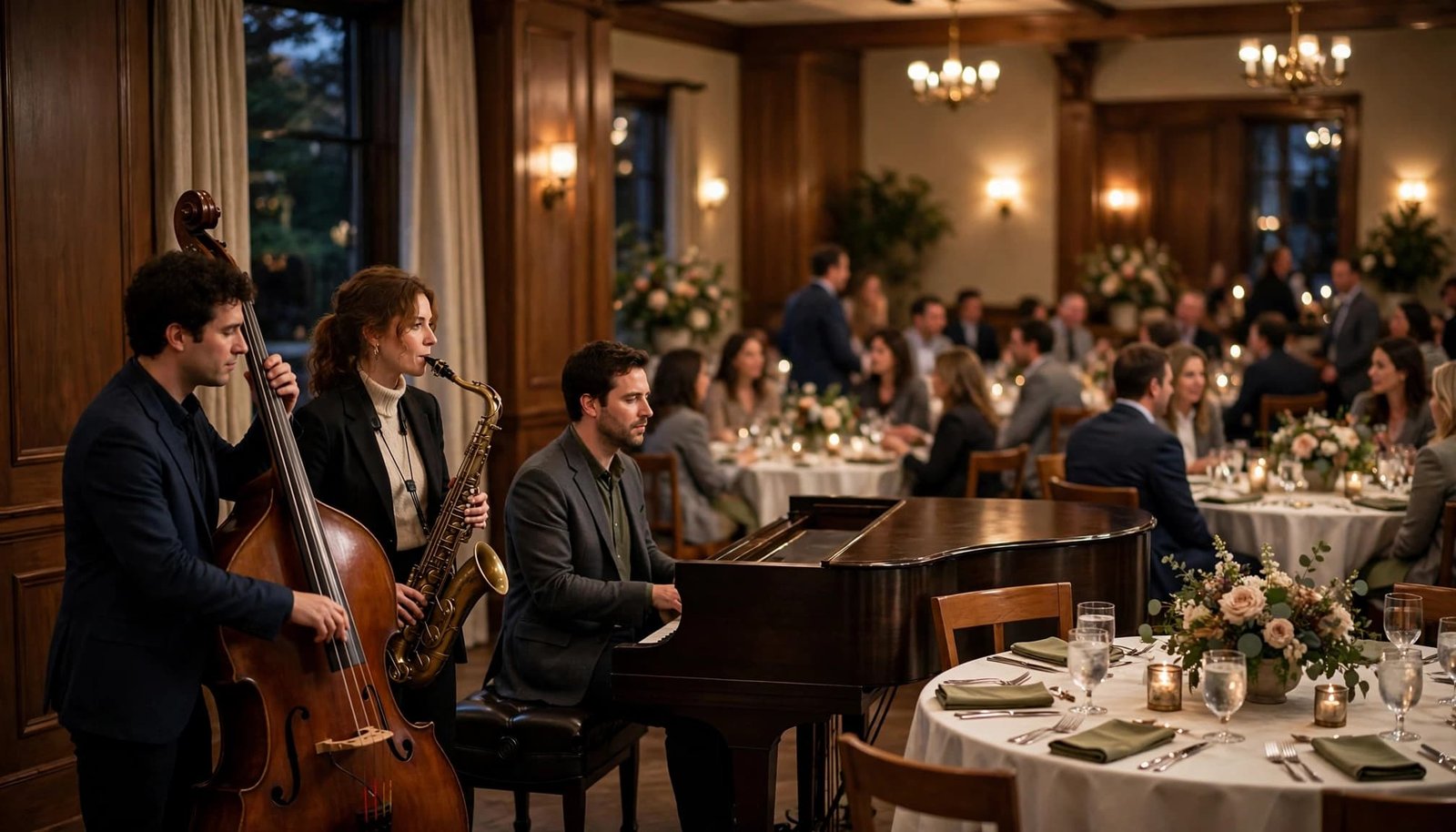
Live music adds personality and visual interest. A pianist suits refined dinners and formal events, while classical music from a string ensemble works for elegant client programs. An instrumental jazz trio supports networking without competing with conversation.
Live musicians can extend a set when dinner service runs long or pause quickly for a speech. They need clear expectations about breaks, volume, song style, load-in, parking, power, equipment, insurance, and stage space. Ask whether the group provides its own amplification.
A small acoustic act may not need amplification in an intimate room. A larger ballroom may require a properly designed sound system so guests at the back hear balanced music without front tables feeling overwhelmed.
When a Professional DJ Is the Better Choice
A professional DJ is often practical for formal events with speeches or awards, company holiday parties, networking events, and product launches. A DJ can provide background music, microphone support, announcement cues, and later dance music without changing vendors midway through the evening.
Curated playlists cost less and can work for a short, informal dinner with no speeches or changing energy needs. They won’t suit every target audience, from executives and clients to families and employees, and they’re less reliable when the schedule changes.
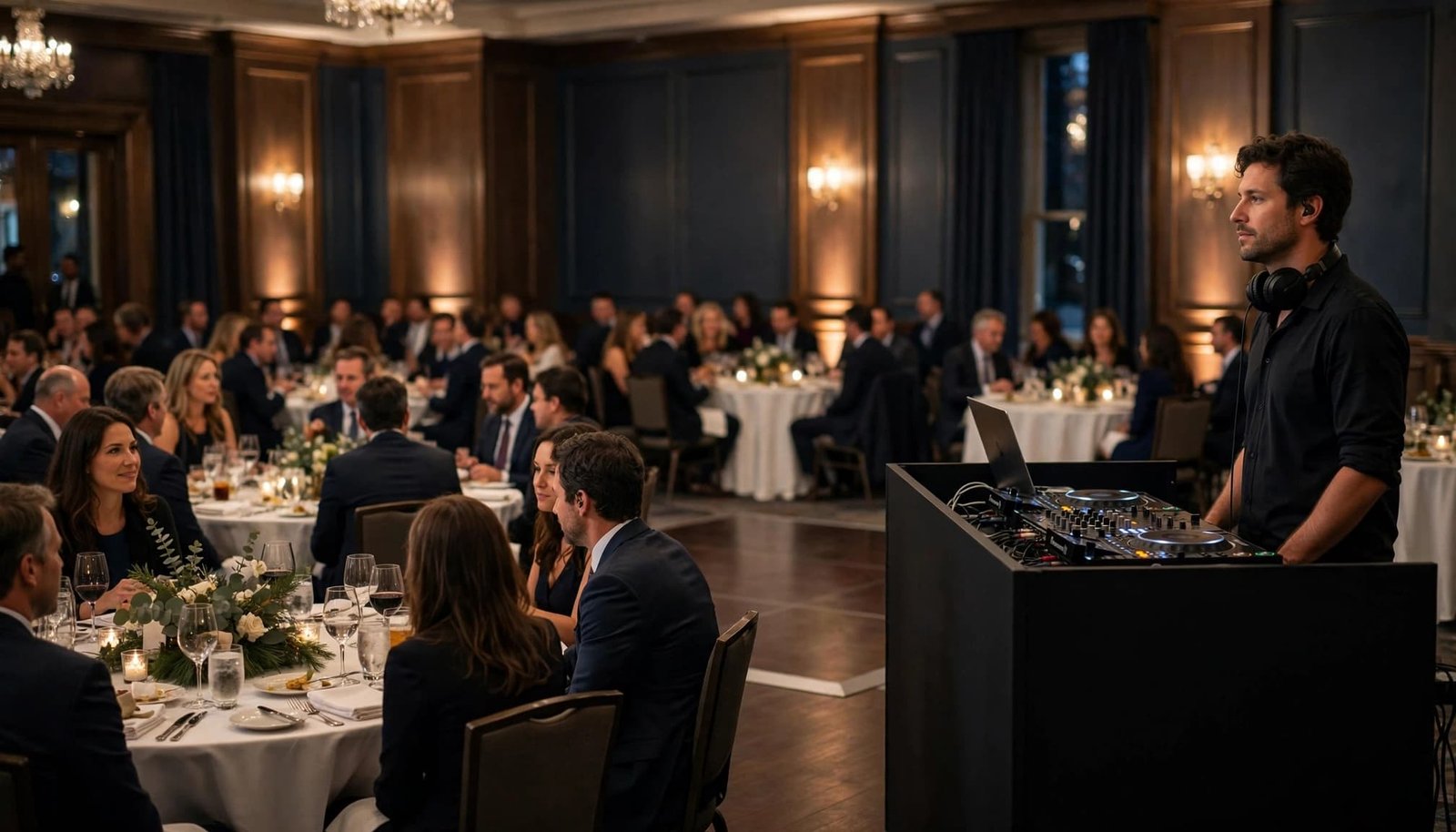
For dinners that end with dancing, compare live music with a DJ-led set that builds into dance music. Curated playlists are less reliable for formal programs because someone still needs to manage volume, make announcements, respond to timing changes, and handle technical issues.
Set Sound Levels That Protect Conversation
Loud is not the same as exciting. During dinner, guests should speak across the table without leaning forward or repeating themselves. This matters especially at formal events with executive remarks, awards, or donor-facing speeches. Guests should also hear announcements clearly the first time.
Rooms with hard floors, glass, tall ceilings, or exposed beams can make music sound brighter and louder than expected. Low ceilings can make bass feel muddy. A sound check with the sound system in an empty ballroom helps. After guests begin arriving, check the front, center, and rear of the room again.
Use a Speech-First Sound Plan
Tell the DJ, band, and venue coordinator that speech clarity takes priority during dinner and program segments. Keep live music at a controlled level, and set curated playlists or background music below speaking volume. Microphones should be tested at the podium, head table, and audience seating areas. Walk the room during the sound check, including the front, center, and back.
Speaker placement matters. Aim sound toward the audience, not directly into a wall, glass surface, or neighboring dining room. Keep bass controlled during cocktails and dinner. It may feel good beside the DJ booth, but it can make table conversation tiring across the room.
A professional should bring backup music playback, spare cables, adapters, batteries, and an extra microphone. Downloaded music and backup playlists provide reliable offline playback. Do not depend on venue Wi-Fi for the full event soundtrack.
Keep Cables, Power, and Access Routes Clear
Audio and power cables should run along approved room edges whenever possible. They should never cross emergency exits, doorways, stairs, or accessible routes.
If a cable must cross a busy walkway, use a venue-approved cable ramp or floor protector. Gaffer tape can hold a thin lead in a dry, low-traffic area. It is not a substitute for a proper ramp where guests and staff will walk.
Confirm dedicated power needs for speakers, lighting, laptops, and microphones before load-in. Extension cords should not run through doorways or places where they can be pinched or damaged. A final walkthrough with the venue coordinator protects guest safety and keeps the room looking clean.
Handle New Hampshire Venue Rules Early
New Hampshire event rules vary by municipality, venue, event type, season, and whether the dinner is indoors, outdoors, or tented. Indoor or hotel-based formal events, including winter programs, usually raise fewer sound concerns than summer outdoor receptions. Still, confirm the venue’s music restrictions, load-in schedule, permits, and ending time in writing.
Outdoor or tented formal events, especially near residences, may face additional restrictions. Amplified performances, DJs, live music, and acoustic acts can raise different questions for live musicians, so verify current local requirements.
Outdoor amplified music deserves extra attention, especially near residences. Manchester’s published rules identify amplified outdoor sound above 60 dBA as a permit issue and set a 10:00 p.m. outdoor venue curfew. Review the City of Manchester’s amplified-sound requirements when planning an outdoor dinner, tented reception, or public-facing company event there. Treat it as a local example, not a statewide New Hampshire standard.
Confirm Music Rights Before Event Day
Review ASCAP’s music licensing guidance and BMI licensing information, which explain public performance rights and why they need separate confirmation. Don’t assume a personal streaming account covers public music at a company dinner. The venue may already hold licenses for certain uses, but confirm coverage separately for recorded tracks, live repertoires, DJs, and audiovisual playback.
Review the music selection for public performance rights, too. Classical music doesn’t remove the need to verify permissions. Recap videos, livestreams, and social media clips may require additional clearance beyond playing music in the room.
A written answer from the venue or responsible party is better than an assumption made during setup.
Give Your Entertainment Team a Clear Brief
A quality performer or DJ can make smart decisions, but event planners need the right information first. A detailed brief matters for formal events, including awards dinners and executive programs. Product launches also need tightly timed entrances, announcements, and transitions.
Share the agenda, guest profile, arrival time, meal timing, speeches, award cues, and planned end time. Note whether live music supports each portion. For formal events, identify conversational portions for background music and predictable sections where curated playlists are an approved option. Mark when the room may shift to dance music.
Provide an approved music selection and a do-not-play list. Describe the target audience, including employees, executives, clients, spouses, and families; note age ranges, cultural expectations, and workplace standards. Radio edits still need review. Some versions leave awkward silences, suggestive themes, or lyrics that don’t fit a workplace setting.
Name One Final Music Contact
Give one person authority to approve requests or make quick decisions. That contact can confirm whether a song fits company culture, whether the room is ready to celebrate, and whether a requested change affects the schedule.
Guest requests are useful input, not automatic approval. A DJ should be able to decline or delay a request that conflicts with the approved music plan, the room’s needs, or workplace standards.
A clear contract should also cover arrival time, setup window, break schedule, overtime, meals for live musicians, insurance requirements, cancellation terms, equipment included, and who provides power. Reliable coordination begins before the first guest arrives, so confirm these details in advance.
Frequently Asked Questions
What type of music works best for a corporate dinner?
The right choice depends on the event purpose, guest profile, venue, and desired formality. Piano, strings, instrumental jazz, soft acoustic music, and carefully selected background playlists can support conversation without competing with the program.
Should I hire live musicians or a DJ for a corporate dinner?
Live musicians add personality and visual interest, while a professional DJ offers broader variety, microphone support, announcements, and quick changes. Choose based on the room, schedule, coordination needs, and whether the evening will end with dancing.
How loud should corporate dinner music be?
Dinner music should remain low and steady enough for guests to speak comfortably across the table. Speech clarity should take priority during remarks, awards, and announcements, with a sound check performed throughout the room before guests arrive.
How should music change during the evening?
Begin with restrained ambient music during arrival, raise the energy slightly during the reception, and keep dinner selections relaxed. Use brief cues for entrances and awards, then introduce more recognizable or dance-oriented music only after dinner and speeches are complete.
What New Hampshire rules should I check before an event?
Confirm the venue’s music restrictions, load-in schedule, permits, ending time, and any outdoor sound requirements in writing. Also verify public performance licensing for recorded music, live repertoires, DJs, and any recap videos or livestreams.
A Soundtrack That Supports the Whole Room
The best soundtrack for formal events feels natural because it is planned with care. Background music gives guests space to talk, while classical music or instrumental jazz can add polish without taking over.
Choose an approach that fits the target audience, event purpose, room, and schedule, keeping the event atmosphere polished, personal, and memorable. Live music adds a personal touch, while well-timed live music marks transitions and builds energy without becoming too loud.