A relaxed brunch can still feel like a real celebration. The right DJ brings warmth, timing, and polished energy. A live DJ can shape the room in real time without making guests talk over the music.
For employee appreciation events, client gatherings, company milestones, and casual networking, the goal isn’t a nightclub at noon. It’s an inviting room where people can enjoy good food, catch up with colleagues, and feel proud to be there.
A thoughtful music plan turns a standard meal into a more memorable business occasion.
Why Brunch Music Needs a Different Approach
A corporate brunch has a different rhythm from a typical weekend brunch. Guests may arrive with coffee, eat, network, listen to remarks, or join tables at different times. Music should support those moments instead of competing with them.
A generic playlist can fill silence, but it cannot respond when the room changes. A DJ can lower the volume as guests settle in, cue a walk-up song for an executive welcome, and build energy after formal remarks. Beverage service, including bottomless mimosas, makes careful pacing and conversation-friendly volume especially important.
Corporate events also bring a wide audience together. Interns, department leaders, clients, longtime employees, spouses, and families may all share the room. The right selections are familiar, appropriate, and broad enough to make more people feel included.
A brunch celebration does not need louder music to feel more energetic. It needs the right song at the right moment.
What a Corporate Brunch DJ Adds to the Event
A live DJ is more than a person behind a playlist. At a corporate brunch, the DJ reads the room, adjusts volume, handles microphones, and cues transitions between program segments.
Conversation-Friendly Music That Fits the Room
During arrivals, coffee service, and networking, polished pop, classic soul, light rock, Motown, and tasteful dance tracks create an upbeat atmosphere. Current radio-friendly music can keep the room lively without overwhelming conversation.
The music can gradually change as brunch moves forward. A relaxed first hour may lead to brighter favorites after awards, a company toast, or milestone recognition. This pacing gives guests space to connect before the celebration becomes more social.
A skilled DJ also knows that “upbeat” means different things to different companies. The DJ can coordinate with live music or provide an alternative without making the event feel like a concert. One team may prefer contemporary pop and disco-inspired favorites. Another may want country, classic rock, and familiar singalongs. For corporate events, the best DJ starts with your company culture, guest mix, and event purpose.
Clear Announcements and Natural Transitions
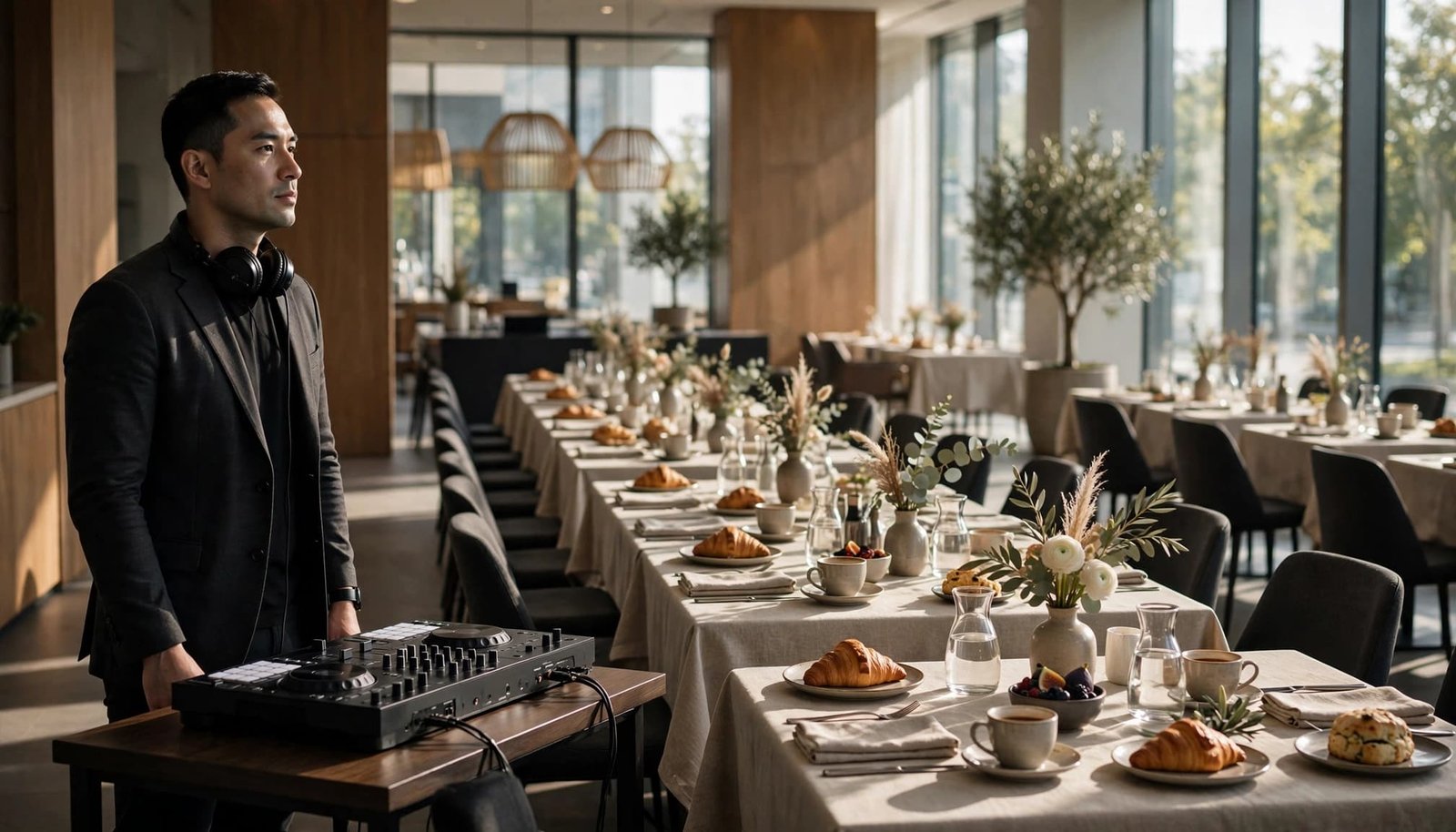
Brunch events may include a welcome, leadership remarks, employee recognition, a presentation, raffle drawings, or a closing thank-you. These moments need clean microphone audio and a host who understands when to speak and when to step back.
Give the DJ exact names, titles, pronunciations, speaker timing, and approved announcement wording. The MC should introduce each moment clearly, cue music properly, and know when to step back. This keeps the program moving without turning every announcement into a performance.
For planners in New Hampshire, professional corporate event DJ services can provide event production support, including music, sound, lighting, and hosting for a polished daytime gathering.
Build a Music Plan Around the Brunch Timeline
The strongest brunch playlist isn’t a random collection of favorite songs. It’s a schedule-aware plan that gives each part of the event its own sound.
Start Soft, Then Build Naturally
Arrival music should feel welcoming. Keep it light enough for greetings, registration, coffee, and casual conversation. Instrumental versions, warm pop, soul, and familiar classics work well because guests recognize the mood without focusing on every lyric.
Controlled volume matters when beverage service includes bottomless mimosas. Guests should be able to order, mingle, and settle in without competing with the music.
During dining and networking, the DJ can add more rhythm while keeping the level comfortable for table conversation. Clean, upbeat tracks can make the room feel active while remaining professional.
During formal remarks, lower the music completely or keep it barely audible between speakers. Clear transitions help guests shift their attention without disrupting the program.
After the formal program, the music can become more celebratory. If your group wants dancing, familiar throwbacks, dance-pop, funk, country favorites, hip-hop, or approved current hits can create momentum. If dancing isn’t part of the plan, keep the music lively while guests continue networking.
Give Your DJ a Useful Creative Brief
A short description is often more helpful than a long, scattered list of songs. Choose three to five words that describe the event, such as “welcoming, modern, upbeat, polished, and family-friendly.”
Share these details before the event:
- The purpose of the brunch, whether it’s recognition, networking, a client gathering, or a company milestone.
- Guest demographics and the expected mix, including employees, leadership, clients, families, or plus-ones.
- Preferred genres, favorite artists, must-play requests, and do-not-play selections.
- Clean-music expectations, including lyrics or themes that don’t fit company culture.
- Whether guests can make requests freely or need approval through one company contact.
A clear brief gives the DJ room to read the crowd while protecting the event’s tone.
Coordinate Sound, Lighting, and Venue Details Early
Music is only one part of the setup. The room, venue rules, schedule, and technical preparation all affect how the event feels to guests.
Keep Volume Comfortable During Food and Conversation
If guests have to lean across the table or raise their voices, the event can feel less polished. Schedule a sound check during room setup, then keep levels lower during food service and executive remarks. Plan a deliberate adjustment if the event moves into a later social period.
Room acoustics matter, too. A hotel ballroom, brewery, private dining room, tented outdoor event, and renovated mill can all sound different. Confirm speaker placement with the venue, considering room size, ceiling height, and guest count.
Some venues have their own sound restrictions. The DJ should confirm decibel limits, power access, load-in timing, and backup plans directly with the venue. For example, Penticton’s event planning guidelines state that sound above 95 dB(A) requires adjustment by the organizer or audio company. That number is not a universal rule, but it is a useful reminder to confirm the venue’s policy before event day.
Plan for Microphones, Power, and Backup Equipment
A corporate brunch may only need one wireless microphone, but it needs to work when a speaker stands up. Confirm speaker systems, wireless microphones, backup gear, and presentation playback as part of the sound equipment plan. Ask about microphone checks, power access, setup time, and the DJ’s contact at the venue.
The DJ should also know whether presentations, video playback, awards, or walk-up music are part of the schedule. A last-minute request is easier to handle when the equipment and cues were discussed beforehand.
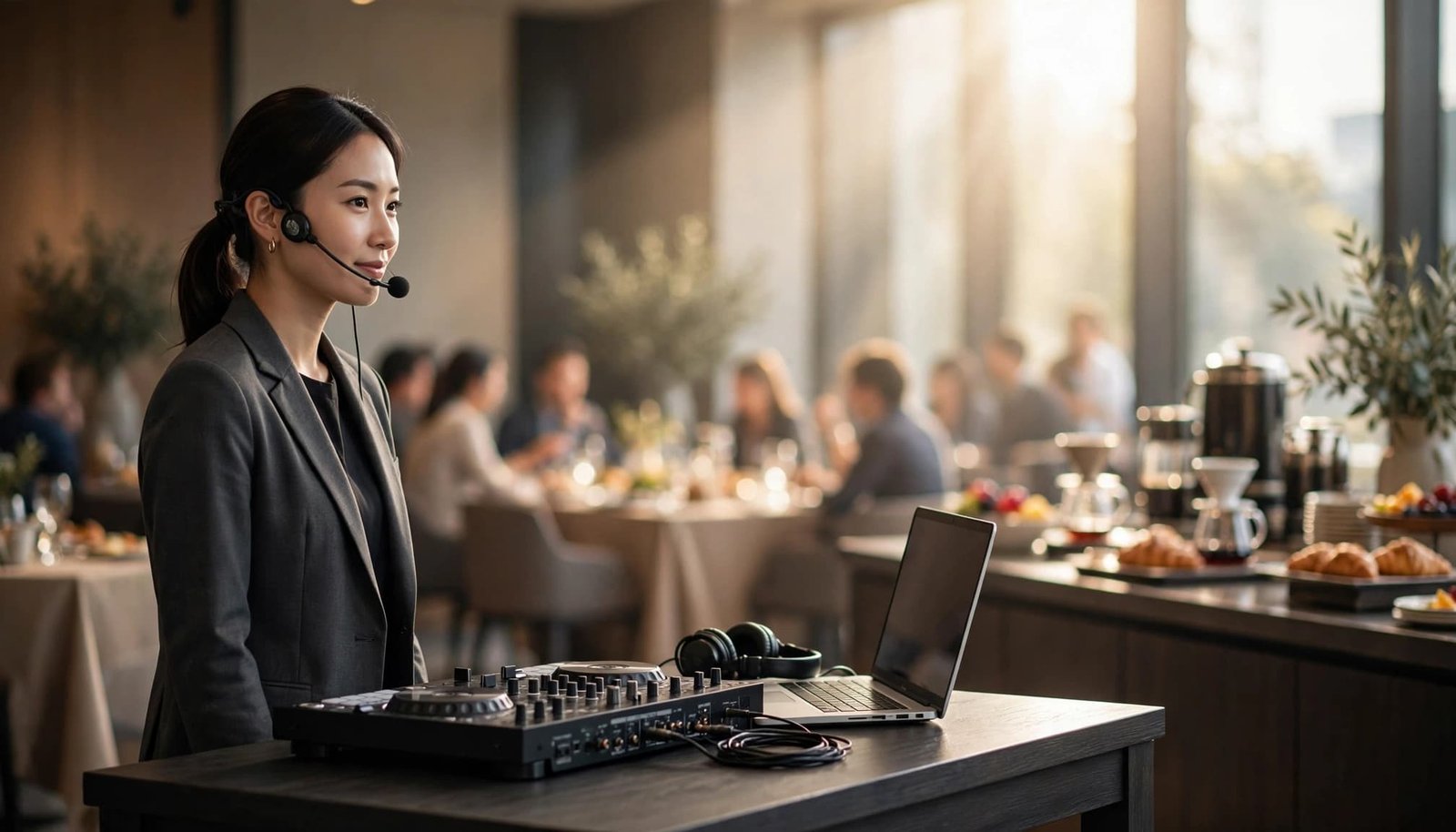
Professional DJ experience dating back to 1999 brings value in these quieter details. Dependable technical preparation helps the event feel calm and professional, rather than theatrical. DJ Steve Neff Entertainment LLC is based in Concord, New Hampshire, and works with corporate gatherings that need dependable sound, appropriate music, and calm coordination.
Match the Entertainment to Your Brunch Format
Not every business brunch needs the same level of energy. The DJ’s role should match the reason people are gathering.
Employee Appreciation and Company Milestones
An employee brunch can feel warm and celebratory without becoming over-the-top. Begin with light background music, use clear cues for recognition moments, and move toward more upbeat music after the formal portion.
If the event has a longer social period, the DJ can create a party brunch atmosphere without turning it into a nightclub or wedding reception. A bottomless brunch with bottomless mimosas may feel social, but familiar favorites should leave room for conversation. Keep announcements clear, as you would at relaxed weekend gatherings, and remember that success doesn’t require a packed dance floor.
Client Events and Private Brunches
Client-facing events often need a more reserved approach. Music should feel intentional and high-quality, but it should never distract from introductions, conversation, or hospitality.
A private brunch may allow more personality, especially when it celebrates an anniversary, a launch, or a company achievement. Details such as avocado toast or a bloody mary may signal a casual dining experience, but they shouldn’t dictate a loud or overly festive brunch experience. Strong song selection, controlled volume, and professional hosting create energy without forcing the event into a style that does not fit the brand.
Ask the Venue the Right Brunch Questions
A great DJ setup cannot fix a venue plan that has not been confirmed. Before booking a private brunch, speak with the restaurant, hotel, or private event space about group policies and entertainment options for private events.
Confirm Food, Drinks, and Group Policies
For a party bottomless brunch, package rules can vary widely among brunch spots. Some venues may offer a bloody mary, specialty cocktails, craft cocktails, or other brunch drinks, while others provide limited selections or alcohol-free options.
Ask what the brunch menu includes and which brunch dishes are available. Confirm whether bottomless mimosas or a bloody mary are included. Ask whether the bottomless mimosas option has a time limit and whether the brunch price includes gratuity. Ask whether every guest must participate in bottomless mimosas. Check whether nonalcoholic alternatives are available when bottomless mimosas are offered.
Don’t assume package pricing, available dishes, brunch hours, or serving times are the same from one venue to another. These details affect guest movement, service pacing, and the DJ’s timing.
Large groups should confirm table reservations and how brunch reservations are handled. They should also ask about deposits, minimum spending, cancellation policies, and the final guest-count deadline.
Check Whether Entertainment Is Allowed
Ask where the DJ can set up, when load-in begins, and whether the room has enough power nearby. A compact setup can work well for brunch, but the venue needs to approve speaker placement, microphone use, lighting, and volume rules.
Advance organization prevents small details from becoming day-of problems. Georgia Tech’s event planning checklist makes the same practical point: even simple events need early planning and clear coordination.
Give the DJ a Run-of-Show
A run-of-show is a simple timeline that keeps the planner, venue, DJ, speakers, and caterer aligned. It doesn’t need to be complicated, but it should include the key moments.
A useful brunch timeline should mark cue points for guest arrival, coffee service, food service, remarks, awards, a toast, beverage service, and the closing social period. If beverage service includes bottomless mimosas, note when it begins so the DJ can keep the first portion calm and adjust timing if service runs late. Add the name of the person responsible for approving last-minute changes.
Share the timeline with the DJ before load-in. Make sure the DJ knows who can approve changes and has music beds or silence ready if speakers run long. If a raffle moves or brunch service needs extra time, the DJ can adjust the music and announcements without creating awkward silence.
The most polished events usually look easy because the planning was clear behind the scenes.
Key Takeaways for a Relaxed Business Brunch
- Choose conversation-friendly music first, with clean transitions and higher energy only when the schedule and guests call for it.
- Give your DJ details about the audience, including mixed age groups, company culture, content standards, key names, and the event timeline.
- Confirm microphone checks, power access, setup space, volume rules, and venue policies before the event day.
- Treat food, drink packages, and reservations as venue-specific details that require direct confirmation, and create a backup plan for last-minute changes.
- Before hiring, ask whether the DJ handles music, announcements, technical preparation, and calm adjustments when plans change.
Corporate Brunch DJ FAQ
How can a live DJ improve a corporate brunch?
A DJ creates a more responsive atmosphere than a fixed playlist. They can adjust volume and shift styles as the event changes. They can also make announcements and cue recognition moments smoothly.
What should I look for when hiring a DJ?
Look for professional event experience, clear communication, clean music options, microphone support, and reliable equipment. Confirm that they’re comfortable following a run-of-show and have a backup plan.
How should the DJ manage volume during dining?
The DJ should keep music at a comfortable conversational level while guests eat. They can raise the energy between courses, then lower it for remarks.
How are transitions handled between food service and remarks?
Share the meal schedule, speaker cues, and recognition moments in advance. The DJ can fade the music cleanly, introduce speakers, and restart at a suitable level.
What equipment and backup plans should be included?
Ask whether the package includes professional speakers, a reliable microphone, stands, cables, and suitable power distribution. Confirm backup audio, spare cables, and a plan for equipment failure.
How can the DJ accommodate mixed-age or client audiences?
Look for someone who can balance familiar styles across generations without making the music distracting. Share audience details, brand expectations, clean music preferences, and songs to avoid.
What information should the planner provide?
Provide the venue address, access times, room layout, power details, meal schedule, speaker list, and pronunciation notes. Include venue and day-of coordinator contact details with the run-of-show.
What should I ask about the music booking?
Ask about availability, planning calls, deposit requirements, setup timing, package inclusions, and cancellation terms. Confirm when final details and song requests are due.
How should timing around bottomless mimosas be handled?
Coordinate drink service timing with the venue and DJ so the energy stays appropriate. Confirm when service begins, when remarks occur, and whether the venue has pacing or volume policies.
How early should the DJ coordinate with the venue?
Start the conversation as soon as the date and location are confirmed. The DJ and venue should review setup access, power, sound limits, microphone needs, room layout, and the event schedule well before guests arrive.
A Brunch That Feels Organized and Enjoyable
The best corporate brunch music feels natural to the room. Guests can talk, eat comfortably, hear every announcement, and still feel the energy of a special occasion.
A skilled DJ brings more than songs. A live DJ manages volume, timing, and transitions in real time. With thoughtful planning and reliable sound, the celebration feels relaxed, professional, and worth remembering.