Award ceremonies can lose their polish in one unplanned pause. Corporate awards ceremony music gives each arrival, announcement, and win a purpose, but it should never compete with the people being recognized.
Guests should hear a confident soundtrack through the evening. It should guide arrivals, announcements, and wins, not sound like ceremony tunes dropped between speeches. With a cue plan, a prepared DJ, and an AV team working from the same timeline, the room feels organized, warm, and ready to celebrate. Start by deciding what the room should feel like before anyone reaches the stage.
Plan Corporate Awards Ceremony Music Before Building a Playlist
Good music choices begin with the event’s purpose. An internal sales awards dinner can support brighter pop, funk, and familiar throwbacks, while a client-facing gala may call for cinematic percussion, polished house, or orchestral instrumentation that feels composed and upscale. These are different award ceremonies, so the same approach shouldn’t be reused across award ceremonies.
Choose three to five words that describe the event atmosphere. “Confident, modern, welcoming, and premium” gives a DJ a usable brief for music selection and helps eliminate tracks that feel too aggressive, too casual, or too sleepy. A Spotify playlist can illustrate the mood and support approvals, but it shouldn’t replace a cue sheet or offline show-control files.
Match the Sound to Company Culture
A financial services company may want a clean, contemporary soundtrack with a steady pulse. A creative agency can usually support bolder electronic selections, disco-pop, and stylish remixes. A lifestyle brand may want modern dance music that feels fresh without becoming a nightclub set.
Familiar songs can work well when they fit the crowd and the client approves the exact version. Clean, approved excerpts of “Happy,” “Can’t Stop the Feeling!,” “Good as Hell,” or “24K Magic” can support a celebratory reveal. For a retro lift, familiar retro hits such as “September,” “You Make My Dreams,” “Dancing Queen,” and “I Wanna Dance with Somebody” still bring instant recognition.
The song title is only the starting point. Review the exact edit, intro, lyrics, and ending that will play in the room.
Give Every Cue a Clear Owner
The show caller should own the final “stand by” and “go.” The DJ, playback operator, AV technician, presenter, and awards coordinator all need to know who gives that command.
Confirm award names, job titles, pronunciation notes, stage entrances, and the order of presenters before rehearsal. A presenter shouldn’t guess when to walk, and a DJ shouldn’t guess when to start the winner music.
Ask the production team to keep all playback files downloaded locally. Hotel Wi-Fi is not a reliable show-control plan. A backup device, printed run sheet, and direct communication line between the DJ booth and stage team protect the program when timing changes.
Open the Program With a Confident Cue
Arrival music should welcome guests at award ceremonies without turning the cocktail hour into a concert. Use warm soul, light funk, polished pop, jazz-influenced tracks, or wordless electronic music as ceremony tunes, at a conversation-friendly level.
If guests have to lean across the table to talk, the music is too loud. Background music should make the room feel intentional, not make networking difficult.
Use Short Walk-On Cues for Leaders and Hosts
A clean opening and recognizable beat build anticipation before the fast handoff to the microphone. A 12 to 20-second walk-on cue is usually enough for an emcee, leadership team, or host to reach the stage. Keep this brief soundtrack focused on the handoff, not a full song.
Let the music hit first, then bring the presenter out with confidence. Start fading two to four seconds before the host’s first line, unless the show caller requests a hard stop. Long intros and full songs slow the pace before the program has found its footing.
A short cinematic rise works well for a formal gala. Bright dance-pop, classic funk, or a confident percussion track may better fit a younger company or a high-energy recognition event.
Cue Nominees, Winners, and Acceptance Speeches
The strongest music for award ceremonies follows the live stage action. It builds anticipation, gives winners a proud entrance, and clears space for applause and sincere remarks. Together, these cues create a focused soundtrack from the nominee bed to the walk-off cue.
Build Suspense, Then Let the Name Land Cleanly
Nominee music should create focus without distracting from the category or video package. Use a controlled rhythmic bed, cinematic pulse, or subtle orchestral build for eight to 15 seconds.
As the presenter reaches the winning name, lower the music or stop it entirely. The announcement of the award winner needs air around it. Guests should hear the name clearly before the celebration cue begins.
Once the name lands, fire a bold musical sting immediately. Hold it for about 10 to 20 seconds as the recipient reaches the stage. If they have a longer route or stairs to manage, the DJ can loop the strongest section until they arrive.
The walk-on cue should feel like a celebration, not a countdown that forces a winner to hurry.
Keep Acceptance Speeches Easy to Hear
Most acceptance speeches don’t need music underneath them. A quiet bed can make an emotional thank-you feel rushed, and it can compete with a handheld or wireless microphone.
Save speech support for video montages, walk-and-talk transitions, or carefully rehearsed presentations. Choose wordless music with a simple rhythm, then keep it well below the speaking level.
When the recipient finishes, wait for the applause peak, then bring in a short walk-off cue as they leave the stage. Use a lighter transition track while the next presenter gets into place. For award ceremonies with multiple categories, this flexibility helps the program adapt to changing timing.
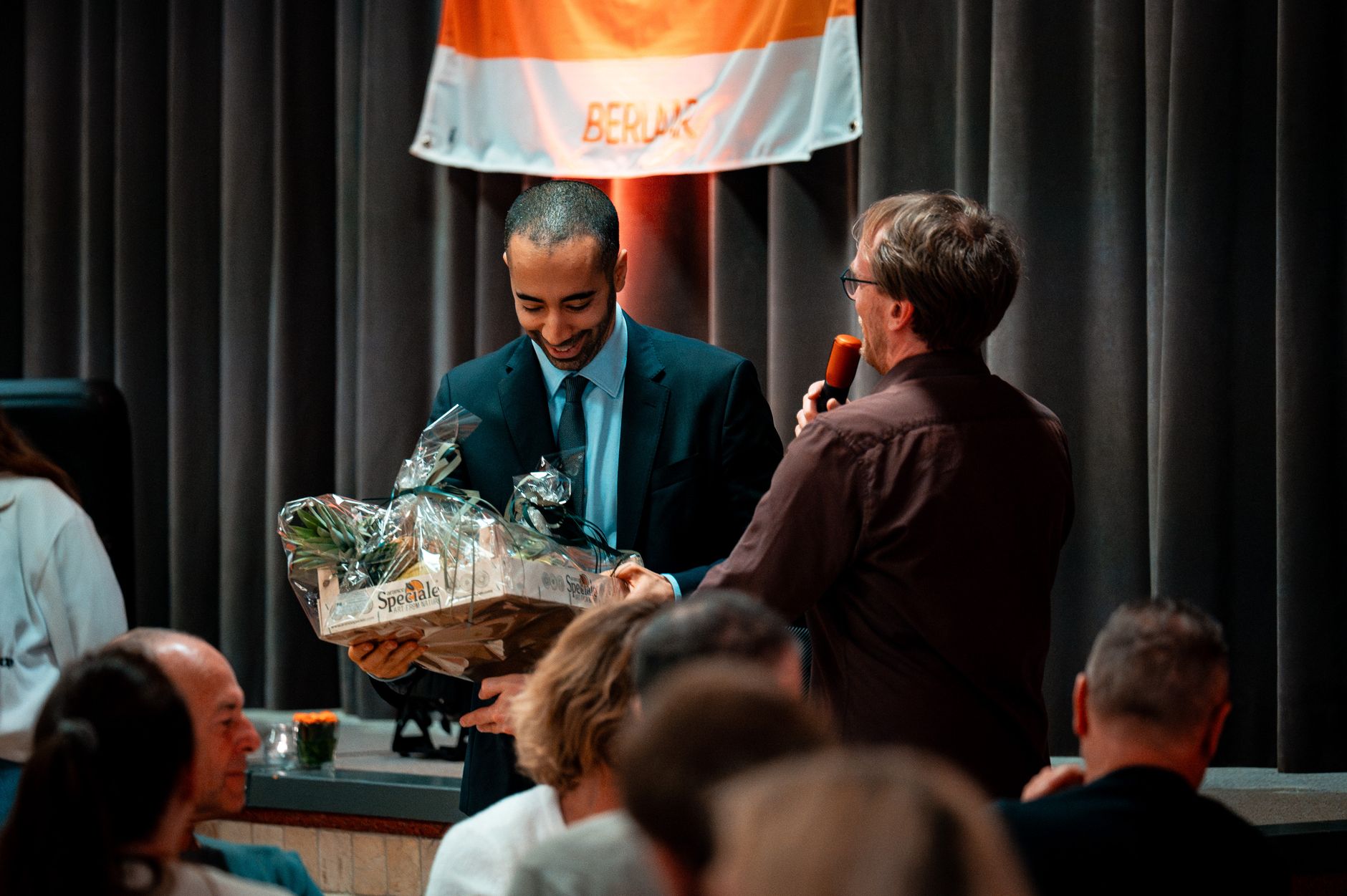
Photo by Jitte Davidson
Choose Genres That Support the Room
Cinematic soundtracks and orchestral instrumentation fit a formal award presentation, while contemporary award ceremonies may call for a lighter sound. Their brass, strings, and percussion create scale without relying on familiar lyrics.
Modern lifestyle awards often work better with disco-pop, refined electronic music, clean hip-hop selections, and upbeat house tracks. Use uplifting anthems for celebratory wins and inspirational anthems for milestone or leadership moments. Use stronger dance energy later in the night, especially if the program leads into a reception or company party.
Avoid Music That Fights the Moment
Elevator music can flatten an awards presentation because it has no direction or emotional lift. Hardcore techno can be just as disruptive when presenters need a calm, professional stage environment.
Keep genre blocks short. Two or three tracks with a similar feel can create consistency, but an entire evening of one style can make a mixed corporate crowd disengage. Let the soundtrack evolve from recognition moments into the reception, while a professional DJ reads the room and adjusts the energy.
Lighting should follow the same rule. Brand-color uplighting can frame the stage and make a ballroom feel polished. Fast-moving dance lights are better saved for a post-awards celebration, not a leadership speech.
Build a Cue Sheet the Whole Team Can Use
A cue sheet for award ceremonies turns general ideas into clear show instructions. Keep it short enough to scan quickly, but detailed enough that no one has to guess.
| Program Moment | Trigger, Cue Owner, and Timing | File, Direction, Handoff, and Backup |
|---|---|---|
| Guest arrival | Doors open through seating. DJ owns cue 01. Stand by before doors open, then go when doors open. | Local file 01, in-point 00:00. Warm, mid-tempo music at conversation level. Switch to file 01B if playback fails. |
| Show open | Show caller owns cue 02. Stand by during the final room check, then go on the caller’s “go.” | Local file 02, in-point 00:00. High-impact 15-second opener, fade under emcee. Use file 02B if needed. |
| Category introduction | Playback operator owns cue 03. Go when the presenter reaches the stage and is ready. | File 03, in-point 00:08. Light pulse or cinematic bed, then fade on the presenter’s first words. Hold the loop if the presenter is delayed. |
| Winner announcement | Show caller owns cue 04. Go when the name is fully announced. | File 04, in-point 00:00. Immediate celebratory sting, hold 10 to 20 seconds. Stop on the caller’s signal, or use file 04B. |
| Acceptance speech | Playback operator stands by cue 05. Go only when the show caller approves it. | File 05, in-point 00:00. Stop music when the winner reaches the microphone unless a rehearsed bed is approved. Keep the stop command ready. |
| Walk-off and reset | DJ owns cue 06. Go as applause begins to drop. | File 06, in-point 00:05. Short upbeat cue, then low transition music. Loop the reset section if the stage change runs long. |
| Final award or group photo | Show caller owns cue 07. Go on the presenter’s callout. | File 07, in-point 00:00. Larger anthem or branded closing cue. Extend the outro or switch to file 07B if the photo takes longer. |
Before doors open, confirm these practical details with the show team:
- Verify every cue number, presenter name, award order, and pronunciation note against the final script. Mark each cue as stand by or go, with stand by meaning ready and go meaning play.
- Store local playback files on the primary and backup devices. Play each file through the actual sound system and test microphone levels in the room.
- Confirm the backup playback device, emergency stop signal, and who can approve a last-minute change.
- Mark the exact in-point, fade-out point, stop point, and loop section for every walk-on track.
A cue sheet also gives the DJ room to react. If a presenter is delayed, the team can hold a loop cleanly instead of allowing dead air to take over.
Handle Music Rights Before Event Day
A polished program also needs a documented music plan. Ballroom playback at award ceremonies, a recap video, and live event streaming can involve different permissions.
ASCAP’s music licensing FAQs are a useful reminder that one license may not grant blanket permission across platforms or catalogs. Ask the venue about its public-performance licensing, then confirm what the event’s music provider covers.
Royalty-Free Music Needs Written Scope
Royalty-free music can be a practical choice for award videos, branded recap reels, and live-stream holding screens. Still, royalty-free music does not automatically mean P.R.O.-free, and it does not automatically cover every use.
Check the provider’s terms for the venue, catalog, territory, audience, livestream, edited video, paid promotion, and future social posts. Treat public-performance rights, synchronization rights, livestream permissions, and social-media reuse as separate checks.
Require providers to document any P.R.O.-free claim in writing, without treating it as blanket permission. Keep the invoice, license ID, track title, and provider terms in the event file for legal security.
SESAC’s business licensing information states that live and recorded music can require a public-performance license. Its licensing FAQ also explains that licenses from ASCAP and BMI do not automatically authorize the use of SESAC-represented music.
For copyrighted commercial music, review the venue agreement and the DJ’s coverage well before the event. A music plan is more reliable when rights approval for video, livestreams, and social posts is separate from content approval.
Frequently Asked Questions
How loud should music be during an awards ceremony?
Music should support the room without making guests or presenters compete with it. Keep arrival and transition music at a conversation-friendly level, then lower or stop it completely when someone speaks.
How long should a winner walk-on cue last?
A winner cue usually works best at about 10 to 20 seconds. Loop the strongest section if the route to the stage takes longer, and stop or fade it when the recipient reaches the microphone.
Who should control music cues during the program?
The show caller should own the final “stand by” and “go,” while the DJ or playback operator runs the assigned files. Every presenter, AV technician, and awards coordinator should know the cue owner and the handoff point before rehearsal.
Do award ceremonies need music licensing?
They may, depending on the venue, music catalog, playback method, livestream, and later video use. Confirm public-performance, synchronization, livestream, and social-media permissions separately, and keep the licensing documentation with the event files.
Final Thoughts
Music cues are not filler in award ceremonies. They give presenters confidence, help winners enjoy the moment, and keep guests engaged throughout the program.
The best corporate awards ceremony music plan uses short, purposeful cues, clear ownership, controlled volume, defined trigger points, and written backup options. When each cue has an owner, trigger, and ending point, recognition stays where it belongs, with the people who earned it.