A thoughtful introduction can help extended families feel welcome as they come together, without putting their relationships on display. For a blended family wedding, clear names, comfortable roles, and well-timed announcements deserve the same attention as the music.
Your DJ doesn’t need every detail of your family structure; they need approved wording, clear boundaries, and a plan everyone understands. Start with the people involved, then build the ceremony and reception around moments they can comfortably enjoy.
Key Takeaways
- Confirm names, pronunciations, preferred family titles, and entrance order before your DJ prepares announcements.
- Give children and teenagers meaningful choices, including the option to participate without speaking or performing.
- Coordinate family dances, toasts, and music with clear approval rules so unexpected requests don’t become public surprises.
Start Your Blended Family Wedding Plan With Private Conversations
Personalized wedding entertainment begins with understanding how each family member wants to participate. Have these conversations before assigning ceremony roles, announcing special dances, or sharing the reception timeline.
Ask privately rather than presenting a finished plan in front of relatives. A child may agree publicly to avoid disappointing someone, even when the proposed role feels uncomfortable.
Give Children Choices Without Pressure
Invite children, including stepchildren, to decide whether and how they want to participate. Offer a few manageable options. They might walk in the processional, join a family photo, choose a reception song, or sit with a trusted adult.
Participation shouldn’t require a speech, a new family title, or a public promise of affection. A ceremony role isn’t proof of a newly formed family unit. If a child changes their mind, give your coordinator and DJ permission to adjust without announcing the reason.
Let Teenagers Choose Their Level of Visibility
Teenagers may prefer contributing behind the scenes, choosing music, greeting guests, or joining friends during open dancing. Others will welcome a reading or toast, provided they have time to prepare.
Adult children should also receive an invitation to participate rather than an automatic assignment. Agree on whether they’ll enter with the wedding party, sit with family, or be introduced individually. Clear expectations reduce last-minute pressure.
Prepare Sensitive Introductions With Your DJ
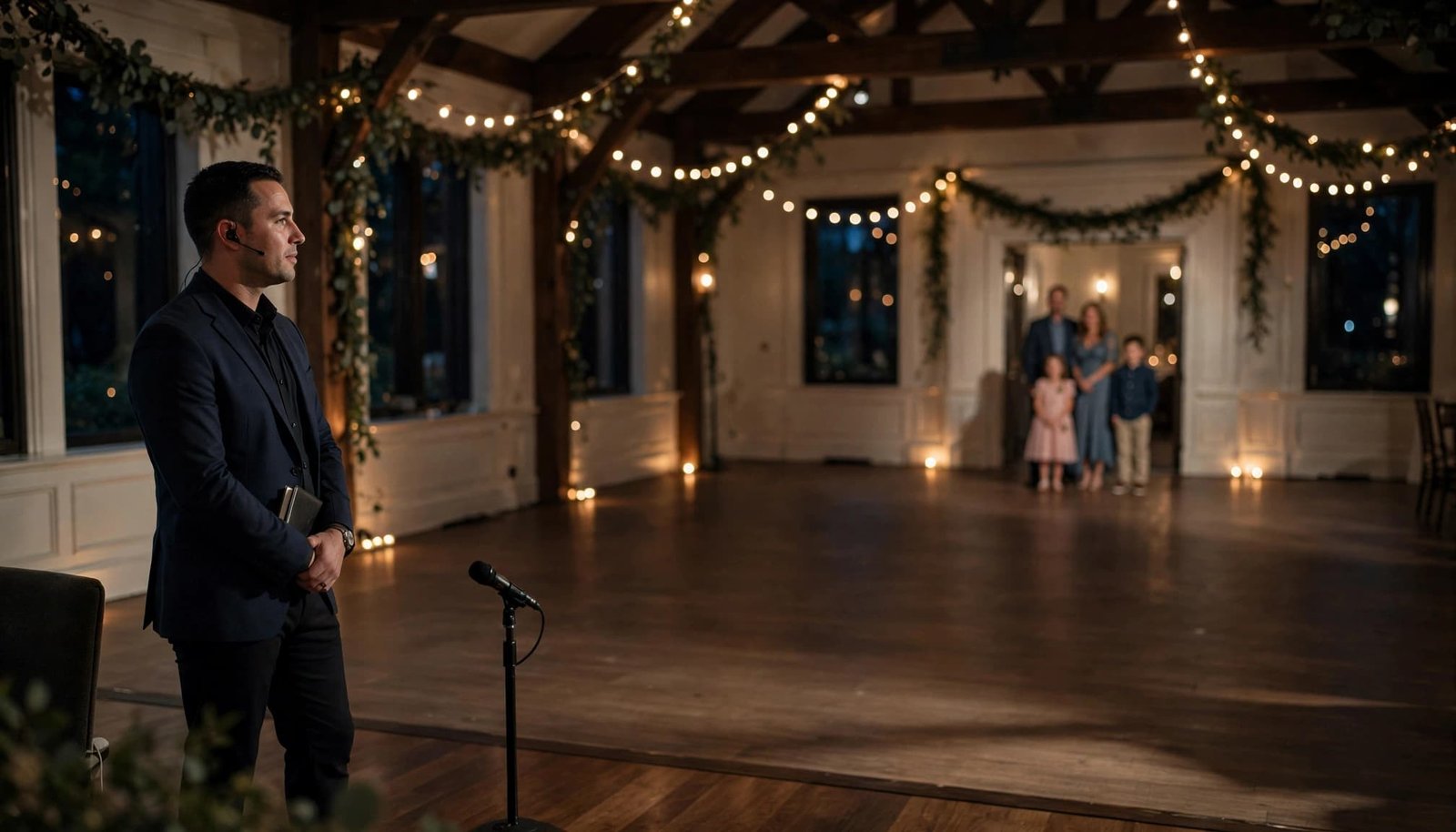
A professional MC should introduce people confidently without explaining relationships guests don’t need to understand. First names can be enough when formal titles feel uncomfortable or unclear.
Confirm Names and Preferred Family Titles
Give your DJ a current introduction sheet with names, pronunciation notes, preferred titles, and the approved entrance order. A short voice recording can help clarify names that are difficult to explain phonetically.
Ask before using “stepfather,” “bonus mom,” “Dad,” or another relationship label. Those terms may feel natural in one relationship and uncomfortable in another.
Review the same spoken names with your officiant. Ceremony introductions and reception announcements should reflect your preferences, including whether to use surnames or marital titles.
Choose an Entrance That Fits Your Family
Children can enter with the newlyweds, enter separately, or already be seated. Parents and stepparents don’t need individual entrances, and divorced parents don’t need to walk together.
A simple announcement such as “Please welcome our newlyweds and their children!” works when everyone has approved that format. Introducing only the couple is equally appropriate.
An introduction list isn’t a summary of family history. Include only the names and relationship labels approved for public use.
Once the wording is settled, choose music that supports the entrance’s energy. These wedding reception entrance song ideas can help you find a recognizable starting point and choose a comfortable entrance length.
Choose Ceremony Roles and Unity Rituals That Feel Comfortable
A wedding ceremony can acknowledge children without asking them to show instant closeness. Keep the language warm and realistic, and focus on commitments the adults can make.
Offer Alternatives to a Unity Sand Ceremony
A unity puzzle, family medallion, or shared handprint canvas can offer an alternative to a unity sand ceremony. FamilyLife’s blended-family ceremony ideas include these options.
Choose a unity ritual the children involved genuinely like, and make participation optional. The ritual isn’t a test or proof of family bonding.
Older children may prefer a private gift or helping create a keepsake before the wedding instead of taking part in front of guests.
Check practical details with the venue and officiant. Paint needs surface protection and drying time, and someone should be responsible for moving ceremony objects afterward.
Coordinate Sound and Music Around the Ritual
Tell the DJ whether the officiant will explain the ritual, whether children will speak, and when music should begin or fade. Keep background music low enough for everyone to hear spoken words.
If a child declines a speaking role, the officiant can acknowledge the family without passing a microphone. Avoid asking children to promise love or loyalty publicly. Adult commitments can emphasize patience, respect, and dependable care.
Make Parent and Family Dances Personal
Parent dances work best when the relationship determines the format. Mothers, fathers, stepparents, grandparents, siblings, mentors, and chosen family can be included according to the couple’s wishes.
Agree on Separate, Shared, or Private Moments
Separate dances give each relationship its own moment. A shared dance, brief song change, or group invitation can keep the formal portion comfortable and concise.
A private toast or photograph is also a meaningful option. Couples don’t need matching dances for every parental figure, and they can choose to skip dances altogether.
Talk directly with divorced parents before finalizing the schedule. Explain each person’s role clearly without inviting comparisons about who receives more attention.
Keep Dance Announcements Brief and Accurate
“For a special family dance, please direct your attention to the dance floor” may provide all the direction guests need. Names can follow when participants prefer individual recognition.
Confirm the exact artist, recording, starting point, and ending cue. Review the lyrics and the song’s overall feeling.
For a dance involving children, establish whether they’ll begin on the floor or join later. The DJ should wait until participants and photographers are ready before starting the track.
Protect Family Privacy and Set Reception Boundaries
Respectful planning includes practical arrangements that never need a microphone announcement. Seat family members where they can enjoy dinner comfortably, and give extended families room to sit or socialize without assuming everyone should be paired. Coordinate photograph groupings without treating the reception as a public test of family harmony.
Where co-parenting arrangements affect attendance, transport, or departure times, settle those details with the adults involved. Children shouldn’t have to carry messages between households.
Share only what your planner and DJ need to know about family dynamics. “Don’t pair these guests for an entrance” is usually more useful than a lengthy explanation.
Identify one person authorized to approve timeline changes. A relative’s suggestion during dinner shouldn’t automatically become an additional speech, dance, or surprise announcement.
For toasts, agree on speakers and order ahead of time. Tell speakers to avoid divorce jokes, comparisons with former partners, and comments about children accepting a new parent. If a guest requests microphone access unexpectedly, the DJ can refer the request to the designated decision-maker before proceeding.
Use Wedding Invitation Wording That Matches Your Hosts
Wedding invitation wording and reception introductions should work together, but they serve different purposes. The invitation names the hosts; the MC guides guests through the celebration.
When Parents or Stepparents Are Hosting
The Emily Post Institute’s wedding invitation guidance explains that invitations are issued by the host or hosts. Confirm the hosting arrangement and names before ordering wedding invitations or sending save-the-dates.
When several hosts are involved, review the proposed wording with the couple and everyone being named. Consider extended families, but don’t use the invitation to rank emotional importance.
Emily Post’s formal invitation wording examples include different parental hosting arrangements. Choose wording that fits your wedding, and check all names and titles carefully.
If save-the-dates have already been sent, the formal invitation can clarify who is hosting without drawing attention to a change.
When the Couple Is Hosting
Couples hosting their own wedding can lead with their names and a direct invitation. “Together with their families” is another option when a collective acknowledgment feels right.
Children can receive a separate acknowledgment if the couple and children want one. Their names don’t have to function as host names.
Use the wedding website for practical details, such as children’s attendance, schedules, and accommodation information. It doesn’t need to explain custody arrangements or sensitive family relationships.
The wedding website can also share updates about timing or transportation as plans take shape. Keep those logistics separate from private family matters.
Build a Clear DJ Planning Timeline
A reliable reception plan connects announcements, music, venue readiness, and family preferences. Start wedding planning before sending save-the-dates, and use these checkpoints rather than leaving sensitive details until the final week.
- At your initial planning conversation, identify must-have moments, family participation preferences, cultural traditions, and your preferred MC style. Explain whether you want understated introductions, an energetic entrance, or minimal microphone time. Ask how changes will be handled when someone opts out.
- Once the main schedule is established, confirm entrance order, ceremony roles, toast speakers, parent dances, and children’s departure plans. Keep practical logistics current on your wedding website, and share must-play songs and a do-not-play list, including music with difficult personal associations. Decide whether guest requests may override any selections; restricted songs should remain restricted.
- During the final review, read introductions aloud and ask the DJ to repeat unfamiliar names. Confirm recordings, song cues, and who approves changes. Provide one updated document so the working plan doesn’t depend on scattered emails or an older version of the family list.
- On the wedding day, have the DJ check readiness before each formal moment with the planner, venue team, photographer, and participating family members. If someone needs more time, keep suitable background music playing. Announce the moment when it is ready rather than explaining a private delay to the room.
DJ Steve Neff Entertainment LLC provides wedding DJ and MC services that include ceremony and reception music, announcements, and timeline coordination. Now based in Concord, New Hampshire, the business has professional DJ experience dating back to 1999. Clear preparation supports personalized entertainment and a reception that feels organized without constant commentary.
Frequently Asked Questions
What should I tell the DJ about my blended family?
Share approved names, pronunciations, preferred family titles, entrance order, and any boundaries for announcements. Your DJ needs the details that affect the schedule and wording, not a full explanation of family relationships.
Do children have to take part in the ceremony or reception?
No. Offer children a few comfortable options, including participating without speaking, and let them change their minds without a public explanation.
How should we introduce stepparents and children at the reception?
Use names and relationship labels only when the people involved have approved them. A brief welcome to the newlyweds and their children—or an introduction of the couple alone—can work well.
How can we avoid unexpected speeches or family dances?
Agree in advance on who can approve changes and which guests are scheduled to speak or dance. Ask the DJ to check with that person before accepting a last-minute request.
A Comfortable Celebration Starts With Clear Preparation
A blended family wedding feels more personal when introductions reflect the people involved, rather than assumptions about their relationships. Approved wording and flexible participation give your DJ a dependable plan while leaving room for a genuine wedding celebration.
Keep family explanations private, confirm the moments that matter, and let music carry the energy between announcements.
When you’re ready to plan your wedding DJ services, bring your priorities and boundaries together. The goal is a welcoming reception where every announcement helps people enjoy the next moment.