A surprise party can lose its magic in the last five minutes. Timing feels rushed, a guest arrives late, or the birthday honoree walks in while everyone is still finding a place to hide.
A well-planned birthday surprise reveal is one of the most effective birthday surprise ideas when preparation matters more than volume. Your DJ, host, and guests know their roles. The guest of honor feels the excitement when the music hits and the room comes alive.
The goal isn’t to make the reveal louder than every other moment. It’s to make it feel perfectly timed.
Key Takeaways
- Have guests arrive 45 to 60 minutes early so they can settle in, hide, and give the DJ time to test the equipment.
- Create a simple show plan that names the reveal location, cover story, final decision-maker, music cues, and backup contact.
- Save the song’s strongest hook, chorus, or beat drop for the birthday guest’s actual entrance.
- Use private spoken cues, visual signals, and short text messages to coordinate the host, DJ, and guests.
- Prepare for early or late arrivals, technical issues, and route changes so the reveal can continue without feeling rushed.
Set the Birthday Surprise Reveal Before Guests Arrive
The best surprise starts with a realistic arrival plan. Guests should have enough time to park, enter, settle in, and get out of sight without standing around for an hour.
Most parties work well when guests arrive 45 to 60 minutes before the birthday guest. That buffer lets them park, settle in, and get out of sight. It also gives the DJ time for a sound check and the host time to confirm the final route. These surprise party arrival timing tips support a comfortable buffer before the guest of honor appears.
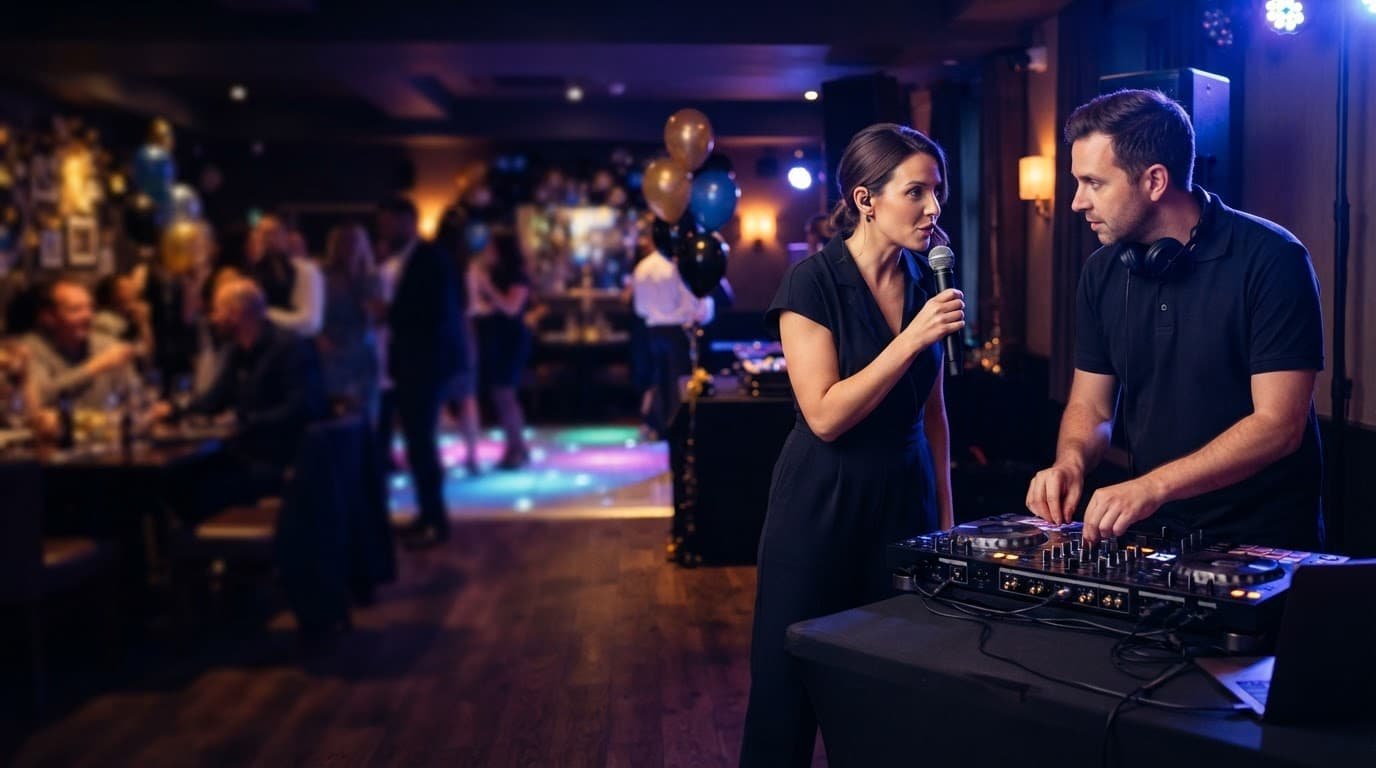
Choose the Right Moment in the Party
Don’t reveal the party the second the birthday guest enters the building unless the entrance itself is the full surprise. Let the host guide them toward the main room, cake table, patio, or dance floor first.
At a home party, the reveal may happen at the front door or when the guest steps into the living room. At a banquet hall or restaurant, it often works better near the dance floor, where the DJ has clear sight lines and guests can gather safely.
A strong reveal lasts about one to two minutes. The surprise lands, guests cheer, photos happen, and the DJ moves into a familiar celebration song. After that, the party needs somewhere to go, such as dinner, cake, a toast, or open dancing.
Write a Simple Show Plan
A party DJ should receive more than a playlist. Provide a short event brief with the guest’s expected arrival time, the cover story, the reveal location, the person in charge, approved music, restricted songs, and a backup contact.
Name one person as the final decision-maker. Too many group texts and last-minute opinions can create confusion at the exact moment everyone needs to be focused.
The surprise is not the loudest song. It is the second when every guest is ready and the birthday guest is not.
A 60-Minute DJ Surprise Reveal Schedule
A clear run-of-show keeps the event moving without making the room feel over-managed. Plan for the DJ to arrive 45 to 60 minutes early. If venue constraints require it, 30 minutes is a workable minimum.
Follow the Final Hour in Phases
| Time | DJ and Host Action | Guest Experience |
|---|---|---|
| 45 to 60 minutes before | DJ arrives and tests the speakers, microphone, lighting, and reveal track at a realistic volume. | The room is still clear, allowing time for adjustments. |
| 30 minutes before | Host directs arriving guests to their hiding locations and checks windows, doors, and side entrances. | Guests settle in quietly and stay out of sight. |
| 15 minutes before | Host confirms the birthday guest’s location and expected route. DJ shifts to music with a little more energy. | Anticipation builds without looking suspicious. |
| 5 minutes before | Host confirms, “They’re on the way.” DJ loads the reveal cue and watches the entrance. | Guests move near the planned reveal area. |
| Arrival moment | Host brings the birthday guest into position and gives the final visual cue. DJ starts the music at its strongest hook. | Cheers, photos, and a clear shared reaction. |
| 1 minute after | DJ lowers the music slightly for the host’s brief welcome or birthday message. | The guest can hear and respond. |
| 2 to 5 minutes after | Move directly into cake, a toast, dinner, or a dance set. | The party keeps its momentum. |
The biggest mistake is using the recognizable hook too early. Save the chorus, beat drop, or opening hook for the actual entrance. A 15 to 25-second music clip often feels tighter than playing a full song before anyone has reacted.
Coordinate the DJ, Host, and Guests
A professional DJ can read a room, but nobody should have to guess whether the birthday guest is walking through the right door. Communication needs to be clear, quiet, and planned before the party begins.
Use Three Layers of Cues
Use the cues in order: start with a private spoken cue, follow with a visual go signal, and keep a text backup as the last resort. A simple phrase such as, “We’re five minutes out,” tells the DJ to prepare without starting the reveal.
Next, use a visual signal. The host can make eye contact and raise one hand once the birthday guest is in the right location. This works better than shouting across a noisy room.
Finally, use a backup text message if the host and DJ are separated. Keep it short: “At door,” “Hold,” or “Go.” The DJ should know that “Go” means music starts immediately, not after another conversation.
The host and DJ can use a qr code to open a private cue sheet, with a printed copy or text-message fallback if a phone fails.
For the public announcement, keep the wording warm and quick:
“Everybody, come close for one quick photo. Happy birthday, make some noise!”
That cue gives guests direction, brings the focus to the guest of honor, and gives the DJ a clean opening for the music.
Pick Music That Hits Quickly
Slow intros are risky for a reveal. Choose a song with an immediate beat, familiar vocal, or big opening moment. The guest should feel the energy within a few seconds.
If you add a flash mob, performers need their own rehearsal and visual go cue. The DJ should still start the track at the agreed hook.
Review the exact version before the event. A radio edit can still contain awkward gaps, distracting lyrics, or a long intro that doesn’t fit the moment. Give the DJ a short do-not-play list as well, especially if certain artists, songs, or genres have personal meaning for the birthday guest.
Keep the microphone level clear but comfortable. Guests should hear the host without the announcement sounding sharp or overwhelming in a smaller room.
Keep the Secret Without Draining the Energy
Surprises require a little planning, but guests should not feel like they are waiting backstage for a production. Give people simple instructions and let the DJ maintain a comfortable atmosphere.
Give Guests One Job
Send the final message on the day of the party. Ask guests to arrive by a specific time, use a side entrance if needed, and avoid posting location tags or photos until after the reveal.
If the party is at home, close curtains and move vehicles that would look unfamiliar in the driveway. At a venue, ask staff which entrance the birthday guest will use and keep guests away from that path.
For more practical ideas on cover stories, guest coordination, and protecting the reveal, review this guide to planning a surprise party without spoiling it.
Match the Timing to the Birthday Guest’s Age
Age and format should shape your birthday surprise ideas. A surprise dinner, cooking classes, dance classes, or a spa day may each need a calm handoff before the music begins.
If you add an optional gift reveal, rehearse the handoff first. A custom puzzle, scratch card reveal, or scratch panel can be shown before the celebration track begins. Wait until the birthday guest has seen it, then cue the music.
Young children often respond best to a fast reveal. Keep the waiting period short, avoid complete darkness, and don’t make the music painfully loud. Five minutes of anticipation is usually plenty.
Teens may enjoy a more dramatic entrance, lighting change, and a high-energy song. Keep the music age-appropriate, and ask the DJ to use clean versions that have been checked before party day.
Adults usually appreciate a relaxed setup. An informal meal, backyard gathering, or private event room can build anticipation for 15 to 20 minutes before the guest arrives. The DJ can use polished background music, then move into a stronger party track at the reveal.

Prepare for the Moments You Can’t Control
Even a carefully planned event can change quickly. Traffic happens, a ride arrives early, weather moves guests indoors, or the guest of honor takes a different route than expected.
If the Birthday Guest Arrives Early or Late
If they arrive early, don’t force the reveal before the room is ready. The host can keep them outside for a short conversation, offer help carrying something inside, or guide them to another part of the venue. The DJ should continue normal background music until the visual “go” cue arrives.
If the guest is late, don’t let guests sit in silence. Keep the music warm, offer drinks or appetizers, and let people talk. The DJ can hold the reveal track and adjust the party flow without calling attention to the delay.
A 30 to 60-minute guest arrival buffer is common because it gives planners room for real-life changes. This contingency-planning advice is a useful reminder that timing protects the experience.
Have a Technical Backup Ready
Test the reveal song, microphone, and lighting before guests arrive. The DJ should have the key track ready in more than one place, along with a backup microphone and charged battery if wireless microphones are part of the plan.
Ask the venue about sound limits before the event. A reveal should feel exciting, not uncomfortable. Proper speaker placement and a realistic sound check keep the music full on the dance floor while allowing guests to hear the host.
If the reveal cue is missed, don’t replay the moment like a rehearsal. Let the host welcome the birthday guest, start a strong celebration song, and move forward. Most guests remember the reaction, not the exact second the music started.
Frequently Asked Questions
How early should guests arrive for a surprise birthday party?
Guests should usually arrive 45 to 60 minutes before the birthday guest. This gives them time to park, settle in, hide, and lets the DJ complete a sound check.
How long should a birthday surprise reveal last?
The reveal itself should usually last about one to two minutes. After the cheers and photos, move into a toast, cake, dinner, or dancing to keep the party moving.
What is the best music for a birthday surprise reveal?
Choose a song with an immediate beat, familiar vocal, or strong opening hook. Keep the recognizable section for the actual entrance rather than playing it too early.
What should happen if the birthday guest arrives early or late?
If the guest arrives early, the host can delay the entrance briefly while the DJ continues normal background music. If the guest is late, keep guests comfortable with music, drinks, and conversation while holding the reveal track until the planned cue.
A Reveal That Feels Personal and Well-Paced
The strongest DJ-led reveal has a simple plan behind it: guests arrive with enough buffer, the host controls the entrance, the DJ has a tested cue, and the next activity is ready.
Clear communication and tested equipment keep the moment exciting instead of rushed. Good timing gives the birthday guest space to react and gives everyone else a moment to share.