A wedding in a historic barn or rustic venue can look relaxed and rustic, yet the sound plan needs careful attention. High ceilings, exposed beams, outdoor ceremony spaces, and multiple guest areas can make clear audio harder than it appears.
The right DJ does more than bring a playlist. They plan for vows guests can hear, announcements that reach every table, and a dance floor with energy that doesn’t overpower the room.
Start with the venue layout, then build the music, microphones, lighting, and timeline around it.
Why a Barn Wedding DJ Needs a Full-Day Plan
A barn is rarely one simple room. Your ceremony may be outside, cocktail hour may be on a patio, and the reception may take place under timber beams in a separate building. Each area has different sound needs, power access, guest movement, and volume expectations.
A professional DJ should ask about these details before the wedding day, not while guests are finding their seats.
Ceremony, Cocktail Hour, and Reception Are Different Jobs
Ceremony music needs clean, controlled coverage for processional songs, vows, readings, and the recessional. Cocktail hour calls for lower background music that supports conversation. The reception needs a sound system that can handle introductions, dinner music, toasts, special dances, and open dancing.
Treating all three spaces as one setup can create gaps in coverage and rushed transitions. A coordinated plan gives each part of the day the attention it deserves.
A Venue-Aware DJ Brings More Than Music
A general DJ may know how to fill a dance floor. A barn wedding DJ also needs to understand speaker placement, load-in access, weather backups, cable safety, sound limits, and the flow between event spaces.
This preparation matters because a powerful speaker in the wrong location can make one group of guests uncomfortable while leaving another group unable to hear the toast. Good planning keeps the event polished, clear, and comfortable for everyone.
Plan Ceremony Audio Before Guests Arrive
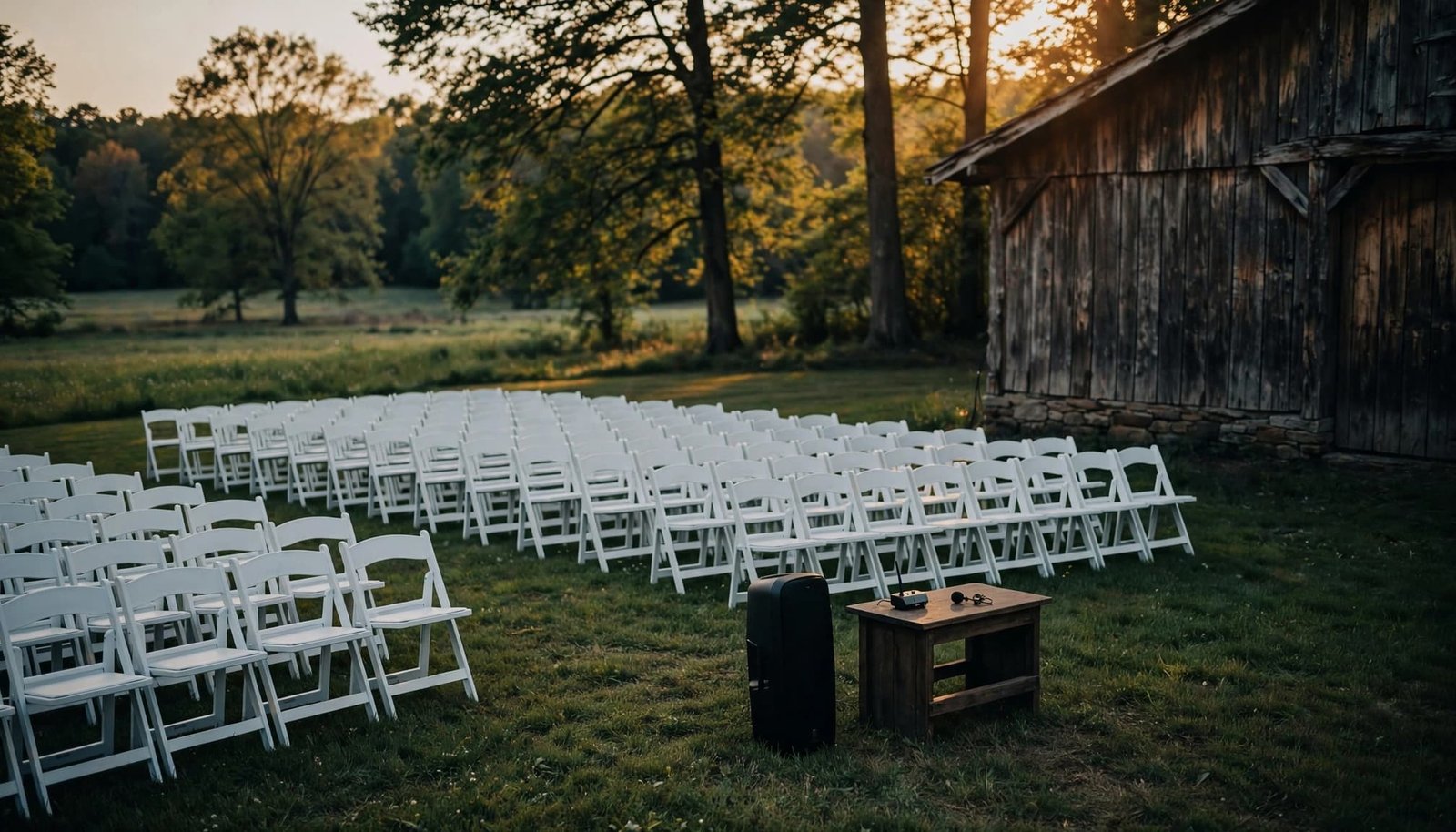
Guests may forgive a missed song request later in the evening. They’ll remember if they couldn’t hear the vows. An outdoor ceremony needs a dedicated plan for ceremony music, processional and recessional cues, and a ceremony sound system before guests arrive, even when the service is brief.
A professional setup should be tested before guests arrive, using the actual microphones, speakers, and music device planned for the service.
Choose Microphones for the People Speaking
An officiant often benefits from wireless microphones, including a lapel or headset option. These keep their hands free and support consistent speech. A handheld microphone can work well for readings, blessings, and musicians. Quiet speakers or personal vows may need their own microphone plan.
Ask your DJ to bring fresh batteries, spare cables, and an alternate microphone. Test the setup on site with fresh batteries and spare cables, then test the backup microphone before the processional begins.
Place Ceremony Speakers for Clarity, Not Volume
Outdoor sound disappears into open air, and wind can carry voices away from the seating area. Speakers should cover guests evenly, account for wind direction, and avoid pointing directly at live microphones, which can create feedback.
Walk the ceremony site with the venue coordinator, planner, and DJ. Look at the guest seating direction, slope of the lawn, nearby roads, power sources, sun exposure, and wind patterns. Check speaker orientation from the seating area and adjust it to reduce feedback. A ceremony system should feel unobtrusive while allowing guests in the back rows to follow every important word.
How Barn Acoustics Affect Music and Announcements
If you’re planning a reception in a historic barn, post and beam construction can create reflection and echo. Wood, glass, hard floors, tall ceilings, and unusual room shapes can increase reverberation, making a room sound louder without making it clearer.
The goal isn’t maximum volume. The goal is clear announcements, comfortable dinner conversation, and focused energy when the dance floor opens.
High Ceilings Can Blur Speech
Sound travels upward, bounces from hard surfaces, and returns to the room a fraction of a second later. When those reflections build up, words can sound muddy, and guests may struggle to understand toasts.
QSC explains that excessive reverberation can make indoor audio unclear, which is why loudspeaker placement for live sound matters so much in a large barn. The DJ should listen from the front, center, and rear of the room during soundcheck, not only from the DJ table.
Coverage Beats One Overworked Speaker
Size the sound system for the guest count, room length, ceiling height, and seating layout. Place the main speakers for even coverage instead of pushing one pair to reach every table.
Room size and ceiling height also affect subwoofer placement. Position any subwoofer so bass doesn’t build up excessively in a corner, against a wall, or near guests seated for dinner. As PCG’s overview of speaker system choices points out, the right approach depends on the room rather than a one-size-fits-all equipment list.
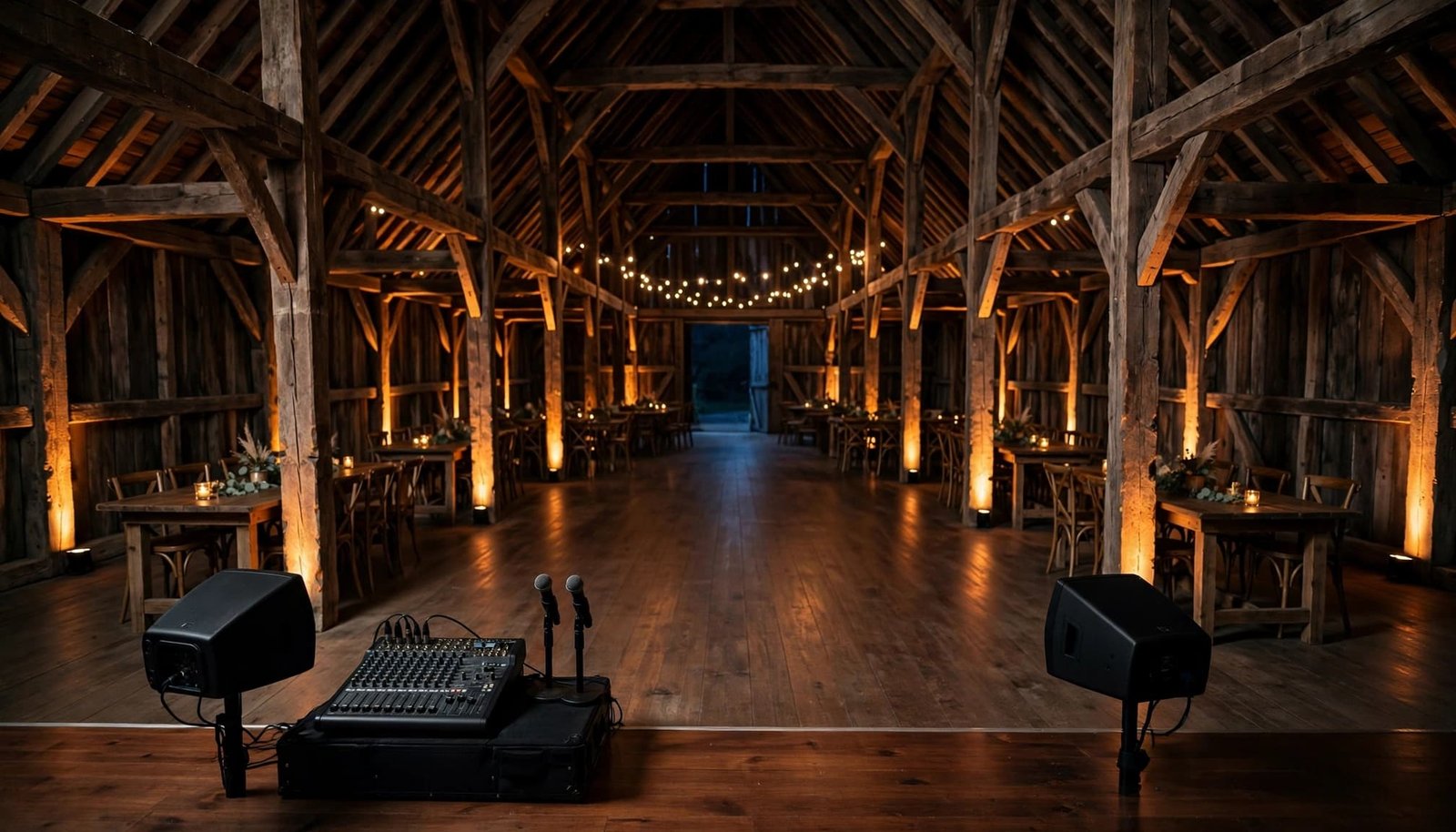
A clear toast at a comfortable volume is a better measure of reception sound than how loud the music feels beside the DJ booth.
Manage Every Space as Its Own Sound Zone
A barn wedding often moves guests through several environments. Music should follow the celebration without making every area sound the same.
Separate sound zones allow the reception to feel lively while the patio, bar area, and dinner tables remain welcoming places to talk.
Give Cocktail Hour Its Own Approach
Cocktail hour music should set a relaxed mood, not compete with conversations or create a second dance floor before dinner. If guests are gathering on a patio, lawn, or courtyard, the DJ should confirm whether separate equipment is needed and where it can be placed safely.
This is also the time to coordinate transitions. If the venue is a historic barn, the wedding planner, caterer, photographer, and DJ should share a day-of communication plan. It should cover the couple’s entrance, dinner service, formal announcements, and movement between spaces.
Protect the Reception Sound
During dinner, keep music warm and lower in level. For toasts, use a tested microphone and direct sound toward guest seating. When dancing begins, the main system can focus energy toward the dance floor rather than blasting the nearest dining tables.
Before the event, confirm any sound limiter, bass restrictions, nearby residences, or music curfew. A strong DJ can adjust the music plan and keep the night engaging without pushing against venue policy.
Build Music and MC Support Around Your Guests
Personal music choices make a wedding feel like your own. Thoughtful music planning works best with a realistic timeline and an experienced MC who can guide moments without taking over the room.
The best wedding entertainment is clear, warm, and brief. Guests should know what is happening next without feeling like they are attending a stage show.
Share Must-Play and Do-Not-Play Lists
Give your DJ the songs and artists that matter most, along with music you don’t want played. Include genres for dinner, cocktail hour, reception music, and the dance floor, then leave room for the DJ to read the crowd and adjust pacing.
A helpful planning conversation often starts with wedding reception song ideas and ends with a list that fits the people in the room. A custom playlist should feel personal while still leaving space for the energy to build naturally.
Plan Formal Moments Before the Reception
Your grand entrance, first dance, special dances, cake cutting, and final song should appear on the timeline with the music choices and timing notes. A first dance doesn’t need to run the full length of a song if a shorter version feels more natural.
A rustic wedding DJ can match country music, acoustic selections, and classic sing-alongs to the guest mix. Couples looking for options can explore country first dance song ideas before making a final choice.
Compare Barn Wedding DJ Packages by What Is Included
A quote should describe the actual wedding package, not only the number of hours. It should identify planning, equipment, MC support, setup, and backup responsibilities. Two packages with similar prices may offer very different levels of service.
Ask for clear details in writing before you compare options.
| Planning Area | What to Confirm |
|---|---|
| Ceremony audio | Microphones, speakers, music cues, backup equipment, and weather plan |
| Reception sound system | Speaker placement, dinner coverage, toast microphones, and dance-floor setup |
| Event flow | Timeline support, introductions, special dances, and MC announcements |
| Logistics | Load-in time, power access, cable routing, sound limits, and breakdown schedule |
| Enhancements | Uplighting, dance-floor lighting, photo booth options, and separate sound areas |
A full-day package may include ceremony music, cocktail-hour music, reception entertainment, wireless microphones, MC services, lighting, venue coordination, and coordination. It may also include only some of those services, so never assume.
Ask About Lighting and Optional Enhancements
Uplighting can bring out barn beams, stone walls, draping, and head-table details. Dance-floor lighting can add energy later in the evening. A photo booth may also fit the celebration, but it needs its own space, power plan, and guest traffic flow.
That photo booth also needs a reserved location, power access, and enough clearance for guest movement.
Choose enhancements that support your venue and guest experience. A crowded barn corner filled with equipment can affect movement, photos, and sound coverage.
Confirm Setup Time, Power, and Safety
If the reception is held in a historic barn, the DJ needs enough time to unload, place equipment, test microphones, and complete a soundcheck before guests arrive. Confirm the approved power source, available circuits, parking, loading route, and exact setup location.
Cables should stay along approved room edges and away from exits, doors, stairs, and busy walkways. If a cable must cross a traffic area, use a venue-approved cable protector. Speakers, mixers, and power connections should also stay protected from rain and wet ground.
Key Takeaways for Barn Wedding Sound Planning
Clear wedding audio starts with the room, not the playlist. Review the barn layout, ceremony site, guest count, power access, sound rules, and weather plan before finalizing equipment.
- Plan ceremony, cocktail hour, and reception audio as separate needs.
- Use tested microphones and backup options for vows, readings, and toasts.
- Prioritize speaker placement and balanced coverage over higher volume.
- Share the final timeline with your DJ, venue, planner, photographer, and caterer.
- Request an itemized package that explains sound, MC support, lighting, setup, and backup planning.
Barn Wedding DJ FAQ
How far ahead should we book a rustic wedding DJ?
Begin contacting DJs once you have your date and venue confirmed. Popular dates can fill quickly, and early conversations give your DJ time to review the barn layout, event schedule, and service needs. Avoid booking based only on availability. Confirm that the DJ can support your ceremony, reception, and venue logistics.
What should we ask about outdoor ceremony microphones?
Ask which microphone will be used for the officiant, how readings and vows will be handled, and what backup equipment will be available. Also ask about wind, power, speaker placement, cable safety, and the indoor rain location. A small Bluetooth speaker may play a processional, but it is not a full ceremony sound plan.
Can we choose our own music and do-not-play list?
Yes. Share your must-play songs, favorite artists, preferred genres, and songs you never want to hear. Your DJ should use that information to build a personalized plan for dinner, formal dances, and open dancing while making sensible adjustments for the crowd.
What should a professional DJ coordinate with the venue?
The DJ should confirm load-in access, setup time, floor plan, available power, sound limits, speaker locations, weather protection, and breakdown requirements. New Hampshire wedding DJ services can include ceremony audio, reception music, custom playlists, MC support, lighting, and coordination around the venue schedule.
A Clear Sound Plan Lets the Wedding Shine
A beautiful historic barn setting deserves audio that feels natural and dependable. Guests should hear the vows, understand the announcements, enjoy dinner conversation, and feel the energy when the dance floor opens.
Professional DJ experience dating back to 1999 brings preparation to details that are easy to miss, including microphones, sound coverage, timing, and venue coordination. Clear sound allows the people and moments to stay at the center of the celebration.