An effective plan starts with pre-event planning and load-in. It covers signal flow, speaker and subwoofer placement, wireless microphones, playback, monitoring, and final verification.
For a corporate event, sound supports every part of the program, including arrivals, presentations, awards, dinner, and dancing. An occupied ballroom changes speech clarity and bass response, so testing should reflect guest conditions rather than a quick microphone check behind the table.
Start With a Ballroom Room Plan
A ballroom has high ceilings, hard surfaces, service doors, banquet tables, and often a built-in AV system. Each detail can affect music volume, speech clarity, speaker placement, and guest movement.
Map the Room Before Load-In
Ask the planner or venue contact for a current room diagram before event day. It should identify the stage, podium, screens, DJ position, FOH or control position, dance floor, bars, tables, doors, power outlets, accessible routes, and guest traffic paths.
Review where announcements, presentations, and dancing will happen. A speaker placed well for the dance floor may not provide clear coverage for a podium on the opposite side of the room. If cocktail hour is in another space, confirm whether it needs separate music or microphone support.
Before load-in, trace the signal flow from playback sources through the mixer, processing, amplifiers, and the main sound system. Confirm where the team will troubleshoot if a signal fails.
Protect Access, Power, and Guest Comfort
Audio and power cables should follow approved room edges whenever possible. They shouldn’t cross exits, stairways, doorways, service paths, or accessible routes. When a cable must cross a busy path, use a venue-approved cable protector.
Venue policies, approved load-in paths, electrical limits, fire rules, and local requirements take precedence. Ask qualified venue or AV personnel about power questions, and use only approved equipment and rigging methods.
Position speakers for even guest coverage, not directly toward microphone locations. Place low-frequency cabinets according to the system design and venue rules, while keeping all equipment clear of exits and accessible routes. Confirm that speakers and stands are stable and appropriately weighted before guests enter.
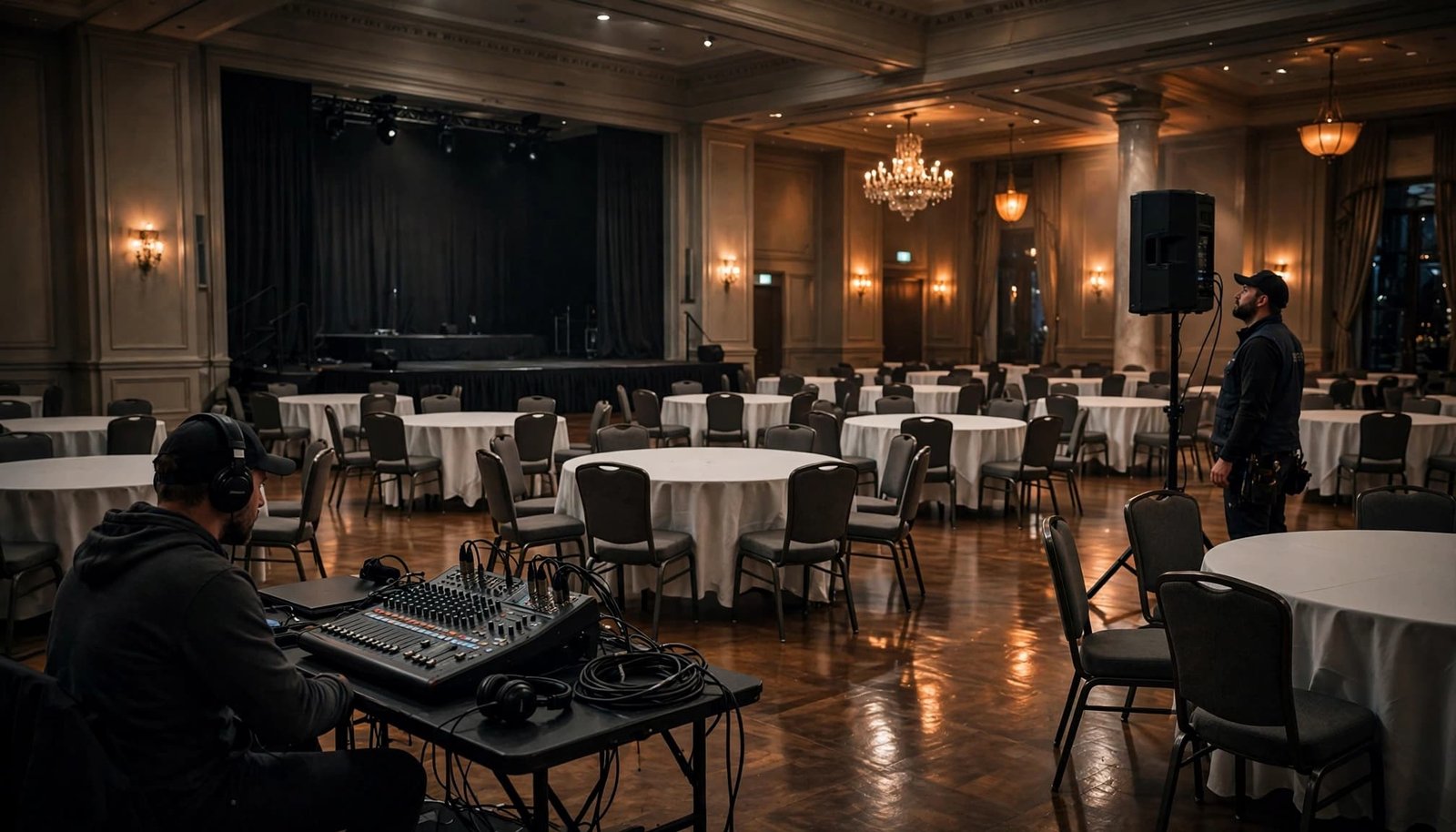
The Corporate Ballroom Audio Verification Checklist
A professional soundcheck starts with the final run of show and production brief, then confirms each source, microphone, cue, and transition before guests arrive.
Confirm the Program and Production Brief
Before turning on the sound system, review the final run of show with the planner, venue contact, AV team, and DJ. Include the event production brief, then assign responsibilities clearly. The planner confirms the timeline and approved content. The venue confirms access and house-system rules. The AV team or system operator confirms routing and presentation playback. The DJ confirms music, MC cues, walk-on tracks, and transitions.
The written brief should include:
- Guest arrival, cocktail hour, meal service, awards, speeches, and dancing.
- Presenter names, titles, pronunciation notes, and microphone needs.
- Walk-on music, video playback, announcement language, and lighting cues.
- Music guidelines, including clean edits, preferred styles, and do-not-play requests.
- Load-in timing, power access, cable paths, house-system rules, and backup contacts.
- One event-day contact who can approve changes without confusion.
If a video includes audio, test its connection before guests arrive. Check the presentation laptop, DJ playback device, backup playback device, adapters, and offline music files on more than one device.
Test the System Where Guests Will Listen
At load-in, verify power distribution and signal flow from each playback source through the mixer and processing to the speakers. Confirm every connection, input selection, channel assignment, and playback level before opening doors.
Check wireless microphone frequency coordination, antenna placement, battery status, mute switches, spare microphones, and the handoff procedure. Test each microphone at realistic volume from the podium or stage, not only beside the control position.
Monitor from the control position and guest tables, the back of the room, the bar, podium, and dance floor. Headphones alone aren’t enough for a complete room walk-through.
The right ballroom volume fills pauses in the program without making guests raise their voices across the table.
Set a safe volume against venue limits, local noise requirements, and the planner’s audience expectations. Keep levels consistent during speeches, presentations, awards, and dancing.
If something fails, confirm source output, cable and input selection, channel mute, gain structure, wireless battery or frequency status, and system routing before changing settings. This sequence helps isolate problems without creating new ones.
Use the final soundcheck to rehearse every cue in order, including opening music, microphone handoffs, walk-on tracks, award cues, video playback, transitions, and final announcements. Secure final sign-off from the planner, venue, and AV operator immediately before doors open.
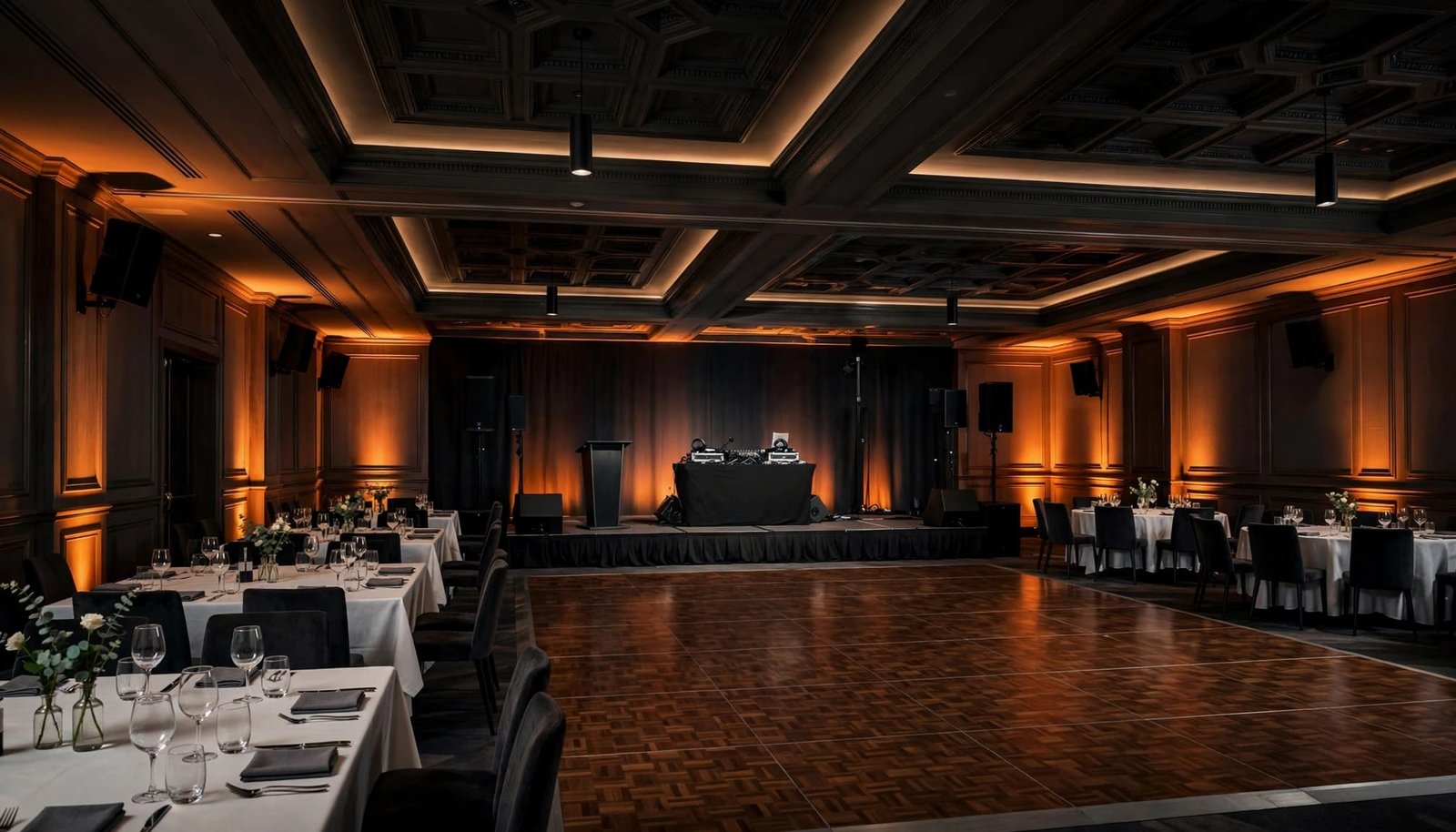
Use Advanced Audio Checks When the Event Calls for Them
Most corporate ballroom events need reliable operational testing, not elaborate technical production. Larger programs, difficult room acoustics, unusually reflective surfaces, distributed audio, subwoofer integration, or a large live performance may justify a qualified specialist.
Measurement and Alignment Checks
A qualified sound engineer may use a calibrated measurement microphone at several positions to examine frequency response. An Earthworks microphone is one example, but the brand isn’t required.
A controlled frequency sweep can reveal resonances or dropouts. Phase checks help confirm alignment among the main cabinet, fills, and subwoofers.
Poor alignment can reduce audio quality, making music feel thin or vocals less clear. A crossover check can confirm the transition between full-range cabinets and subwoofers.
DSP, Processing, and Phone Apps
A digital signal processor may provide delay and equalizer adjustments when a distributed setup needs tuning. The venue-approved sound system configuration should guide any changes, and only the responsible audio engineering professional should make them.
A calibrated spectrum analyzer can support formal analysis by a qualified professional. A phone-based spectrum analyzer offers a limited secondary reference, but it can’t replace audio calibration, careful listening, or qualified judgment.
Define DJ, Venue, and AV Responsibilities
A touring DJ and mobile DJ may follow different workflows from a venue technician or sound engineer. A wedding DJ and corporate specialist may also organize cues differently, without one being automatically more qualified. Confirm responsibilities before load-in.
Set those assignments during planning with a simple responsibility matrix:
- Planner: Owns the final timeline, approved content, contact chain, and program changes.
- Venue: Approves access, house audio, power, cable paths, noise limits, and building requirements.
- DJ: Manages music, MC duties, cue timing, and music-source backups.
- AV team or sound engineer: Manages presentation feeds, wireless coordination, routing, system tuning, and technical troubleshooting.
- System tech: Handles setup and adjustments under the responsible engineer’s direction.
For corporate event sound and lighting, an entertainment company or outside event production provider should document equipment ownership. List microphones, playback devices, lighting and sound, subs, stands, cables, and backup equipment. If a live performance is scheduled, identify whether the performer supplies a separate technical lead.
Build five to 10 minutes of buffer around cocktail hour, meals, presentations, awards, and transitions. Name one person authorized to approve changes. If a speaker runs long, that contact can extend background music, hold a walk-on cue, or delay an announcement until the stage is ready.
Keep the Program Moving After the Audio Test
A successful audio test supports more than audio quality. It supports confident handoffs, thoughtful pacing, and an atmosphere that fits the company and its guests.
Continue monitoring speech clarity, wireless battery status, playback levels, and guest comfort from arrivals through dancing. Keep reception music present for networking without forcing guests to raise their voices. When awards, remarks, or videos begin, lower it cleanly, confirm the correct microphone, and keep the next cue ready.
For dancing, follow the venue’s approved limits and local requirements, using the planner’s audience expectations as a guide. Build energy gradually on the dance floor, balancing coverage and bass so guests near the system stay comfortable while the back of the room still hears announcements. A ballroom isn’t a music venue or nightclub, so corporate celebrations benefit from clarity and controlled pacing rather than maximum level.
If feedback or a developing technical problem appears, report it quietly to the planner, venue, AV lead, or DJ without interrupting the program.
Key Takeaways
- Confirm the room diagram shows power access, speaker coverage, cable paths, and guest access.
- Have the venue contact approve load-in routes, timing, and access points before event day.
- Follow venue policies and local requirements first. Have qualified venue or AV personnel handle electrical or rigging questions.
- Confirm safe power access and protect cables from guest traffic, doors, and service areas.
- Label each signal path and identify who handles every connection or change.
- Confirm speaker and low-frequency speaker locations won’t block exits, sightlines, or guest paths.
- Check wireless channels and batteries before doors open, with spares ready when appropriate.
- Test microphones, presentation audio, and walk-on cues from the positions where they’ll be used.
- Listen from guest seating areas and confirm the venue’s volume limits with the venue contact.
- Assign responsibility for the person handling music and cues, venue AV, and video playback.
- Keep backup microphones, cables, adapters, and playback options ready for common equipment issues.
- Reserve schedule buffer and provide one direct contact for changes during the event.
- Complete a final pre-show cue check with the program lead before guests enter.
Frequently Asked Questions
How early should ballroom audio be tested?
Plan enough access time to load in, place equipment, test the full system, and rehearse every cue. Timing depends on the room, program complexity, outside production, venue rules, and the time needed for a complete cue rehearsal.
What should a planner send before the event?
Share the final timeline, room diagram, music preferences, presentation details, speaker names, pronunciation notes, approved announcement language, and one day-of contact. The planner should also identify the person authorized to approve program changes.
Who controls presentation audio?
The AV team should control presentation audio when it supplies the laptop, playback system, or presentation support. The planner confirms the run of show, while the venue confirms available connections and policies. The DJ handles music playback and cues.
How should wireless microphone backups be handled?
The AV team should test each microphone, confirm approved frequency use, and label the equipment clearly. Keep spare batteries and, where appropriate, a tested backup microphone ready for immediate use.
Where can subwoofers and cable runs be placed?
The venue and AV team should approve equipment locations before setup. Keep subwoofers clear of guest pathways, exits, and restricted areas. Route and secure cable runs according to venue policies and local requirements.
What happens if the presentation laptop fails?
Use at least one approved backup playback source with the final presentation files. The AV team should also bring compatible adapters, cables, and power supplies, then confirm the backup works before guests arrive.
How are volume limits confirmed?
The venue should identify house limits, noise restrictions, and any local requirements. The AV team confirms acceptable levels during testing, while the planner approves the balance between speech, music, and guest comfort.
Who approves last-minute changes?
The planner approves changes to the program, music, and announcements. The venue approves changes affecting the room, power, safety, or building policies. The AV team implements technical changes after receiving clear approval from the appropriate party.
A Confident Start for a Corporate Ballroom Event
The strongest corporate programs feel organized because preparation is thorough. The final ballroom DJ soundcheck confirms clear speeches, reliable playback, controlled transitions, appropriate volume, and a ready backup plan.
Experience dating back to 1999 brings value to details guests may never notice, but always feel. Clear sound and calm coordination help every corporate event begin comfortably and confidently.