A great anniversary celebration should feel like the couple’s story, not a random playlist with a few slow songs added at the end. A meaningful music playlist should reflect their memories. It can make room for heartfelt moments, easy conversation, and a welcoming dance floor.
That takes more than picking songs by decade. Guests may enjoy music from any era, regardless of age, culture, relationship status, or genre preferences. A DJ or live band may be the better fit, depending on the room and desired energy.
Start with the people in the room and meaningful moments. Ask whether the couple wants to revisit their first dance.
Key Takeaways
- Build the playlist around the couple’s story, meaningful memories, guest preferences, and any cultural or language needs.
- Organize music by event moment, moving from welcoming arrival and dinner selections to formal dances, singalongs, and open dancing.
- Use familiar songs across genres and generations, while avoiding assumptions about guests’ tastes based on age or relationship status.
- Plan meaningful songs, requests, clean edits, pacing, and transitions in advance so the DJ can respond to the room without losing the event’s tone.
- If you include an anniversary dance, choose a song with enough time for announcements and honor participating couples with welcoming, optional language.
Start With the Couple’s Story and Guest List
Every milestone anniversary has its own personality. A 25th anniversary dinner may call for elegant background music and a few favorite slow dances. A 50th anniversary party may bring together several generations, longtime friends, grandchildren, and guests who are ready to stay late and celebrate.
Before choosing music, ask the couple a few clear questions:
- Which artists, songs, or concert memories belong to their relationship?
- Would they like to revisit their first dance or another meaningful song?
- Are there cultural traditions, language preferences, or family favorites to include?
- Are any songs connected to difficult memories and better left out?
- Should the music include children, older relatives, and other family members?
- Do they want more dinner music, more dancing, or a balanced mix?
- Which songs, artists, or lyrical themes belong on the do-not-play list?
Requests can come through a short form, planning call, request cards, or a shared document. One approved decision-maker should filter them for timing and tone.
Their answers become a working song list and brief for the DJ or planner. A personalized music plan also prevents the most meaningful songs from getting lost between general party favorites.
Meaningful Songs Should Have a Place of Honor
Many couples have one song that immediately brings them back to their first date, wedding day, or a special season in life. That song deserves a planned moment.
It may work for the couple’s entrance, a toast, a spotlight dance, or the final song of the night. Playing it during cocktail hour while guests are still finding their seats can weaken the moment.
A professional DJ can introduce the selection, adjust the volume, and welcome people to dance. Small details like timing and microphone clarity make the tribute feel polished rather than rushed.
Don’t Assume Generations Have Fixed Tastes
A guest’s age doesn’t predict their preferences. Someone in their seventies may love Bruno Mars, while a younger guest may know every word to “September.”
Ask individuals and families what they actually enjoy. Invite married guests with different backgrounds and ages to submit meaningful selections, rather than assuming what they’ll prefer.
The strongest anniversary celebration playlists use familiar music as a bridge. They give different groups a reason to join in without treating anyone as a stereotype.
Build Anniversary Party Songs Around Each Event Moment
An anniversary party has natural shifts in energy. Organize an anniversary playlist around arrival, dinner, formalities, and dancing. Arrival music should feel warm and welcoming. Dinner music should support conversation. Later, the dance floor needs recognizable songs with a clear beat and a reason to move.
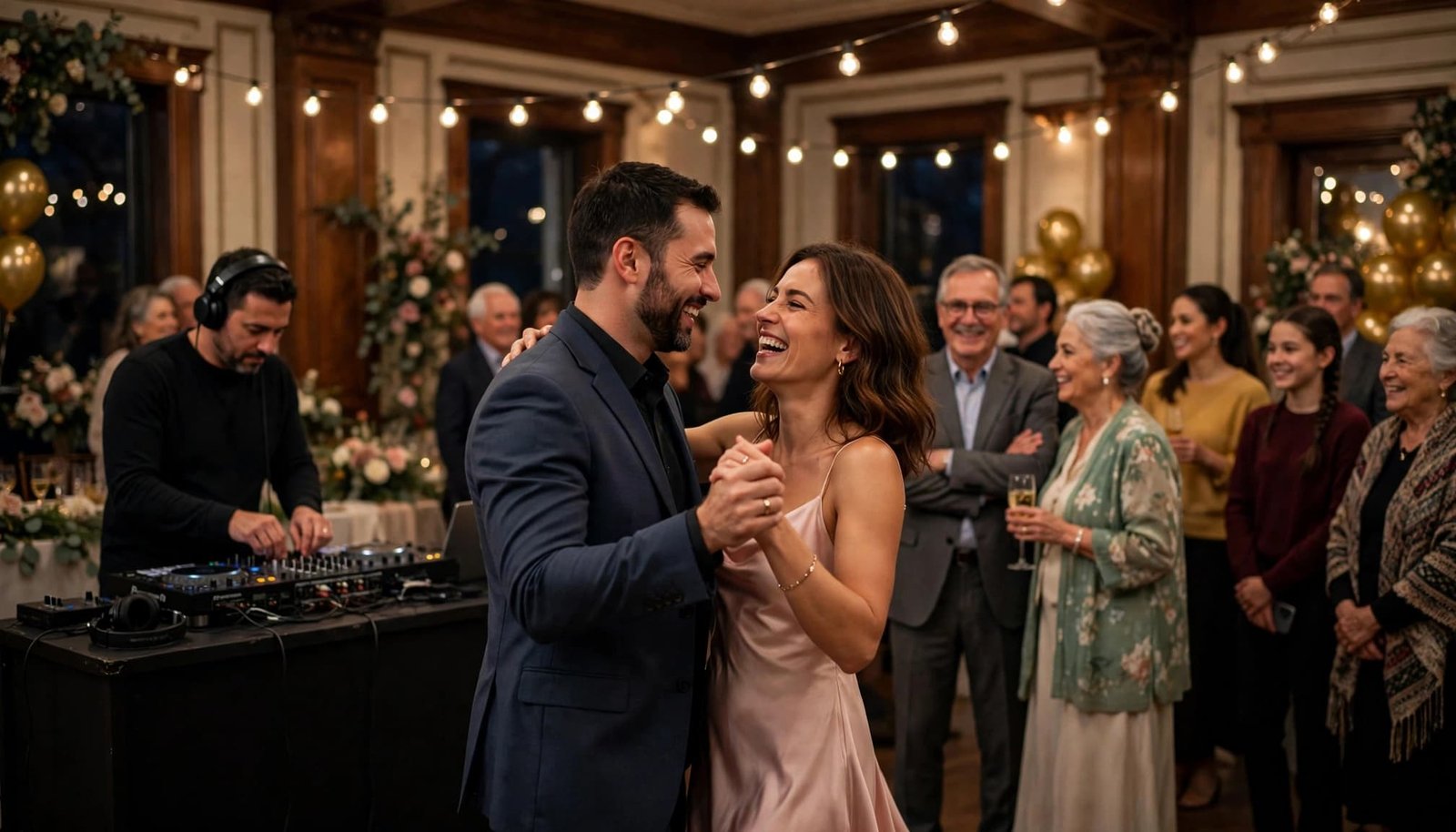
A DJ should prepare more music than the event will use, then adjust based on guest response. That flexibility keeps the night personal and avoids long stretches that only suit one part of the room.
A live band can work well for selected sets, but plan DJ or playback support for transitions, dinner, requests, and breaks. Collect requests through cards, a QR form, or direct communication with the DJ. Keep the couple’s do-not-play list and event schedule in control.
Arrival and Dinner Music Should Support Conversation
Start with low to moderate volume and a relaxed rhythm. Guests should be able to greet one another without speaking over the music.
Good choices include “L-O-V-E” by Nat King Cole, “This Will Be (An Everlasting Love)” by Natalie Cole, “Lovely Day” by Bill Withers, and “Put Your Records On” by Corinne Bailey Rae. Instrumental jazz, acoustic covers, Motown, country music, and other easygoing choices also work well during dinner.
Avoid putting every major romantic ballad into the early playlist. Save a few for the moments when people are watching and listening.
Open Dancing Needs Familiar Hooks
Once formalities are finished, build energy in short, varied runs. A few upbeat pop songs, then a classic singalong, then a funk or country crossover track can keep more guests involved.
“Uptown Funk” by Mark Ronson featuring Bruno Mars, “Dancing Queen” by ABBA, “I Wanna Dance with Somebody” by Whitney Houston, and “Shut Up and Dance” by WALK THE MOON are dependable choices for many mixed-age crowds.
Married guests may respond differently to the same selection. The DJ should read the actual room, not use age or relationship status as a shortcut for taste.
A song that works on paper may not work in the room. The DJ should watch the floor, accept requests thoughtfully, and shift direction before the energy falls flat.
Romantic Music for Different Styles and Memories
Romantic anniversary music should feel sincere, not overly serious, with strong melodies and clear lyrics. The best wedding anniversary songs and other love songs should match the couple’s story, lyrical comfort level, and desired intimacy. Choose themes such as growing old together only when they reflect the relationship.
Timeless Soul, Jazz, and Love Songs
For a slow dance, a first dance memory, or an anniversary tribute, a few classics still carry real weight. A classic love song such as “At Last” by Etta James can set the tone. “Can’t Help Falling in Love” by Elvis Presley, “Unchained Melody” by The Righteous Brothers, and “Let’s Stay Together” by Al Green feel intimate without a big production.
“Stand by Me” by Ben E. King and “You Are the Best Thing” by Ray LaMontagne are also warm choices for couples who want a less formal romantic love song.
Keep ballad-heavy stretches spaced through the evening. Two or three ballads in a row can make guests feel that the party has changed into a concert of ballads.
Country, Rock, and Modern Romance
Country music often fits anniversary celebrations because it tells clear stories about commitment and everyday life. Consider “Then” by Brad Paisley, “Die a Happy Man” by Thomas Rhett, “Joy of My Life” by Chris Stapleton, or “Forever and Ever, Amen” by Randy Travis.
Classic rock offers a different kind of romance. “Wonderful Tonight” by Eric Clapton, “Faithfully” by Journey, and “Your Song” by Elton John work well when they fit the couple’s history. Invite guests to choose among these styles based on personal memories, not age.
For a newer sound, “Lover” by Taylor Swift, “Perfect” by Ed Sheeran, and “You Are the Reason” by Calum Scott can bring younger relatives into the moment. A romantic playlist can mix older standards, country, rock, and newer material. Confirm the exact version before the event, especially if a clean edit, radio version, remix, or live recording is involved.
Use Pacing to Keep the Dance Floor Comfortable
The dance floor doesn’t need maximum energy all night. A good party moves in waves, with familiar songs, stronger dance moments, slower resets, and room for married guests to dance, sing, listen, or reconnect at the tables.

Photo by Kaboompics
A DJ who plays every song until the final fade can lose momentum. Clean transitions, shorter edits, and well-timed announcements keep the atmosphere moving without making the party feel over-produced.
Build Energy in Short, Varied Runs
Long blocks of the same genre can divide a mixed crowd. Three disco favorites may bring guests together. Ten in a row can leave people waiting too long for a change of pace.
A practical dance set might move through Motown, pop, classic rock, country music, and early-2000s throwbacks. Think “September” by Earth, Wind & Fire, “Man! I Feel Like a Woman!” by Shania Twain, “Yeah!” by Usher, and “Don’t Stop Believin'” by Journey.
The most successful celebration is not the one where every guest dances all night. It is the one where every guest hears a reason to join in.
Save Big Singalongs for the Right Time
Certain songs create a full-room moment even when guests are not dancers. “Sweet Caroline” by Neil Diamond, “Don’t Stop Me Now” by Queen, “Mr. Brightside” by The Killers, and “Love Shack” by The B-52’s can bring people together quickly.
Check each clean edit before the event, and have the MC read the room before starting those songs as a full-group moment. A big singalong too early can feel forced. Later in the evening, it can become the memory guests talk about on the drive home.
How the Traditional Anniversary Dance Works
The anniversary dance is a meaningful tradition at a wedding reception or milestone anniversary party. Unlike a private first dance, married couples gather on the dance floor for one romantic song. The couple can choose anniversary dance songs that feel romantic, culturally meaningful, or clean. Married guests may opt in or out without explanation.
The MC calls out milestones based on length of marriage, and married couples leave the floor as each mark is reached. Milestones might begin with couples married less than five years, then 10, 20, 30, and higher. The sequence can stay flexible, not competitive, with the final couple recognized as the longest-married couple in the room.
For a closer look at the format, review this guide to the traditional anniversary dance.
Choose a Song Long Enough for the Moment
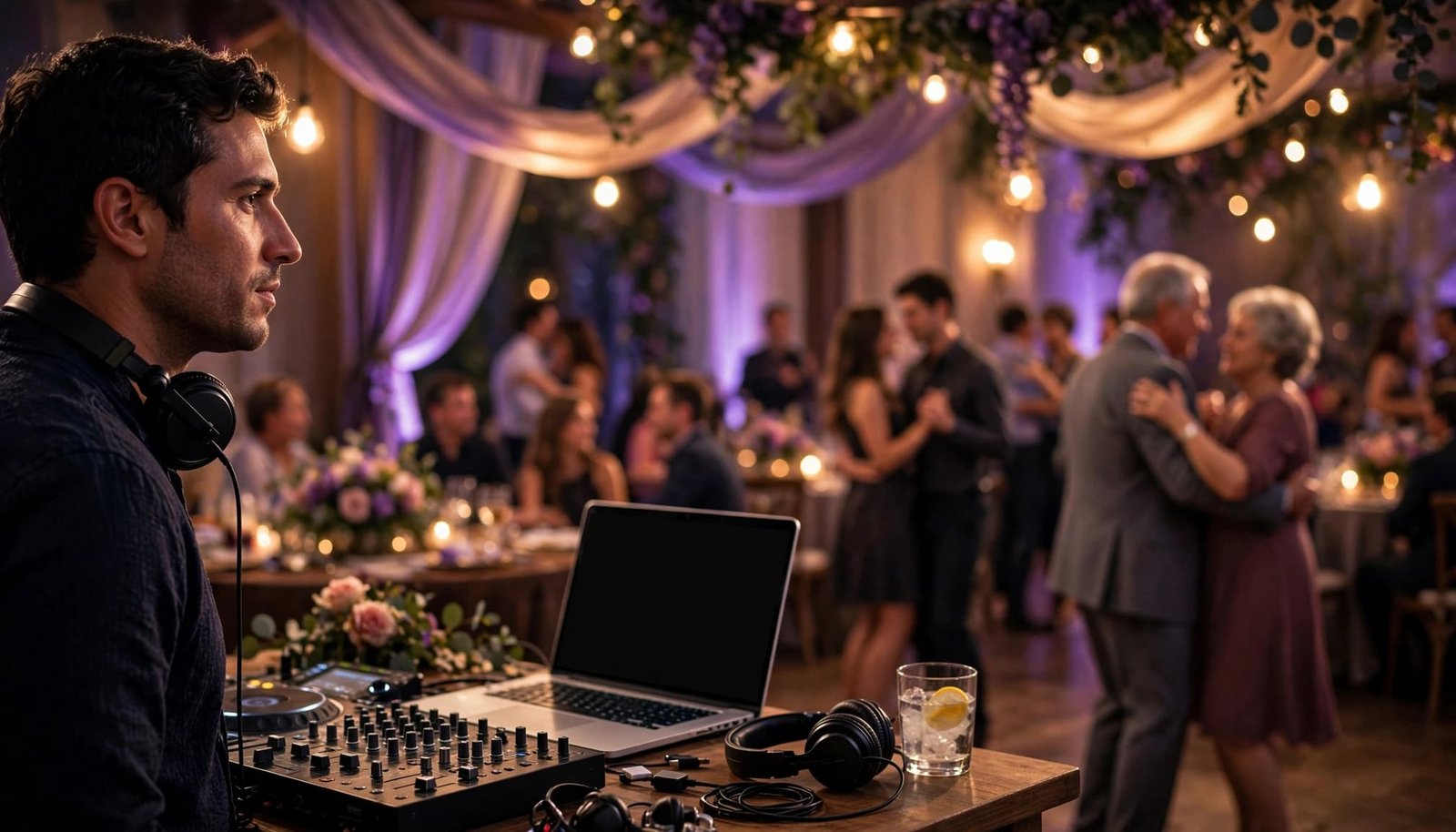
Choose anniversary dance songs that give the MC enough time to make announcements without rushing. “The Way You Look Tonight” by Frank Sinatra, “What a Wonderful World” by Louis Armstrong, and “Beyond” by Leon Bridges all offer a warm pace.
A track around three to four minutes is often enough. The DJ can also extend an instrumental section if the couple count is large or the announcements need more time.
Honor the Longest-Married Couple With Care
When the final couple remains, the MC should ask permission before spotlighting them and inviting applause. Offer the couple a brief moment on the floor. The host may ask for one piece of advice, present flowers, or invite the anniversary couple to join them on the floor.
This tradition can be touching, but it should always fit the family. A thoughtful MC uses welcoming language for married guests and for anyone who is widowed, divorced, separated, unmarried, or unable to participate. The host should follow the couple’s preference. The anniversary dance format can also include a short message or advice for the honored couple.
Plan Music Requests, Clean Edits, and Event Flow
Music planning is most reliable when one person has final approval. Requests can come through a form, QR code, cards, or a designated contact. The approved choices then shape the reception playlist and final event schedule.
The couple may choose a family member, planner, or DJ as the final approver. That person can decline requests that don’t fit the schedule or atmosphere.
Requests are useful because they show what guests want. Collect them as must-play, possible, or do-not-play choices.
A request isn’t a promise. It may be approved later, not immediately, if dinner, speeches, tributes, or a formal dance is underway.
Review the Exact Version, Not Only the Title
Clean edits matter at celebrations attended by children, grandparents, married guests, coworkers, and community members. A radio version may remove one word while leaving themes the couple would rather avoid. Other edits can leave long silences or awkward transitions.
Preview each important track in its exact radio edit, remix, streamed version, or live recording. Check lyrics, themes, silences, transitions, and volume before approving it.
Share clear do-not-play requests, preferred artists, cultural music needs, and songs connected to difficult memories. Check accessibility needs before approving tracks or transitions.
When guests have different language backgrounds, confirm pronunciation for names and songs. These details show care and help the evening feel personal.
Prepare the Room for Safe, Clear Sound
Sound should be strong enough for dancing and clear enough for announcements. Loud is not the same as exciting. Guests should hear the beat without struggling to speak at their tables.
Ask the venue where speakers, lighting, and the DJ booth can go. Audio and power cables should stay along approved room edges whenever possible. They should never cross exits, stairs, doorways, or accessible routes. Use a venue-approved cable ramp for any unavoidable high-traffic crossing.
If a live band is part of the program, coordinate its breaks and set changes with the main playback system. Confirm who controls timing, announcements, and volume during each transition.
A professional setup also includes backup music playback, spare cables, and an extra microphone. When the schedule changes or a technical problem appears, the party can continue without a distracting pause.
For another example of how an MC can call marriage milestones during the dance, see this overview of anniversary dance announcements.
Frequently Asked Questions
How do I choose songs for an anniversary party?
Start with the couple’s relationship, favorite artists, meaningful memories, and desired atmosphere. Then add familiar selections that invite guests from different generations and backgrounds to participate.
How should an anniversary party playlist be organized?
Plan music around the event’s natural moments, including arrival, dinner, formalities, romantic dances, and open dancing. Keep the volume lower for conversation, then build energy gradually with varied genres and recognizable songs.
What songs work well for an anniversary dance?
Choose a warm romantic song that is long enough for the MC to announce marriage milestones, such as The Way You Look Tonight, What a Wonderful World, or Beyond. The DJ can extend an instrumental section if the room includes many participating couples.
How can the music appeal to different generations?
Ask guests and families what they actually enjoy instead of relying on age-based assumptions. Mix classics, current pop, Motown, country, rock, soul, and singalongs in short, varied runs so different groups have reasons to join in.
How should we handle requests and clean edits?
Assign one person to approve requests and sort them into must-play, possible, and do-not-play choices. Preview the exact versions before the event, checking lyrics, themes, silences, transitions, and volume.
A Playlist Should Feel Like a Celebration of One Couple
The best anniversary party songs aren’t limited by decade, genre, or a generic list of hits. They reflect the couple, invite participation across generations, and give the night a natural rhythm.
Plan meaningful moments, balance familiar selections with personal requests, and check that requests are approved, versions are clean, and cultural context is respected. Let the pacing build gradually and create a welcoming atmosphere. With thoughtful choices, clear coordination, and a shared celebration, an anniversary party becomes more than a milestone. It becomes a shared memory in motion.